Blow molding creates hollow plastic parts efficiently and creates scrap constantly. Flash, rejected parts, and startup purge all need to go somewhere. The right plastic granulator turns that material into reusable regrind.
What Makes Blow Molding Scrap Different From Other Plastic Waste
Blow molding produces hollow plastic parts by inflating a heated parison inside a mold. The process is highly efficient for bottles, containers, automotive ducts, fuel tanks, and similar products. But it generates scrap at every stage of operation, and that scrap behaves differently in a size reduction machine than the sprues and runners most people are familiar with from injection molding.
The key difference is density. A rejected 1-gallon container takes up significant space in a hopper but contains very little actual plastic. This combination of large geometry and low bulk density creates feeding and cutting challenges that are not obvious until you try to process the material in an improperly configured machine. Understanding the scrap type is the first step toward selecting the right plastic recycling equipment.
Types of Scrap Generated in Blow Molding Operations
Flash and Pinch-Off Waste
Thin excess plastic squeezed out at mold parting lines every cycle. High volume, consistent, and usually easy to granulate inline with a beside-the-press granulator.
Rejected and Out-of-Spec Parts
Full hollow parts that fail wall thickness, clarity, or dimension checks. Large volume relative to material weight. The primary sizing challenge in blow molding granulation.
Startup and Grade Change Purge
Material from machine startup or resin changeovers. Can be semi-solid and irregular. Often the most difficult blow molding scrap to process in a standard granulator.
Handle and Trim Waste
Trimmed handles, bases, and flash cut from finished parts. Consistent geometry and moderate density. Generally well suited for direct granulation inline or centrally.
The Core Challenge: Hollow Parts and Feeding Problems
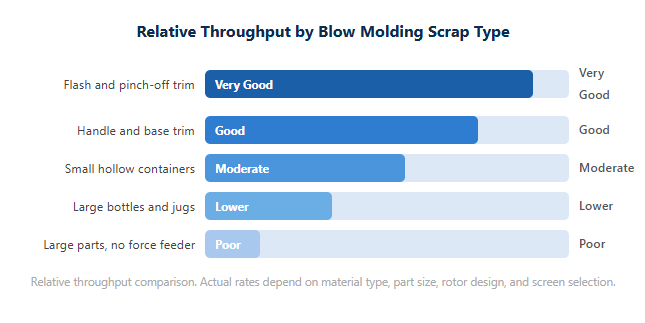
The most common complaint when granulating blow molded containers is that hollow thin-walled parts dance on the rotor rather than feeding through the cutting zone. Bottles and jugs bounce, stack, and compress above the cutting chamber without engaging the knives consistently. The result is poor throughput, uneven regrind particle size, and excess fines.
Virtus Equipment addresses this directly with force-feeding systems for the H Series heavy duty granulators. Force feeders are available in screw and paddle designs and push material into the cutting chamber, preventing the stacking problem that affects loose hollow parts. Adding a force feeder to a central granulator substantially increases throughput when processing bottles, containers, and similar blow molded plastic scrap.
Choosing the Right Plastic Granulator for Blow Molding
The right equipment depends on part size, resin type, scrap volume, and whether the operation runs inline recovery, centralized processing, or both. Below is how Virtus Equipment’s plastic granulator lineup maps to the most common blow molding scenarios.
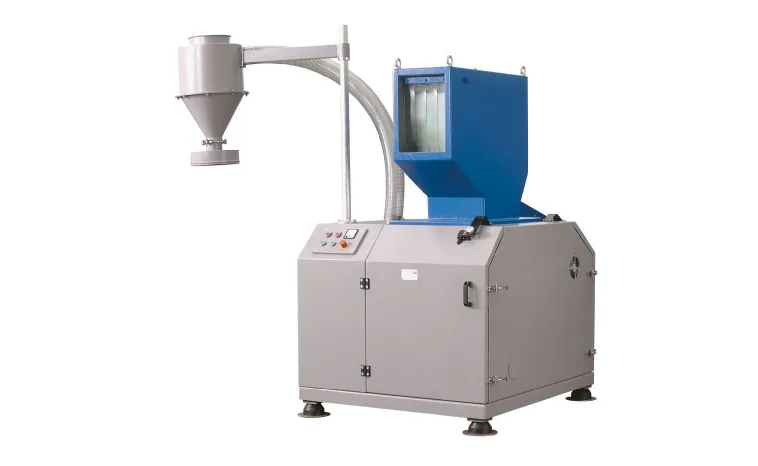
Flash, pinch-off waste, and small trim: The C Series Compact Soundproofed Granulators are built for beside-the-machine recovery of lightweight, thin-walled material. The fully enclosed soundproofing is a meaningful advantage in facilities where the granulator operates in the same workspace as the blow molding equipment. The C Series handles thin-walled blow molded parts, profiles, and film in addition to injection molded runners, making it a versatile beside-the-press granulator for facilities running both processes.
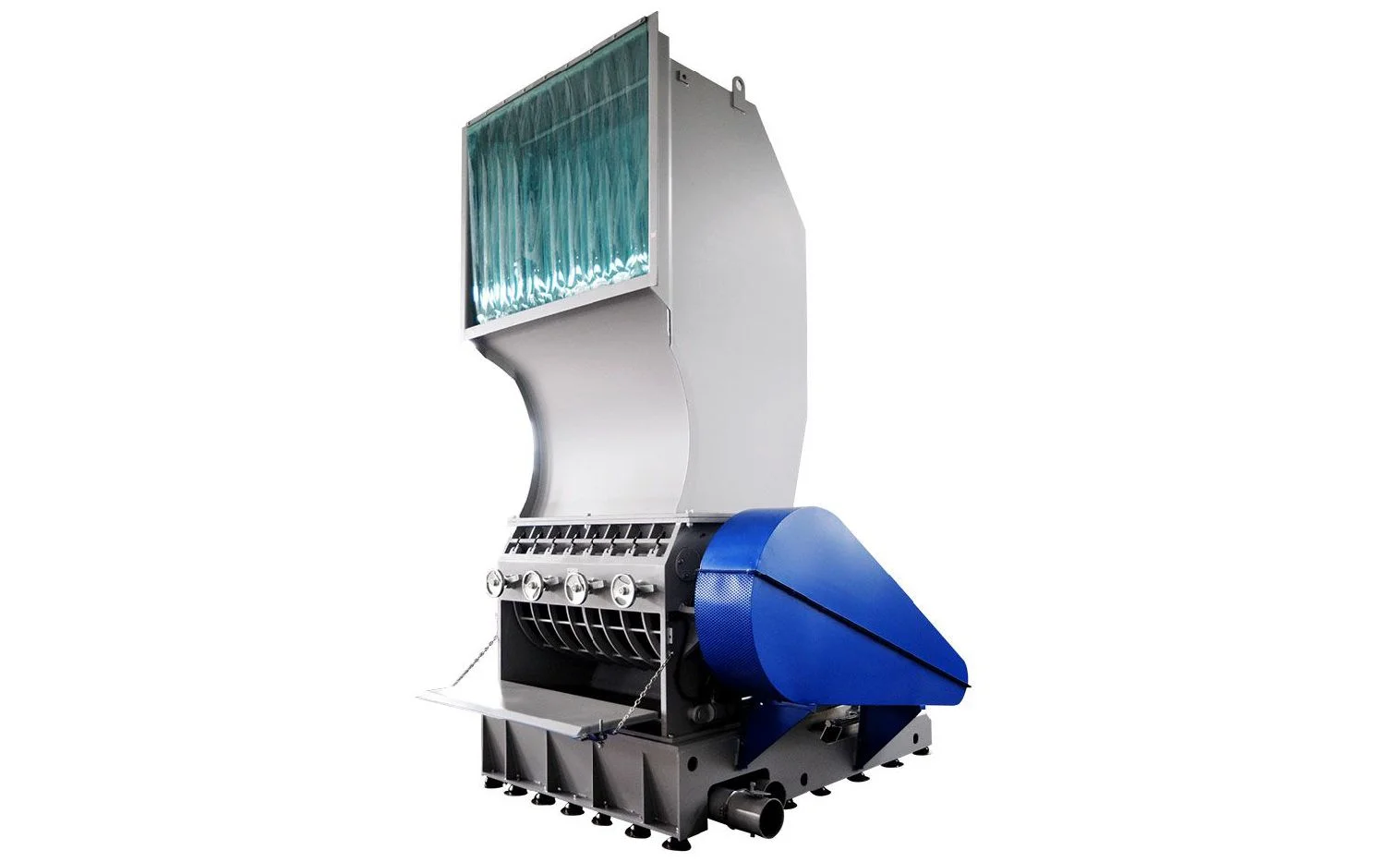
Mixed containers and bottles, centralized processing: The H Series Heavy Duty Granulators are the standard choice for central granulation in blow molding facilities. With optional force feeders, multiple rotor designs, and cutting chamber configurations for varying part sizes and densities, the H Series handles the mixed, variable scrap streams that blow molding central recycling programs generate. This is Virtus Equipment’s primary heavy duty plastic granulator for high-volume production environments.
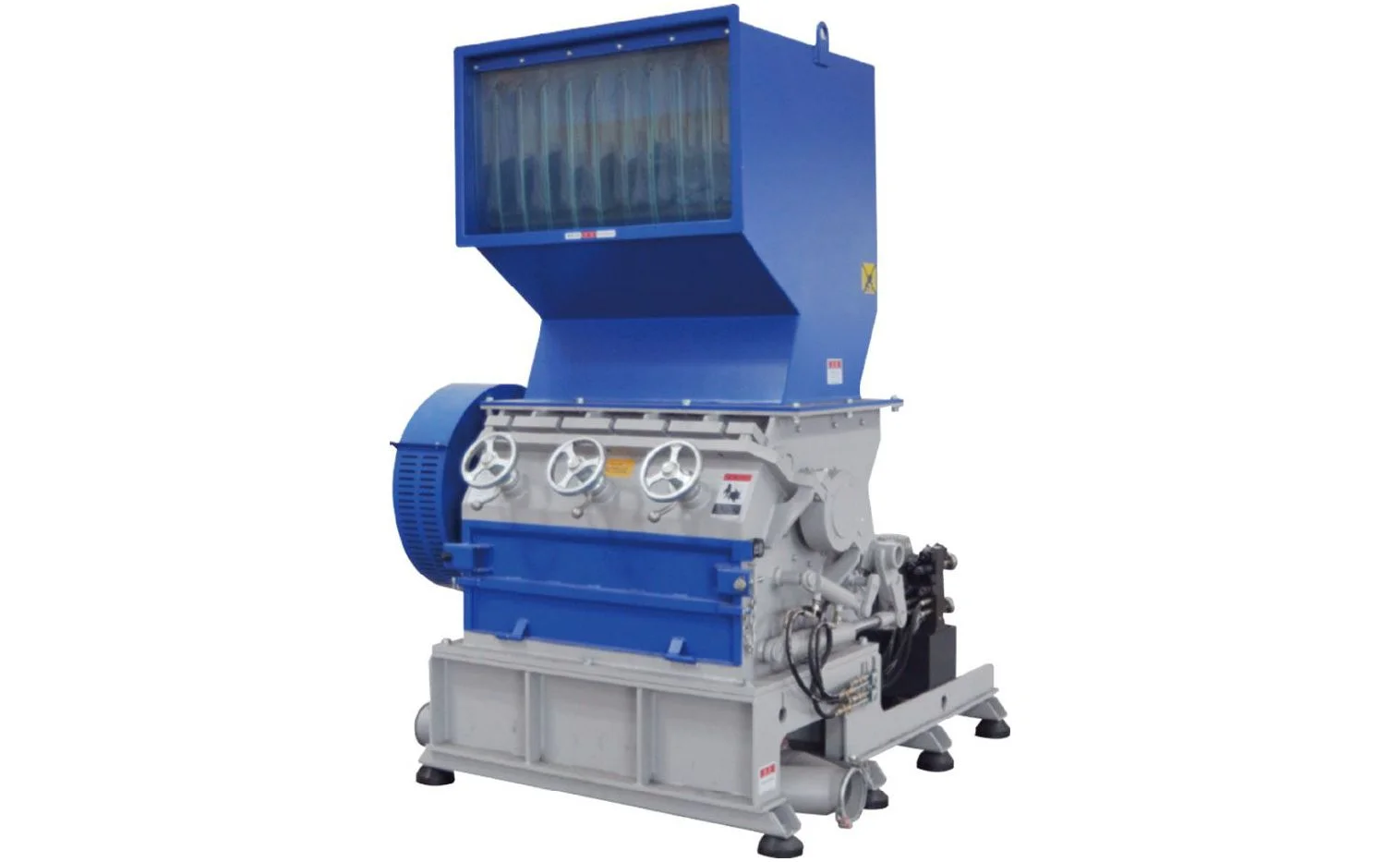
Economical beside-the-press option: The E Series Economical Granulators are a cost-efficient beside-the-press plastic granulator for facilities where scrap volumes are moderate and budget is a primary consideration. Multiple rotor designs are available in 300 mm to 700 mm diameters.
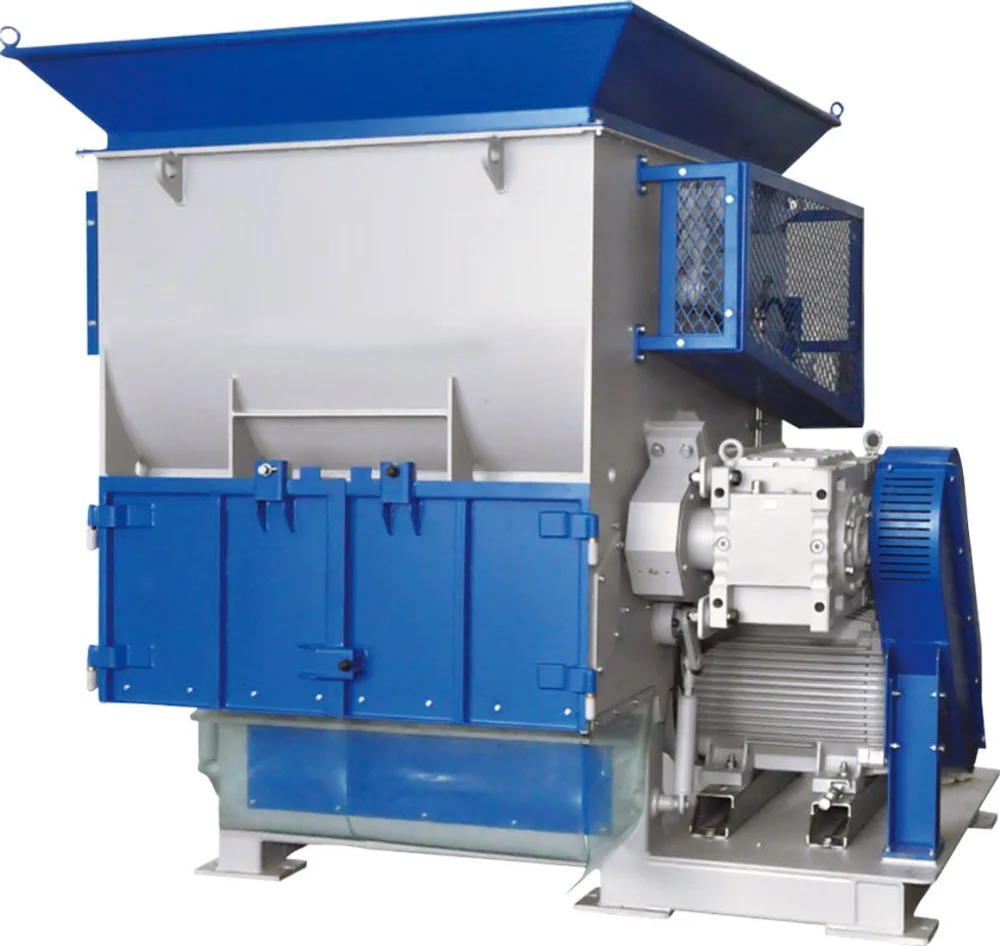
Large purge and oversized industrial parts: When startup purge or large industrial blow molded parts like automotive ducts or bulk containers exceed what a standalone granulator can handle, the SG Series Shredder-Granulator Combination provides a two-stage solution in a single compact system. The industrial shredder stage reduces bulky input to a consistent pre-shredded size; the granulator stage produces the finished regrind. This system was designed specifically for in-house use in blow molding and injection molding applications.
Blow Molding Scrap: Plastic Granulator and Shredder Selection Guide
| Scrap Type | Recommended Equipment | Key Consideration |
|---|---|---|
| Flash, pinch-off, small trim | C Series Compact Soundproofed Granulator | Beside-the-machine, quiet operation |
| Mixed hollow containers and bottles | H Series Heavy Duty Granulator with force feeder | Force feeder required for hollow parts |
| Moderate volume beside-the-press | E Series Economical Granulator | Cost-efficient, accessible design |
| Large purge and industrial parts | SG Series Shredder-Granulator Combination | Pre-shredding required for bulky input |
Regrind Quality from Blow Molded PE and PP
Polyethylene and polypropylene are the most common blow molding resins and both granulate cleanly when the plastic recycling equipment is correctly configured. The primary regrind quality concerns are contamination from labels or adhesives on rejected finished parts, and heat degradation from processing the same material through too many regrind cycles. Screen aperture selection and rotor speed both affect particle size distribution and fines generation significantly.
Regrind from flash and trim is typically the cleanest and most readily blended back into production. Regrind from rejected finished parts requires closer evaluation depending on whether surface treatments, colorants, or labels are present. When regrind quality meets specification, in-house granulation directly offsets virgin resin purchases at current market prices.
Processing blow molded scrap and not getting the throughput or regrind quality you need? Virtus Equipment can help identify the right plastic granulator configuration for your operation.