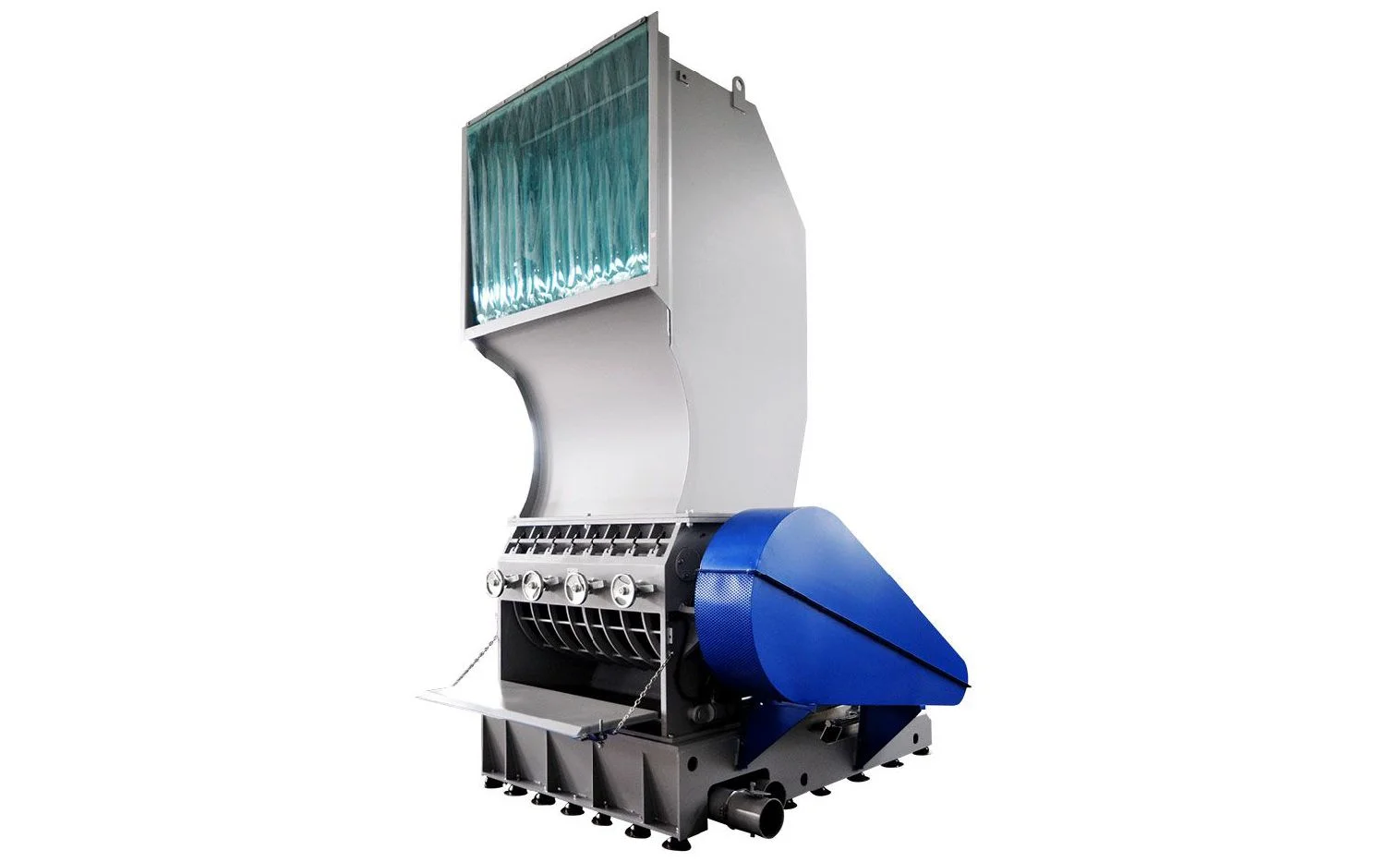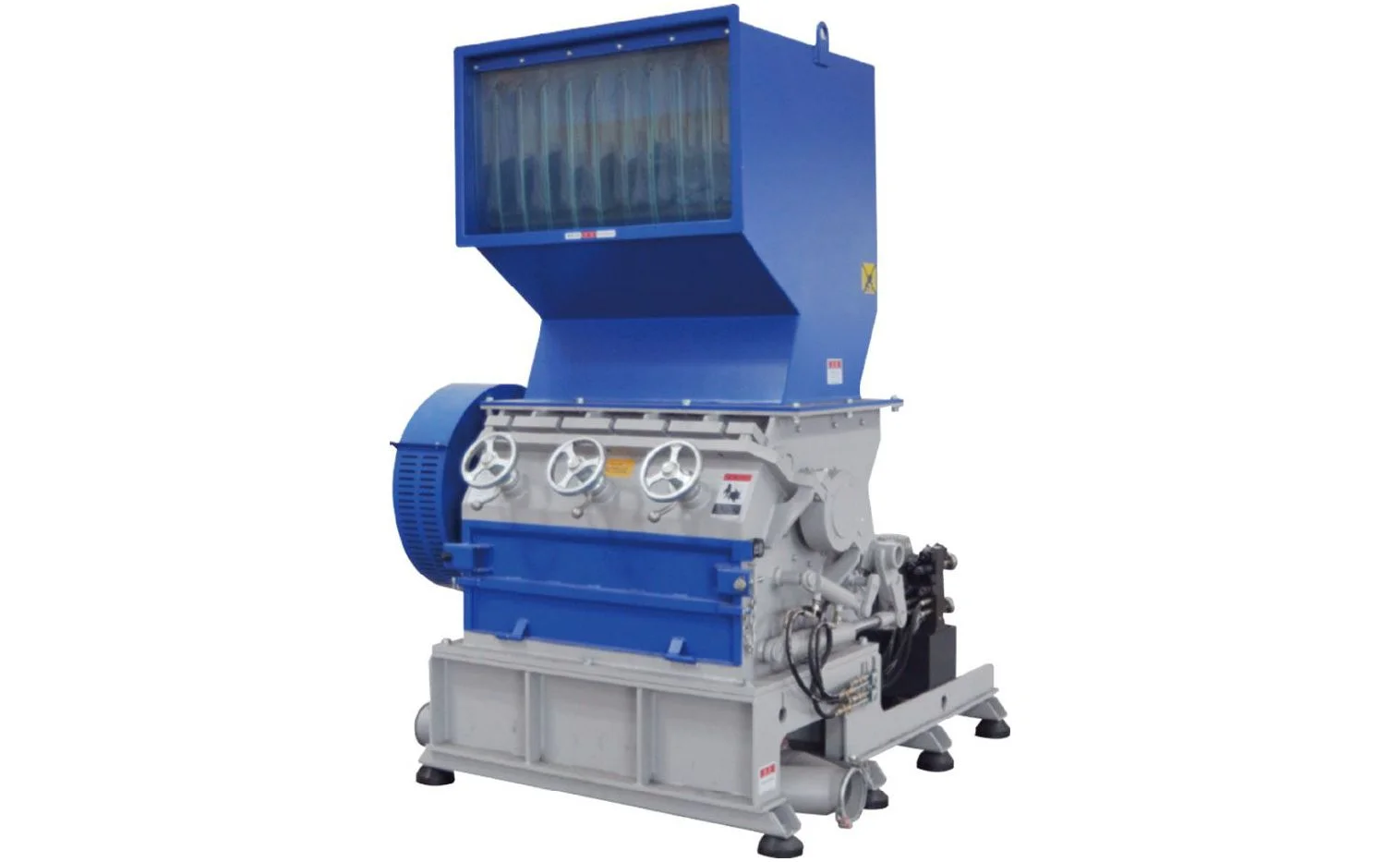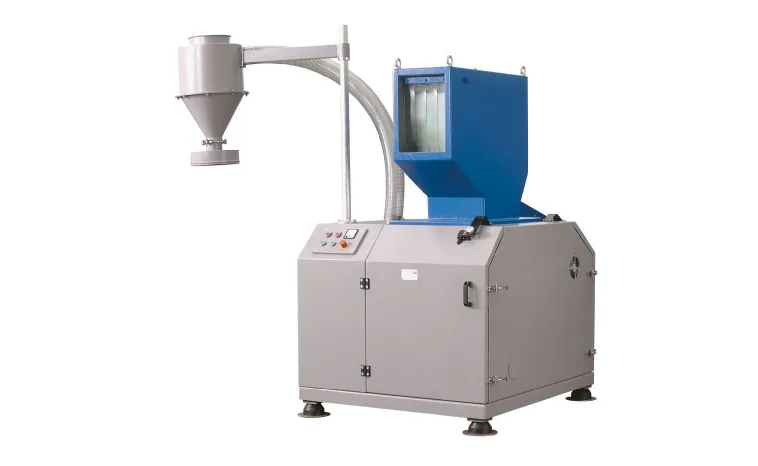
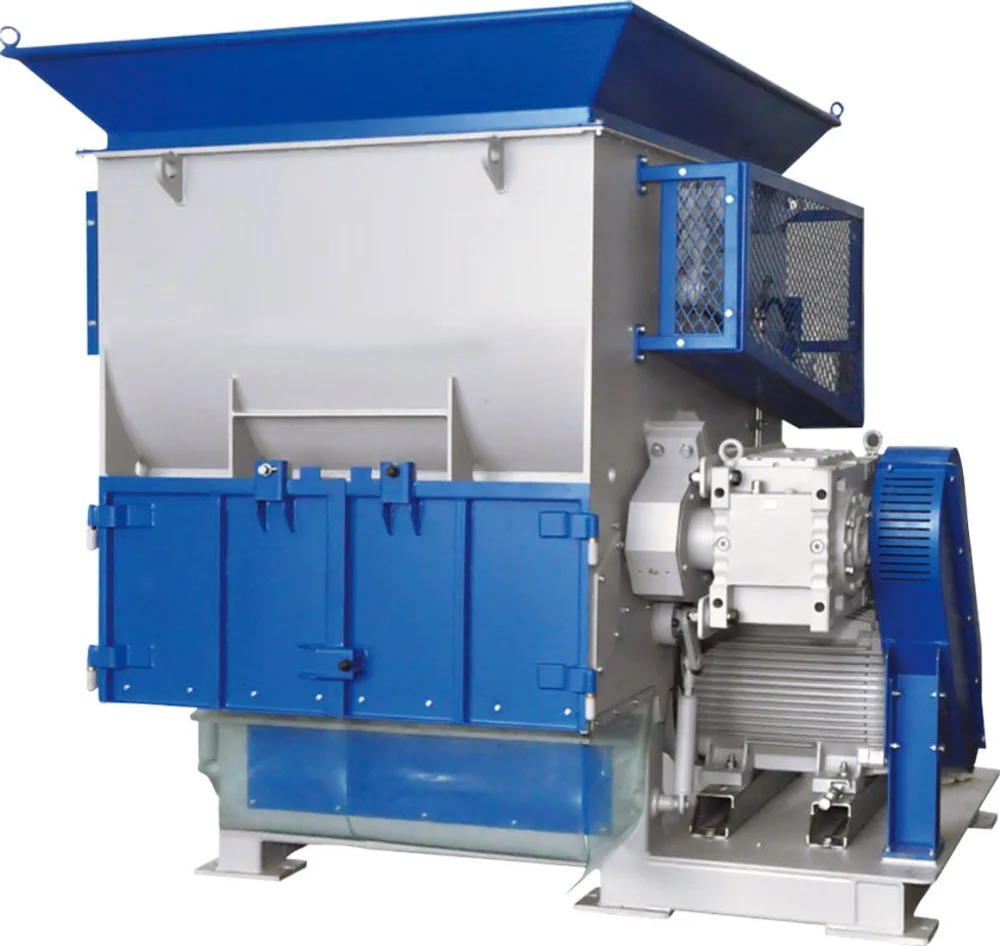
A granulator is not the right tool for every plastic scrap problem. Some materials are too big, too dense, or too irregular to feed cleanly into a granulator. That is when an industrial plastic shredder becomes the correct first step.
The Most Common Mistake in Plastic Size Reduction
Many facilities that process plastic scrap default to granulators for everything because granulators produce the usable regrind they need. That is logical, but it creates a real problem when the input material is not suitable for direct granulation. Feeding oversized, bulky, or dense material into a granulator that is not configured for it leads to machine overloads, stalled rotors, poor regrind quality, and accelerated knife wear. In some cases it damages the machine.
An industrial plastic shredder is not a replacement for a granulator. It is a first-stage size reduction machine that reduces difficult input to a consistent, manageable size before granulation. When the job calls for it, a shredder protects the granulator, improves throughput consistency, and allows material that would otherwise be landfilled or trucked away to be recovered in-house.
Five Signs You Need a Plastic Shredder in Your Operation
Is Your Scrap Telling You That You Need a Shredder?
Parts will not fit in the granulator hopper
Large hollow containers, IBCs, drums, barrels, and industrial parts physically cannot enter a standard granulator cutting chamber. A shredder reduces them to a feedable size.
Granulator keeps stalling or jamming
Dense material like thick purge, heavily filled engineering resin, or solid industrial scrap overloads the granulator rotor. A shredder’s high-torque, low-speed rotor is built for this.
You are processing pipe, profiles, or long extrusions
Pipe lengths of several meters cannot enter a granulator. The P Series shredder from Virtus accepts pipe up to 6 meters long in its feeding trough without pre-cutting.
Material arrives in bales or large compressed blocks
Post-consumer baled plastic needs primary size reduction before a granulator can process it. A shredder is the correct first stage for bale processing lines.
Knife life on your granulator is too short
If your granulator knives are wearing far faster than expected, the material may be too hard or inconsistent for direct granulation. Pre-shredding protects the granulator and extends knife life.
You have scrap you currently throw away
If your operation landfills or discards material that you know contains recoverable resin, it is often because you lack the equipment for first-stage size reduction. A shredder changes that equation.
How the Two Stages Work Together
In a two-stage size reduction line, the shredder handles the input that a granulator cannot. The shredded output, which is a coarse reduced-size material rather than finished regrind, then feeds into a granulator for final particle sizing. This approach allows the granulator to operate efficiently on consistently-sized input, protects it from overload damage, and produces better regrind quality than forcing difficult material through a single granulation stage.
Two-Stage Processing: Shredder to Granulator
Difficult Input
Pre-Shredded Output
Finished Regrind
The SG Series Shredder-Granulator Combination integrates both stages in one compact system for facilities that prefer a single-unit solution.
Virtus Equipment’s Industrial Shredder Lineup
Virtus Equipment builds single-shaft industrial plastic shredders across six application-specific series. All use the same proven rotor knife design with outboard bearings, hydraulic screen cradles, and housings engineered for daily production use.
Virtus Industrial Shredder Series by Application
| Series | Best For | Key Spec |
|---|---|---|
| G Series | General plastic recycling, film, bales, cables, paper, wood | 457 mm rotor, 850 to 2,000 mm widths, 37 to 110 kW |
| V Series | IBCs, wheelie bins, pallets, large drums, voluminous containers | 457 mm rotor, 1,200 to 2,000 mm widths, 35% more cutting chamber volume |
| X Series | Fridges, tires, dense purge, high-throughput industrial applications, RDF | Twin-speed hydraulic system, high-torque low-speed gear drive |
| VHS Series | Mixed materials, plastics, wood, paper, general waste streams | 600 mm rotor, angled hydraulic ram, 1,500 to 2,600 mm widths |
| P Series | Large-diameter HDPE, PP, PVC pipe, profiles, bundles up to 6 m long | Up to 1,500 mm rotor diameter, hydraulic ram, no pre-cutting required |
| L Series | Small plastic lumps, purge from injection and blow molding, low-volume batches | 310 mm rotor, 600 or 850 mm widths, 60 rpm, tangential infeed, 11 to 18.5 kW |
Understanding the Plastic Shredder Market
The need for industrial plastic shredding equipment is growing. According to Verified Market Reports, the industrial plastic shredder market was valued at $1.15 billion in 2024 and is projected to reach $1.95 billion by 2033, growing at a 6.5% annual rate. The primary drivers are tightening plastic waste regulations, rising demand for recycled resin content, and the growing volume of post-industrial and post-consumer plastic that facilities need to process in-house rather than ship out.
IndexBox, in a June 2026 analysis, projects the broader plastic and cardboard shredder market will grow at a 4.8% compound annual rate through 2035, driven by circular economy policies and rising recycled content requirements. Both trends point in the same direction: facilities that invest in in-house size reduction are better positioned for what is coming than those that continue to rely on third-party processors or disposal.
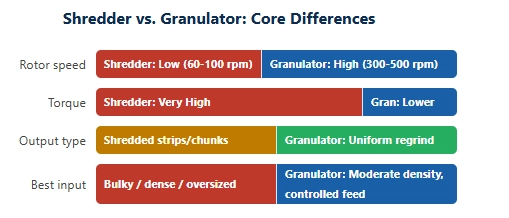
Rotor speed and torque characteristics based on Virtus Equipment product specifications available at virtus-equipment.com. Market growth data: Verified Market Reports, Industrial Plastic Shredder Market (2025). IndexBox, Shredders, Paper, Plastic and Cardboard Market Forecast (June 2026).
Need to add industrial shredding capacity to your operation? Virtus Equipment builds and supplies the full range of single-shaft industrial plastic shredders. Call or request a quote today.