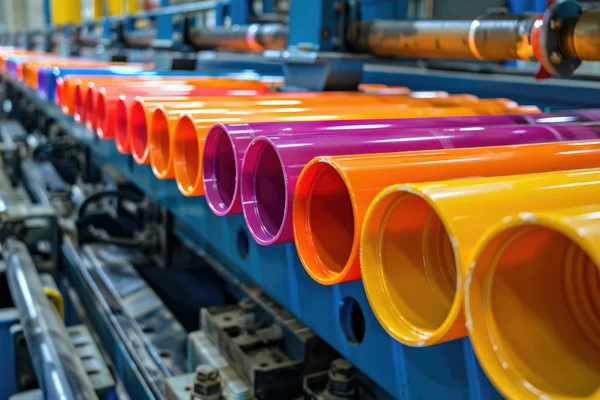

Heavy-Duty Industrial Granulators are engineered to break down thick, oversized, and high-volume plastic scrap into reusable granules. They are essential in industries like:
- Injection molding & blow molding
- Automotive parts manufacturing
- Packaging & film production
- Recycling plants for post-consumer waste
- Extrusion and profile manufacturing
These robust machines process…
- Hard and tough plastics
- Thick wall purgings
- Large components like bins, crates, and bumpers
- Production rejects from manufacturing lines
Virtus Equipment specializes in plastic recycling industrial granulators built for long-term durability, performance excellence, and high-throughput operations.
Why Choosing the Right Granulator Matters
Selecting the correct granulator is one of the most important decisions in a plastic recycling or production facility – because it directly affects the quality of regrind, overall equipment efficiency, and operational profitability. A granulator that does not match your material or production requirements can lead to frequent breakdowns, excessive fines and dust, inconsistent particle sizing, and costly downtime. This not only reduces material recovery value but also disrupts downstream equipment such as extruders, washers, dryers, and pelletizers.
An efficiently matched granulator ensures:
- Consistent and clean granule size → essential for trouble-free reprocessing
- Optimized energy usage → preventing wasted power or oversized machinery
- Higher throughput and productivity → more material processed per shift
- Longer equipment lifespan → reduced wear on blades, screens, and bearings
- Lower maintenance and labor requirements → quicker cleaning and fewer stoppages
- Improved safety and operational reliability
Additionally, choosing the right machine helps manufacturers reduce scrap disposal costs and transform more waste plastic into valuable raw material – supporting sustainability goals and circular manufacturing initiatives.
In short, the right heavy-duty granulator becomes a key contributor to your production efficiency and financial return, while the wrong one can become a bottleneck that drains resources, time, and money.
Key Selection Criteria for the Best Granulator
The most important factors when selecting a heavy-duty granulator are:
A. Material Type:
Every plastic behaves differently during cutting.
| Material Category | Examples | Required Machine Characteristics |
| Rigid Plastics | ABS, PP, HDPE molded parts | Strong rotor design, large cutting chamber |
| Thick Production Scrap | Purgings, appliance parts | High torque capability |
| Soft/Flexible Plastics | Film, sheet, thermoforming trim | Tangential feed, anti-wrap features |
| Fibrous / Reinforced Plastics | Nylon-GF, PC-GF | Abrasion-resistant cutting tools |
| Hollow Products | Bottles, tanks | Dual-feed or controlled feeding systems |
B. Throughput Capacity:
Throughput is the output volume processed per hour (kg/hr or lb/hr).
Factors influencing throughput:
- Feed rate — continuous or batch
- Blade sharpness & rotor speed
- Motor horsepower
- Feeding automation (conveyor, robotic handling)
- Screen size design
Choose a granulator that comfortably meets or exceeds:
- Peak production load
- Future capacity expansion
- Scrap volume fluctuations
Under-sized machines → frequent jams & overheating
Over-sized machines → unnecessary energy cost and noise
We help calculate the correct machine sizing for your goals.
C. Output Size Requirement:
Granule size impacts reuse efficiency.
Screen sizes determine:
- Flow consistency for re-extrusion
- Product density
- Quality of final recycled pellets
Common sizes: 6 mm, 8 mm, 10 mm, 12 mm+
(Lower mm → finer granules)
Applications requiring tight material flow tolerance, such as extrusion lines, benefit from smaller mesh screens.
Additional Considerations When Choosing a Granulator:
Beyond material type, throughput, and output size, several practical factors influence how well a granulator performs in your specific environment. Elements such as noise level, maintenance accessibility, cutting chamber design, machine durability, and available floor space all play a role in long-term efficiency. Features like wear-resistant components, safety interlocks, dust extraction systems, and automation compatibility can significantly reduce downtime and operational cost. Evaluating these considerations ensures the granulator not only meets technical processing requirements but also enhances workplace safety, user convenience, and overall production reliability.
- Noise control — Slow-speed rotor or soundproof enclosures
- Durability — Replaceable wear plates & hardened steel components
- Maintenance access — Quick-open housings for blade, screen, rotor cleaning
- Space availability — Proper machine footprint for safe access
- Safety features — Emergency stops, chamber interlocks, overload protection
- Automation compatibility — Conveyors, blowers & full recycling cell setup
- Dust management — Extraction systems for cleaner work environment
These features influence operational uptime and long-term cost efficiency.
Benefits of Choosing Virtus Equipment
Partnering with Virtus Equipment means choosing proven performance, engineering quality, and long-term reliability. As a leading Plastic Recycling Equipment Supplier, we design heavy-duty industrial granulators that deliver superior cutting efficiency, reduced energy consumption, and exceptional durability — even in the most demanding recycling environments. Our machines are built with precision-crafted rotors, robust wear protection, and optimized chamber geometry to ensure consistent, high-quality regrind output.
We don’t just supply equipment — we provide complete recycling solutions. From initial material analysis and machine selection guidance to installation, operator training, and ongoing service support, Virtus Equipment helps you achieve maximum production uptime and lower operational costs. Whether you’re processing rigid purgings, automotive parts, films, profiles, or mixed industrial scrap, our customizable granulators deliver the performance and flexibility needed to grow your business and strengthen sustainability goals.
Choosing Virtus Equipment as your Heavy-Duty Industrial Granulators supplier ensures:
- Robust German-engineered cutting systems
- High wear resistance, long service life
- Modular designs for easy maintenance
- Advanced rotor engineering for reduced power consumption
- Noise-reduction technology for better workplace conditions
- Custom-built solutions for specific material/process needs
- Expert consultation from a trusted Plastic Recycling Equipment Supplier
By choosing Virtus, you invest in equipment that turns waste into revenue — efficiently, safely, and consistently.
Conclusion
Choosing the right heavy-duty granulator requires careful evaluation of material characteristics, throughput targets, and output size quality requirements. A well-matched granulator will deliver operational efficiency, cost savings, and superior recycled material quality.
At Virtus Equipment, we take pride in delivering technically advanced, reliable granulation solutions for demanding recycling applications. Whether you process rigid plastics, complex scrap, or large purgings – we have the ideal system tailored for your business.
Frequently Asked Questions (FAQs)
1. What makes a granulator “heavy-duty”?
Stronger rotor, large cutting chamber, higher horsepower, and wear-resistant construction for processing thick, bulky plastic scrap.
2. Can one granulator handle multiple plastic types?
Yes — if selected with the right rotor design, screen options, and feeding equipment to match the material profile.
3. How do I calculate throughput requirements?
Based on average production scrap volume per hour — our team can help verify capacity sizing accurately.
4. Does screen size affect regrind quality?
Absolutely — finer screens produce uniform output ideal for extrusion or pelletizing lines.
5. How often do blades need maintenance?
It depends on material type and usage. Virtus equipment offers easy-access blade systems for quick sharpening or replacement.
6. What safety features should a heavy-duty granulator include?
Emergency stops, chamber interlocks, vibration monitoring, and mechanical safety guards.
7. Does Virtus Equipment offer installation and support?
Yes – we provide full setup assistance, operator training, and ongoing technical support for reliable operation.