A tire is one of the most stubborn things to recycle. It is tough, it is abrasive, and it hides steel belting and bead wire inside the rubber. Feed a whole tire into a machine that was not built for it and you get jams, fast knife wear, and a mess of tangled steel. Tire recycling needs a shredder engineered from the ground up for exactly this material, and that is what the T-Series is.
The T-Series is an industrial tire recycling shredder, a single-shaft machine designed specifically to process complete or pre-shredded tires and to set up the clean separation of steel from rubber that makes the material worth recycling.
This is the fifth post in our shredder series, covering every shredder we build and who each one is for. This one is the tire specialist.
Built for tires, down to the steel
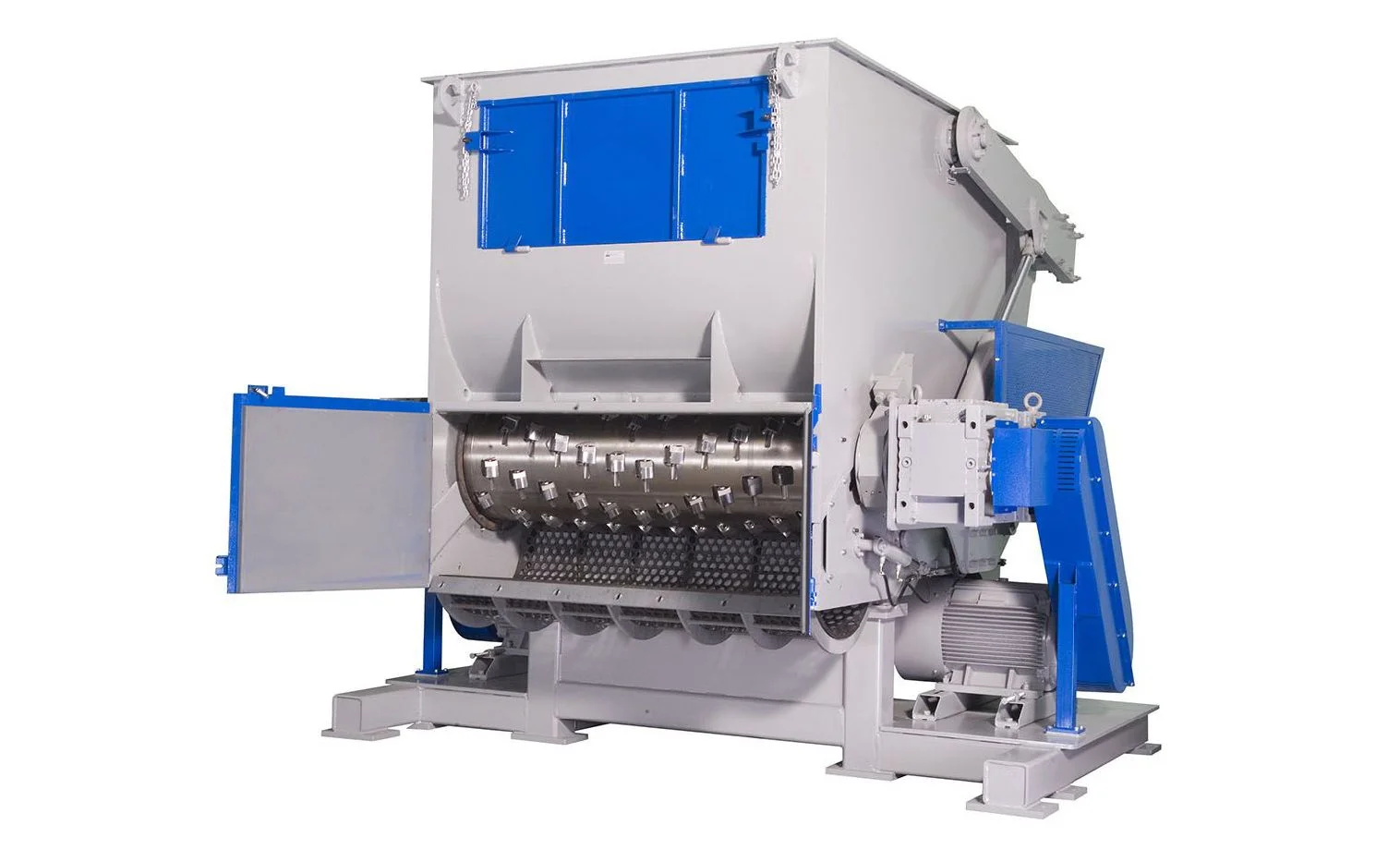
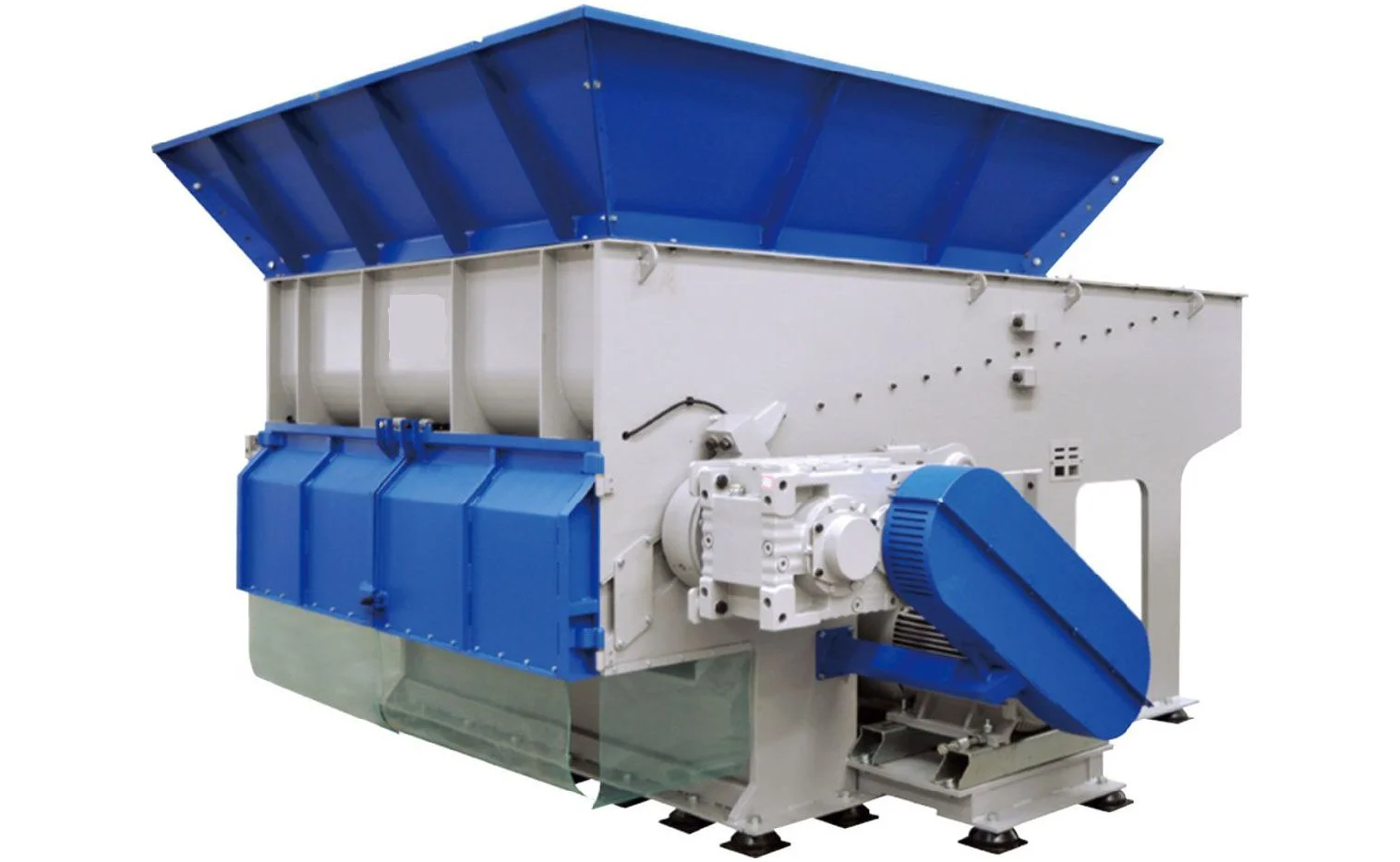
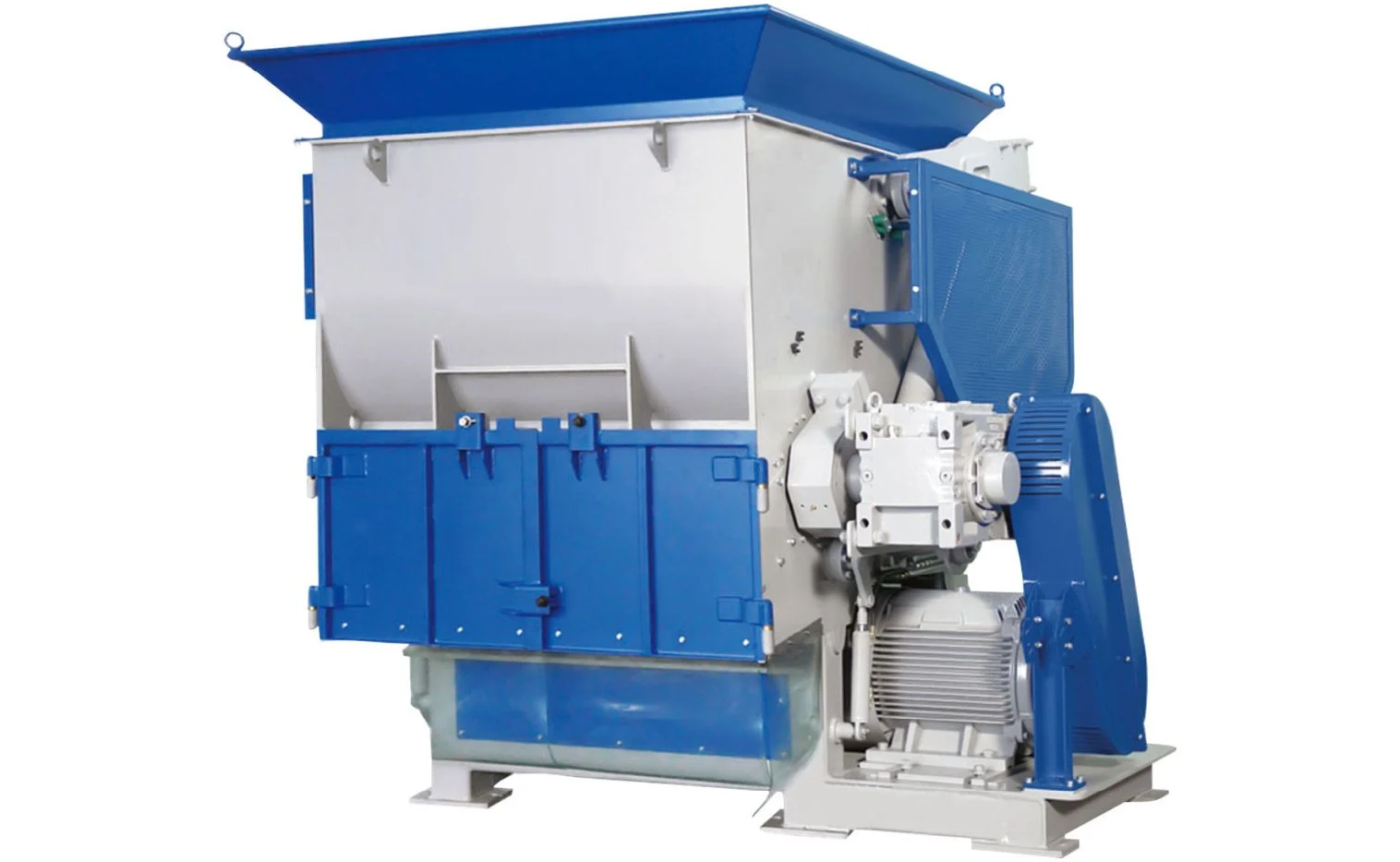
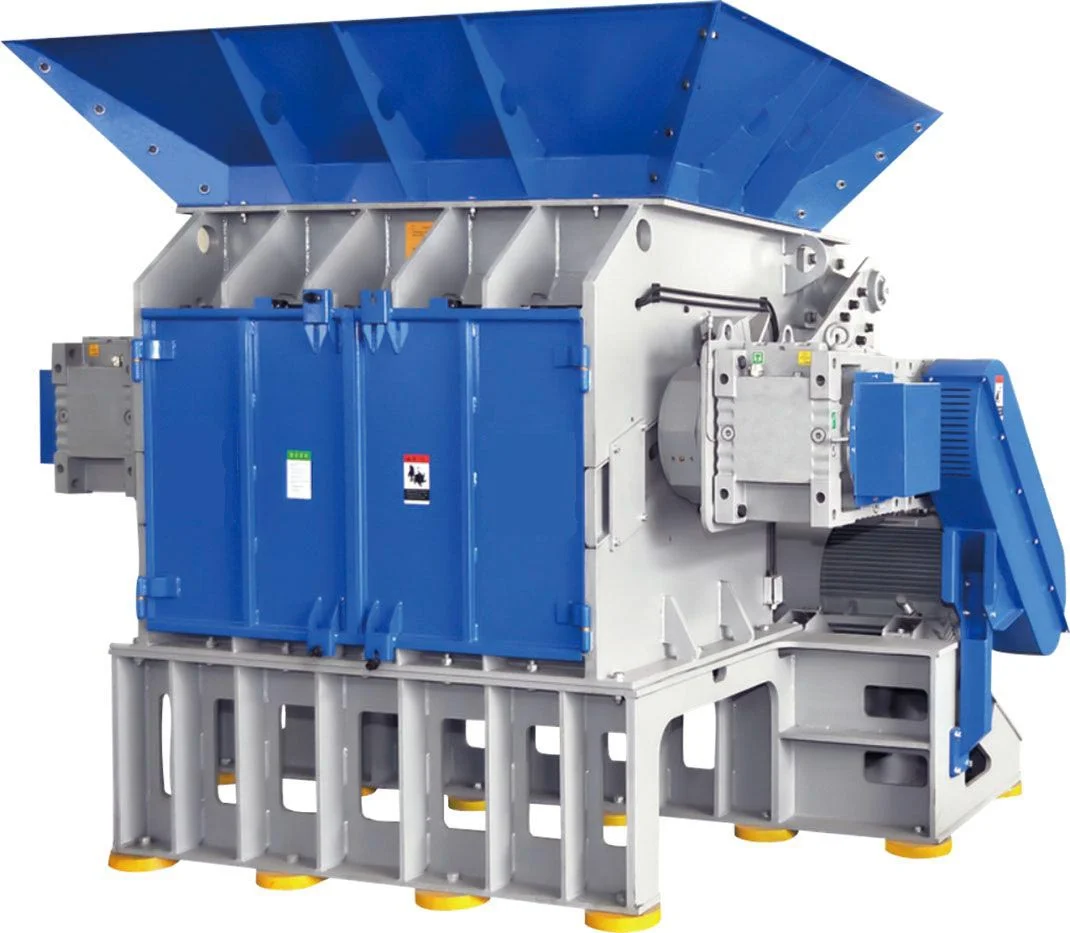
The T-Series runs a large 750 mm diameter hard-faced rotor fitted with special knives and wear plates made of highly wear-resistant steel, and it is available in rotor widths from 1500 mm to 3000 mm. That construction is the whole point. The flat knives use a special highly wear-resistant tungsten carbide that gives long working life when shredding abrasive and contaminated material, and the large diameter flat rotor has weld-on hard facing with machined pockets that securely hold the knives and their holders. This is a machine built to survive the material, not just cut it.
The drive and support match that intent. The T-Series is driven by twin gear drives with oversized outboard bearings, and the oversized gearbox is supported by a very sturdy torque arm that cushions the shocks created while grinding tough material. A tangential infeed handles the tires, which means the T-Series does not need a hydraulic feeding system at all.
How steel-rubber separation works
The real value of tire recycling comes from cleanly separating the steel from the rubber, and the T-Series is designed to make that easy downstream. Its unique design and variable cutting gap create an optimal separation of rubber and steel when the machine is paired with a 20 mm screen. Processed that way, the steel can then be removed easily with magnetic separation equipment in the following steps. The T-Series with its single row of stator knives is used to pre-shred complete car tires, or large pieces of pre-processed truck tires, down to a size of approximately 150 mm, which is the right size to hand off to the next stage of a tire recycling line.
What it processes and who needs one
Tire recyclers. The core audience. Whether you take in whole car tires or large chunks of pre-processed truck and tractor tires, the T-Series is the first-stage machine that brings them down to a manageable, separable size.
Rubber processing operations. Any operation reclaiming rubber value from tires needs the steel out, and the T-Series plus a 20 mm screen plus magnetic separation is a proven path to that.
Alternative fuel producers. The T-Series can also be used in the processing of RDF, refuse-derived fuel, and other alternative fuel applications, where shredded tire material becomes part of the fuel stream.
Typical materials and real-world jobs
The T-Series is engineered specifically for tires. Here is what it processes:
| Tire recyclers | Whole car tires and large pieces of pre-processed truck and tractor tires |
| Rubber processors | Tire rubber where steel and rubber must be cleanly separated |
| Alternative fuel producers | Shredded tire material for refuse-derived fuel (RDF) streams |
| Steel recovery operations | Material prepped so magnetic separation can pull the steel out |
The T-Series is a tire specialist with tungsten carbide knives and a hard-faced rotor. Plastics scrap, pipe, bottles, and general recycling belong to the plastics shredders and granulators in the rest of the line.
T-Series at a glance
| Feature | Detail |
|---|---|
| Rotor diameter | 750 mm hard-faced rotor |
| Working widths | 1500 mm to 3000 mm |
| Knives | Highly wear-resistant tungsten carbide flat knives, single row of stator knives |
| Drive | Twin gear drives, oversized outboard bearings, torque arm shock cushioning |
| Feed | Tangential infeed, no hydraulic feeding system needed |
| Output and separation | Pre-shreds to approx. 150 mm; 20 mm screen enables downstream magnetic steel separation |
The T-Series and the X-Series X T
One point worth clarifying for buyers. The dedicated T-Series is purpose-built for tires with its tangential infeed and tire-specific knife and screen setup. Separately, our heavy duty X-Series offers an X T configuration with special wear protection and knives for recycling complete truck and tractor tires as part of a broader heavy duty platform. If tires are your main business, the T-Series is the focused choice. If you run a mix of demanding materials and tires are one of several, the X T configuration may fit better. Our team can help you weigh the two against your actual material mix.
See it in action
Sometimes the easiest way to understand a machine is to watch it run. Our YouTube channel has material demonstrations across the full Virtus lineup, so you can see how different materials feed and process at each stage of size reduction before you ever pick up the phone.
Send us your tires and let us prove it
Tire material varies, car versus truck, whole versus pre-processed, and the cleanest way to confirm throughput and separation is a real test. Send us a sample of your actual tire material, tell us your volume and whether you are targeting steel separation or RDF, and our testing facility will run it and send back a confidential technical analysis with real results. We record the test too, so you can see how your material shreds before you commit.
After the sale, you are not on your own
Tire shredding is hard on wear parts, and when knives, wear plates, or screens need replacing, parts for the T-Series are in stock on Virtus Equipment Direct, our online webstore, so you are not waiting on a quote for a part you already know you need. Our service team handles installation and can commission the machine, train your operators, and set up a maintenance schedule from day one. And if your team works in Spanish, so do we. Nuestro equipo le atiende en espanol, desde la primera llamada hasta la instalacion y el soporte.
Frequently asked questions
Can the T-Series shred whole tires?
Yes. It is designed to process complete or pre-shredded tires. With its single row of stator knives it pre-shreds whole car tires, or large pieces of pre-processed truck tires, down to about 150 mm for the next stage of recycling.
How does it help separate steel from rubber?
The variable cutting gap, paired with a 20 mm screen, produces material where the steel is exposed and freed enough to be pulled out with magnetic separation equipment downstream. Clean steel-rubber separation is what makes the recovered material valuable.
Why tungsten carbide knives?
Tires are abrasive and contaminated, which destroys ordinary knives quickly. The T-Series uses highly wear-resistant tungsten carbide flat knives and a hard-faced rotor specifically so the machine holds up under that abuse and stays productive.
Can the T-Series shred whole tires?
Yes. It is designed to process complete or pre-shredded tires, pre-shredding whole car tires or large truck-tire pieces down to about 150 mm for the next stage of recycling.
How does it help separate steel from rubber?
The variable cutting gap, paired with a 20 mm screen, produces material where the steel is freed enough to be pulled out with magnetic separation downstream. Clean separation is what makes the material valuable.
Why tungsten carbide knives?
Tires are abrasive and contaminated, which destroys ordinary knives quickly. Tungsten carbide flat knives and a hard-faced rotor let the machine hold up and stay productive.
Terms worth knowing
A few terms come up constantly when you are speccing this kind of machine. Here they are in plain language:
Tangential infeed. A feed geometry that accepts whole tires without needing a hydraulic feeding system.
Tungsten carbide knives. Highly wear-resistant flat knives that survive the abrasive, contaminated nature of tire material.
Variable cutting gap. An adjustable gap that, paired with a 20 mm screen, produces the optimal rubber-and-steel separation for downstream magnets.
Hard facing. A weld-on wear-resistant layer on the rotor that extends life on abrasive material like tires.
Magnetic separation. The downstream step that pulls freed steel out of shredded tire material once the T-Series has exposed it.
Related machines
If this machine is not quite the right fit, these are the neighbors to look at: