The tire recycling market was valued at approximately $9.4 billion in 2024 and is projected to grow to nearly $17.9 billion by 2033 at a compound annual growth rate of 7.2 percent. That growth is being driven by expanding vehicle fleets, tightening landfill regulations, and a rising market for recycled rubber products in construction, automotive, and sports applications. North America currently holds about 40 percent of the global market.
What powers all of that activity is mechanical processing, specifically shredding. Mechanical shredding commanded approximately 52 percent of the tire recycling market by process in 2025, according to industry analysis. It is the most commercially mature method for breaking down end-of-life tires, and it remains the workhorse of the industry for a simple reason: it works at scale, it produces consistent output, and the capital costs are manageable compared to alternatives like pyrolysis.
End-of-life tires generated globally each year, per the World Business Council for Sustainable Development
Share of tire recycling market using mechanical shredding as the primary process in 2025
CAGR projected for the global tire recycling market from 2025 through 2033
What a Tire Is Made Of, and Why That Matters for Processing
Understanding tire composition helps explain why the shredding process requires a specific sequence of steps. A typical passenger tire contains roughly 45 to 50 percent rubber compounds (natural and synthetic), 15 to 25 percent carbon black and chemical additives, 10 to 15 percent steel wire, and 5 to 10 percent textile fiber. Each of those materials has a different downstream market and requires different separation steps to recover cleanly.
You cannot simply run a tire through a granulator in one pass and get a usable product. The steel wire would destroy the machine. The size and density of the tire overwhelms standard granulators. This is why tire recycling is a multi-stage process, and why having the right equipment sequence matters far more than the speed of any single machine.
The Processing Sequence: Step by Step
Primary Shredding: Whole Tire to Tire Chips
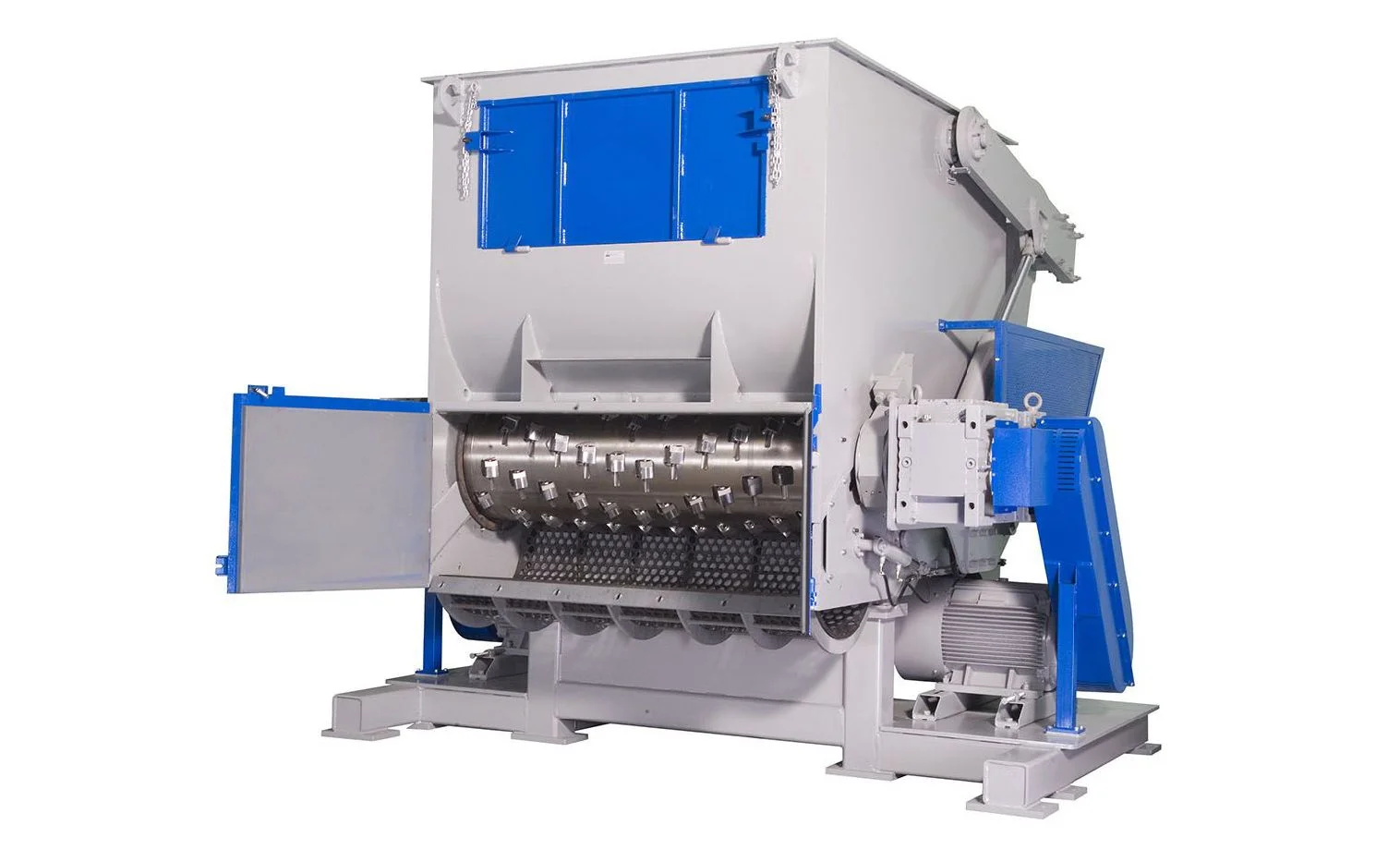
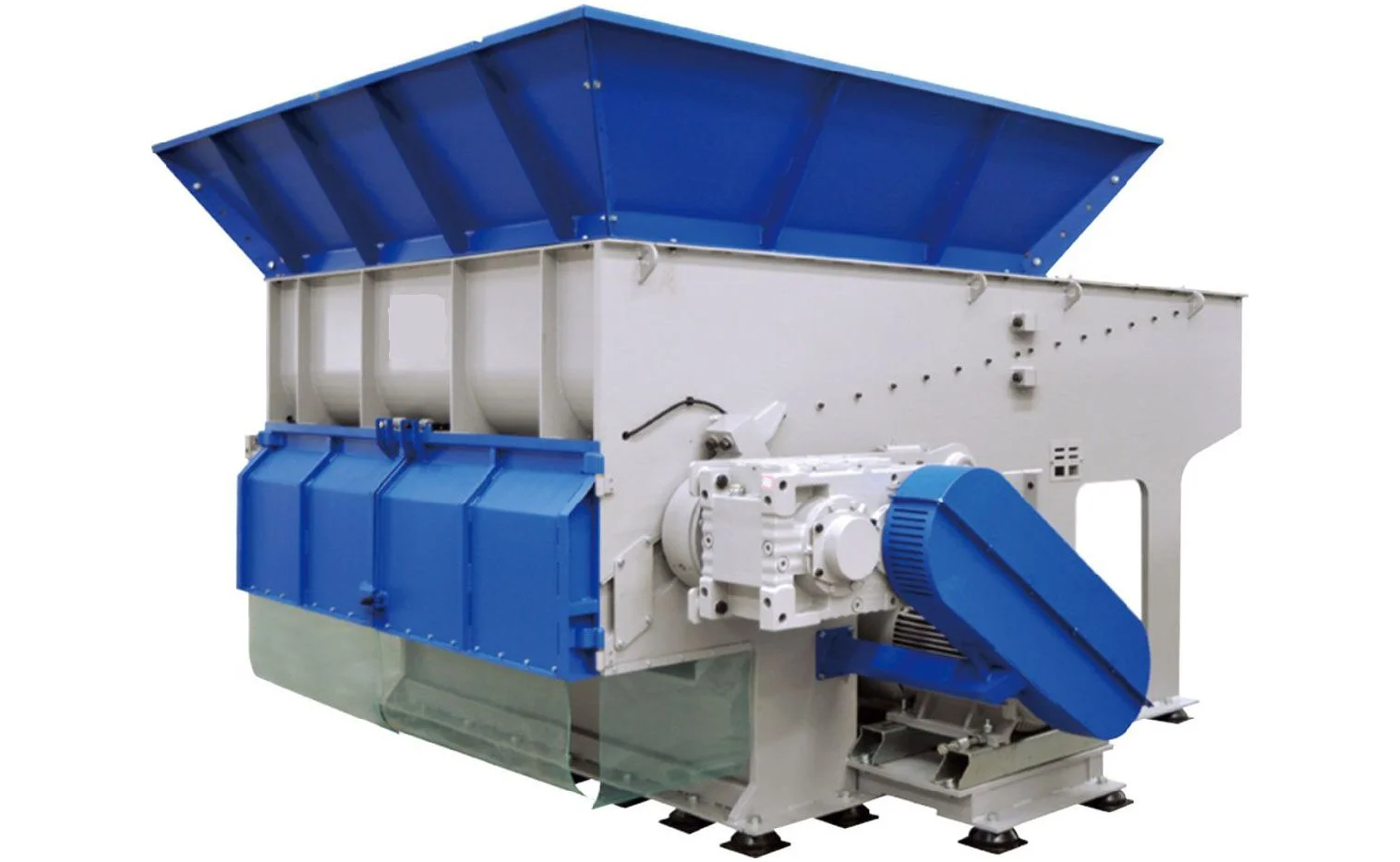
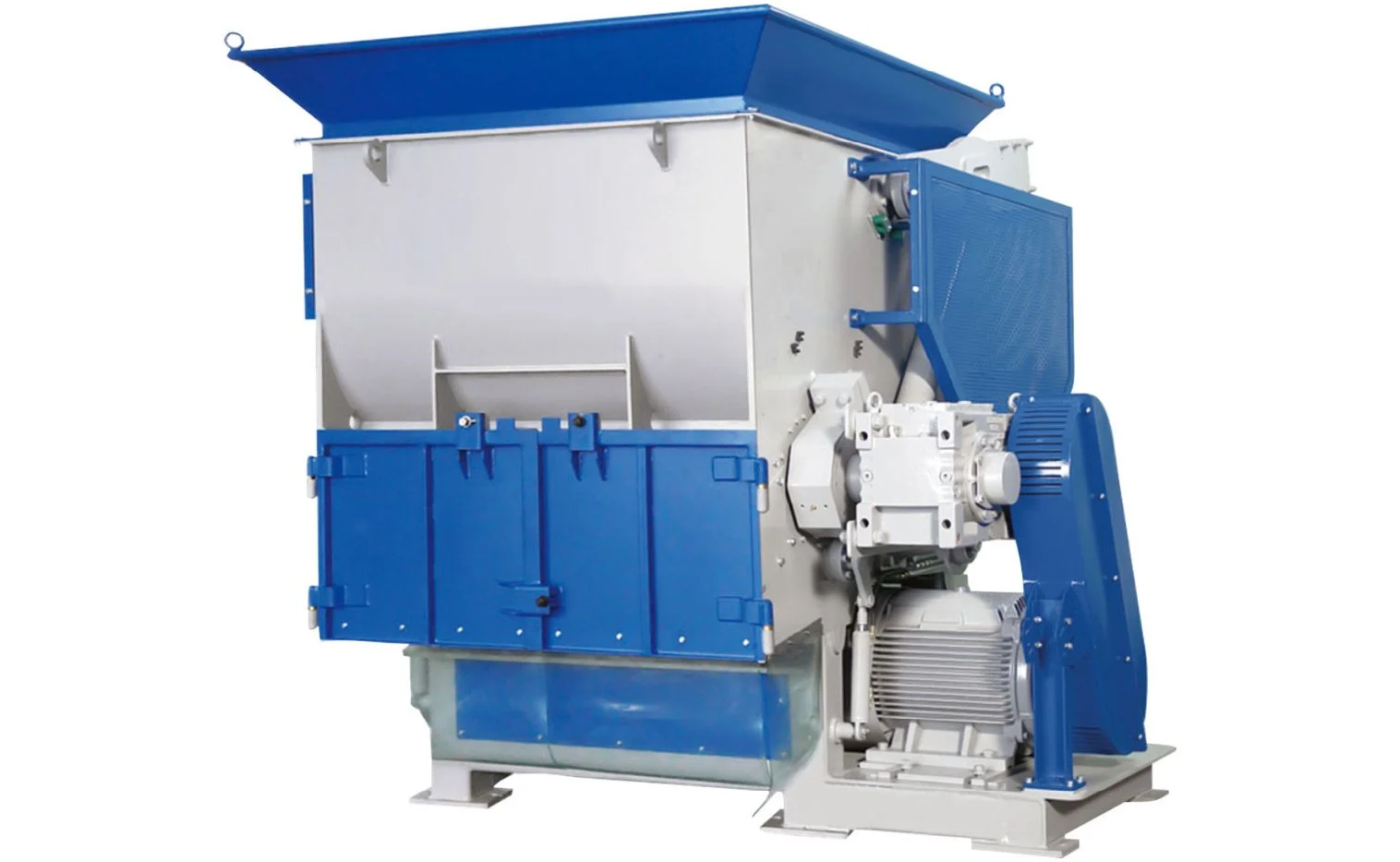
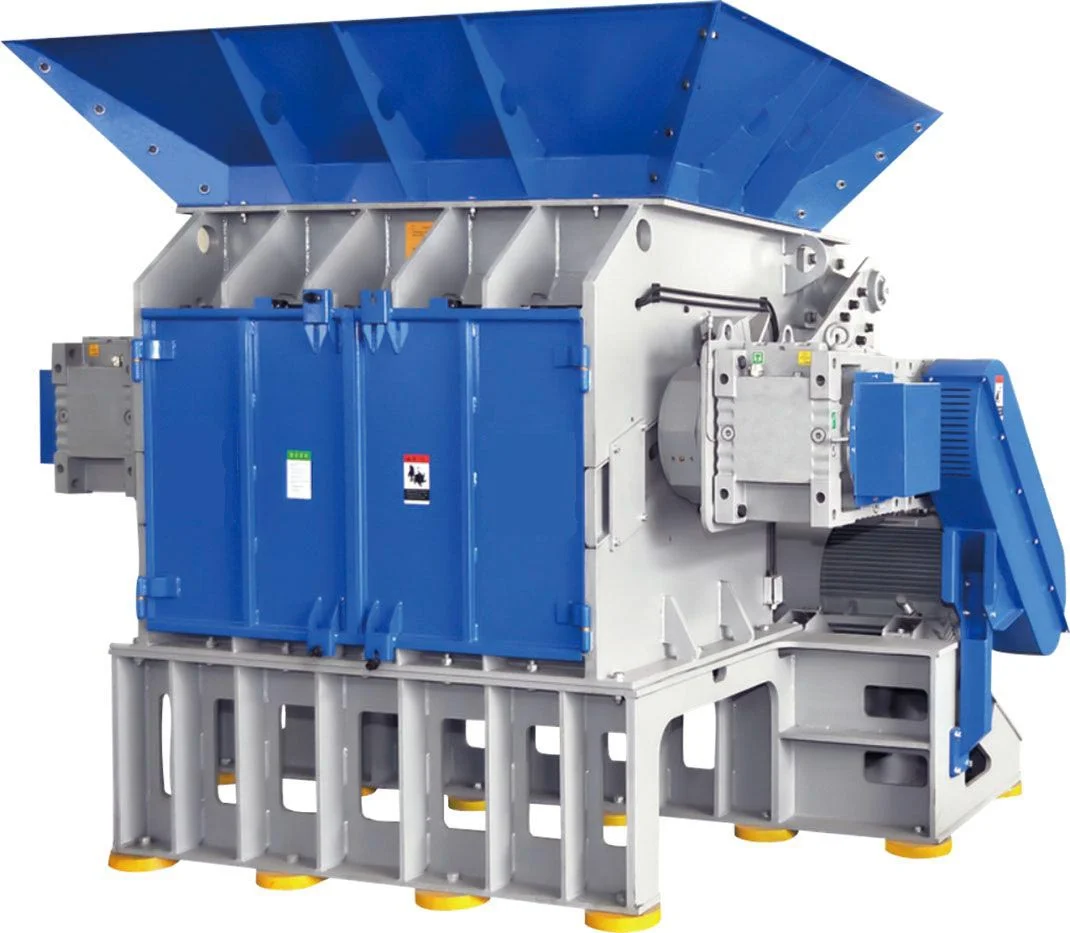
The whole tire enters a primary shredder, typically a two-shaft or heavy duty single-shaft unit capable of handling the full tire without pre-cutting. Output is tire chips in the 2 to 4 inch range. This step is purely about size reduction. Virtus Equipment’s Industrial Tire Recycling Shredders are designed for this demanding first stage.
Secondary Shredding or Granulation: Chips to Granules
Tire chips pass into a secondary machine, often a heavy duty granulator or a secondary shredder, which reduces them further to roughly 10 to 20mm granules. Screen selection determines output size at this stage.
Steel Wire Separation: Magnetic Separator
Steel wire released during shredding is pulled out by a magnetic separator. Clean steel separation at this stage protects downstream equipment and produces recoverable steel that has its own resale market. Recovered steel wire has value in manufacturing applications.
Fiber Separation: Air Classifier or Vibrating Screen
Textile fiber embedded in the tire is separated using air classification or vibrating screens. Fiber content needs to be reduced to acceptable levels for the crumb rubber to be usable in most downstream applications.
Crumb Rubber: Fine Granulation or Ambient Grinding
The cleaned granules move to a final size reduction step, which produces crumb rubber at a specified mesh size. Crumb rubber is the primary commercial product from tire recycling, and mesh size determines its application and market value.
What the Output Is Worth: Crumb Rubber Markets
| Output Product | Primary Applications | Market Notes |
|---|---|---|
| Crumb rubber (coarse, 10-20mm) | Playground surfaces, athletic tracks, equestrian arenas | High-volume, consistent demand from recreational construction |
| Crumb rubber (fine, 30-80 mesh) | Rubberized asphalt, rubber molded products, sealants | Road construction sector is fastest-growing application, CAGR ~6.6% through 2034 |
| Tire-derived fuel (TDF) | Cement kilns, industrial boilers, energy recovery | Holds roughly 28.6% of tire recycling product market by revenue |
| Recovered steel wire | Steel manufacturing, construction materials | Secondary revenue stream that improves overall facility economics |
The Equipment Investment Reality
A complete mechanical tire recycling line capable of processing 20 to 50 tons per day carries an estimated capital cost in the range of $2 million to $8 million, according to industry analysis. That is a meaningful investment, and it underscores why equipment selection, maintenance, and knife and screen management matter so much on a per-ton operating cost basis. A line that runs with worn shredder tools or inadequately sized screens is losing money on every ton processed.