The global plastic pipe market was valued at approximately $72.96 billion in 2025 and is growing at a compound annual growth rate of around 6.1 percent, projected to reach $117.92 billion by 2033. Driving that growth is infrastructure investment worldwide, with water supply, sewage, irrigation, and construction applications all demanding more pipe. PVC holds the largest material share at over 53 percent of the market. HDPE is growing fastest, with a projected CAGR of 6.8 percent through 2033.
That market growth means more pipe production. More pipe production means more scrap. And for pipe extrusion operations, the question of how to handle that scrap efficiently is not a secondary concern. It directly affects raw material costs, labor requirements, and floor safety every single shift.
Global plastic pipe market size in 2025, growing at ~6.1% annually toward $117.9B by 2033
P-Series Machine Dimensions
The engineering drawing below shows the full side profile and end view of the P-Series Pipe Profile Industrial Shredder with labeled dimension references A through H. These configurations are available in rotor widths from 800 mm to 1,500 mm to match your pipe diameter and throughput requirements. Contact Virtus Equipment for the exact dimension table for your specific rotor configuration.
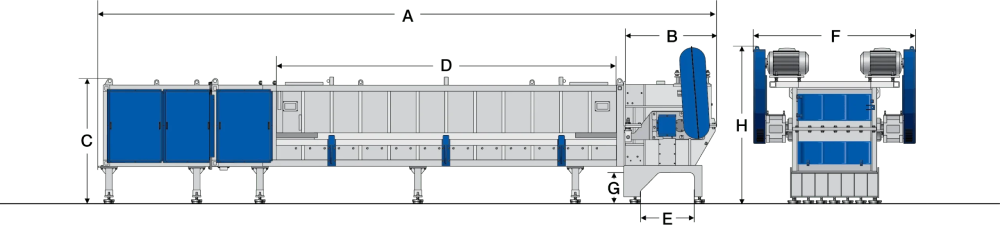
DIMENSION REFERENCE GUIDE
Maximum pipe length the Virtus P-Series pipe shredder accepts in its horizontal feed trough without pre-cutting
Installations of the P-Series pipe profile shredder worldwide, used by leading pipe manufacturers globally
Where Scrap Is Generated on a Pipe Extrusion Line
Pipe extrusion scrap is not a single type of material. It comes from several distinct sources, each with its own handling challenges.
Startup scrap is generated at the beginning of every production run as the extruder reaches target temperature, pressure, and dimensional stability. This material is often full-length pipe that is not usable because it was produced out of specification during the startup phase. On larger diameter lines, a single startup event can produce multiple lengths of pipe that need to be processed before the run proceeds.
End-of-run cuts are the tail lengths left when a production order is complete and the extruder winds down. Again, these are full-length or near-full-length pipes at whatever diameter the line was running. Dimensional rejects are pipes that fail quality inspection for wall thickness, ovality, or dimensional tolerance. Trim and cutoff ends accumulate from the cutting station as pipes are cut to ordered lengths throughout the run.
The Manual Pre-Cutting Problem
Without a Dedicated Pipe Shredder
Full-length pipes must be manually cut to a size that will fit available granulators or general shredders. This requires a saw, a worker, floor space, and time. For large diameter pipe, this is physically demanding work. Safety incidents from manual cutting are a real operational concern. The cut pieces still need to be moved to the granulator. And the whole process is a bottleneck when startup scrap needs to be cleared quickly so the line can resume production.
With the Virtus P-Series Pipe Shredder
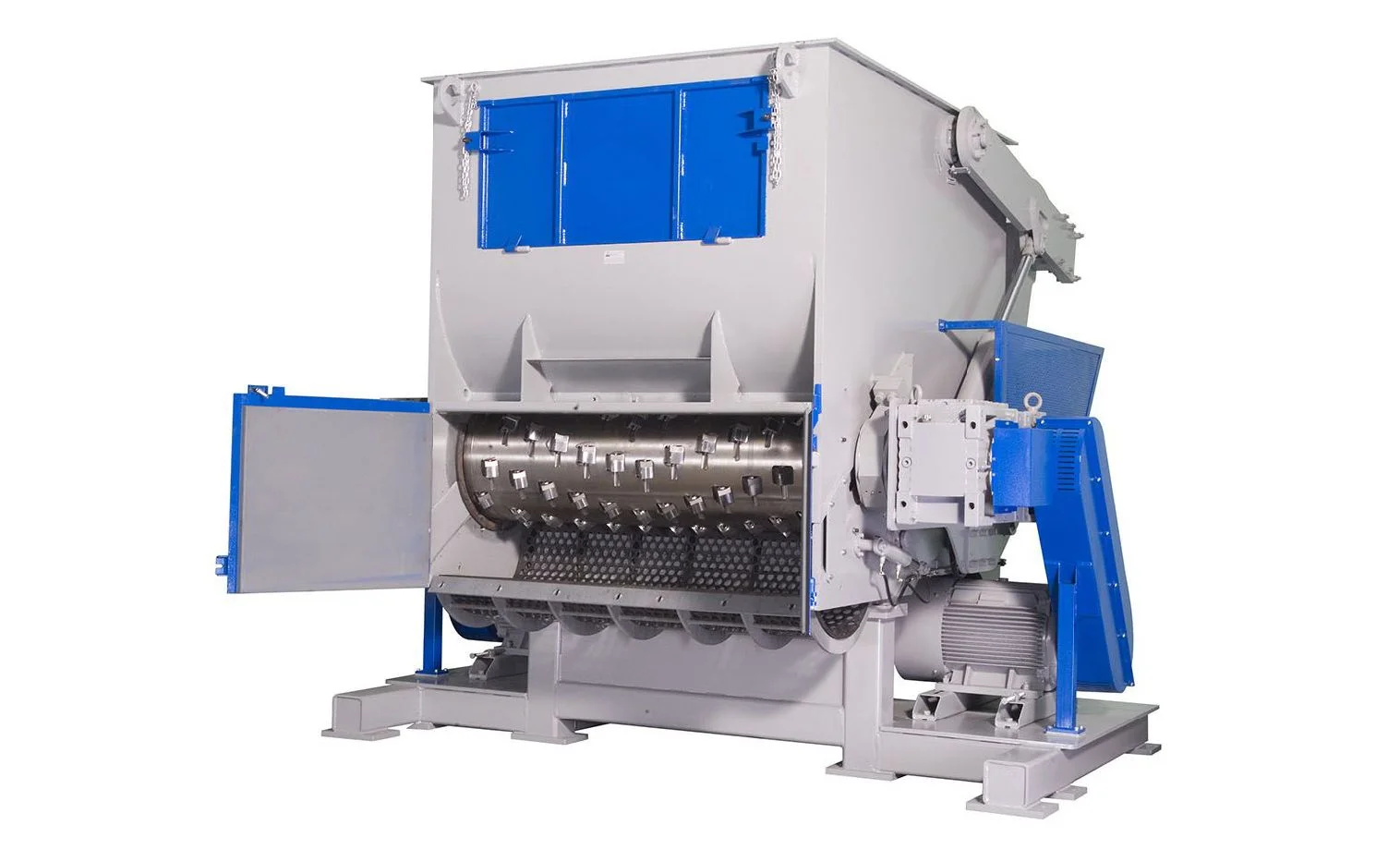
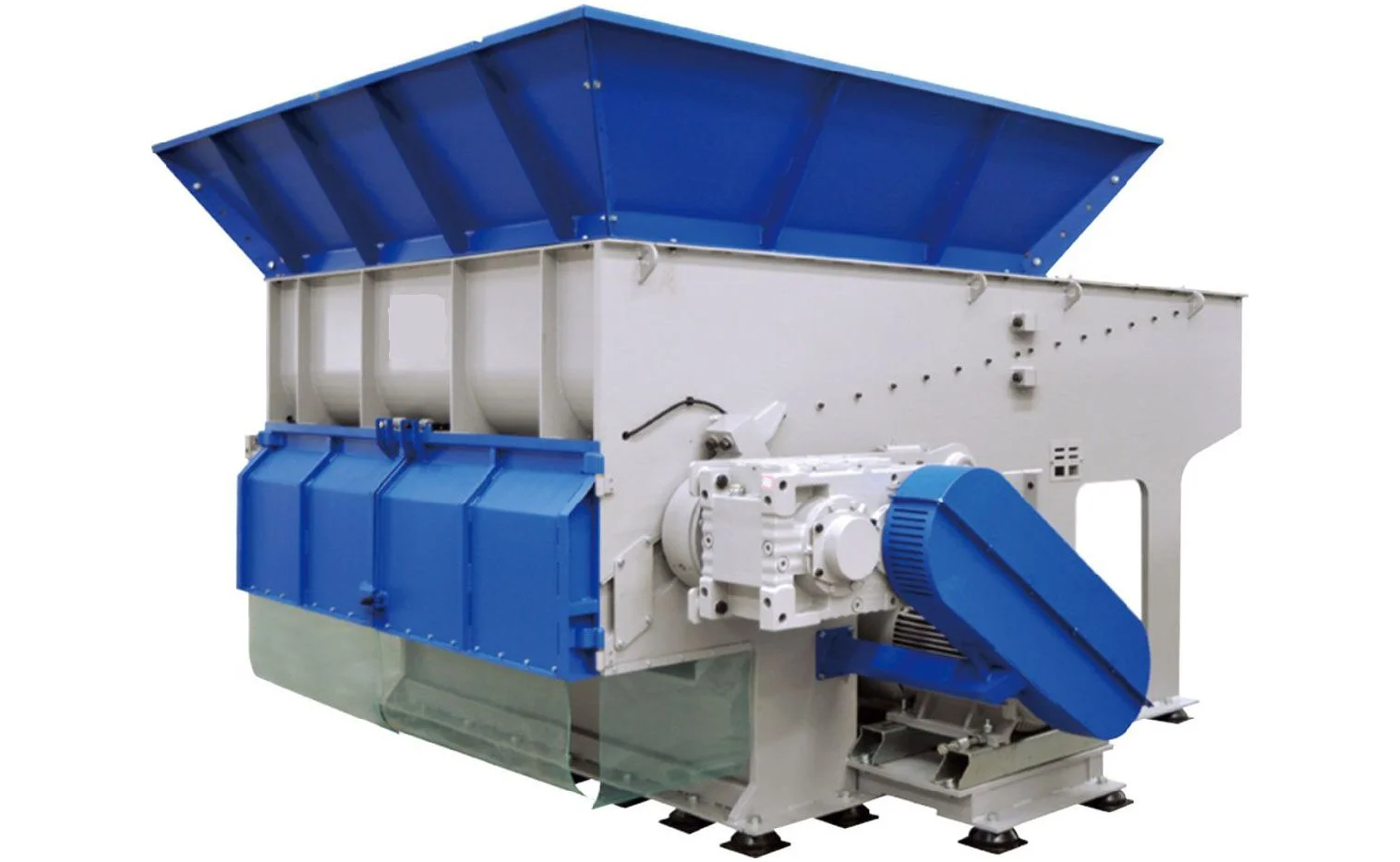
Full-length pipe, up to 6 meters long and up to 1,200 mm in diameter, feeds directly into the horizontal trough. The hydraulic ram controls the feed rate into the rotor. No pre-cutting required. No manual saw work. The shredder handles the full pipe as-generated and reduces it to a size suitable for downstream granulation. One machine replaces the entire manual handling step.
The Full Inline Processing Loop
Pipe Extrusion Line
P-Series Pipe Shredder
Downstream Granulator
Regrind Back to Extruder
The ideal inline arrangement positions the Virtus P-Series Pipe Profile Industrial Shredder near the end of the extrusion line so startup scrap can be fed directly without intermediate handling. A downstream pipe and profile granulator then finishes the material to the regrind particle size required for re-introduction into the extruder. The closed loop operates within the same shift, which means material value is recaptured before it leaves the production area.
How the P-Series Handles What Other Shredders Cannot
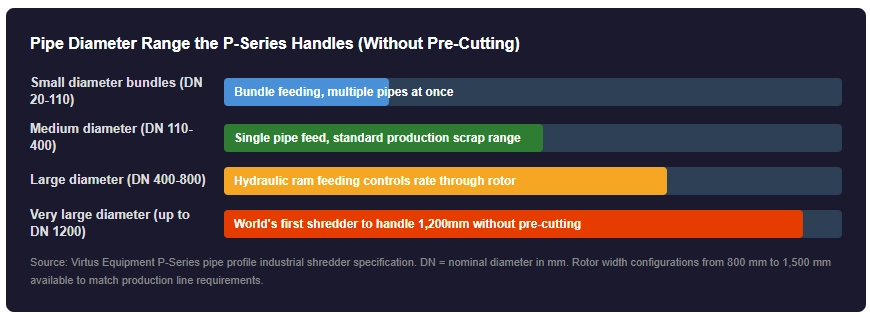
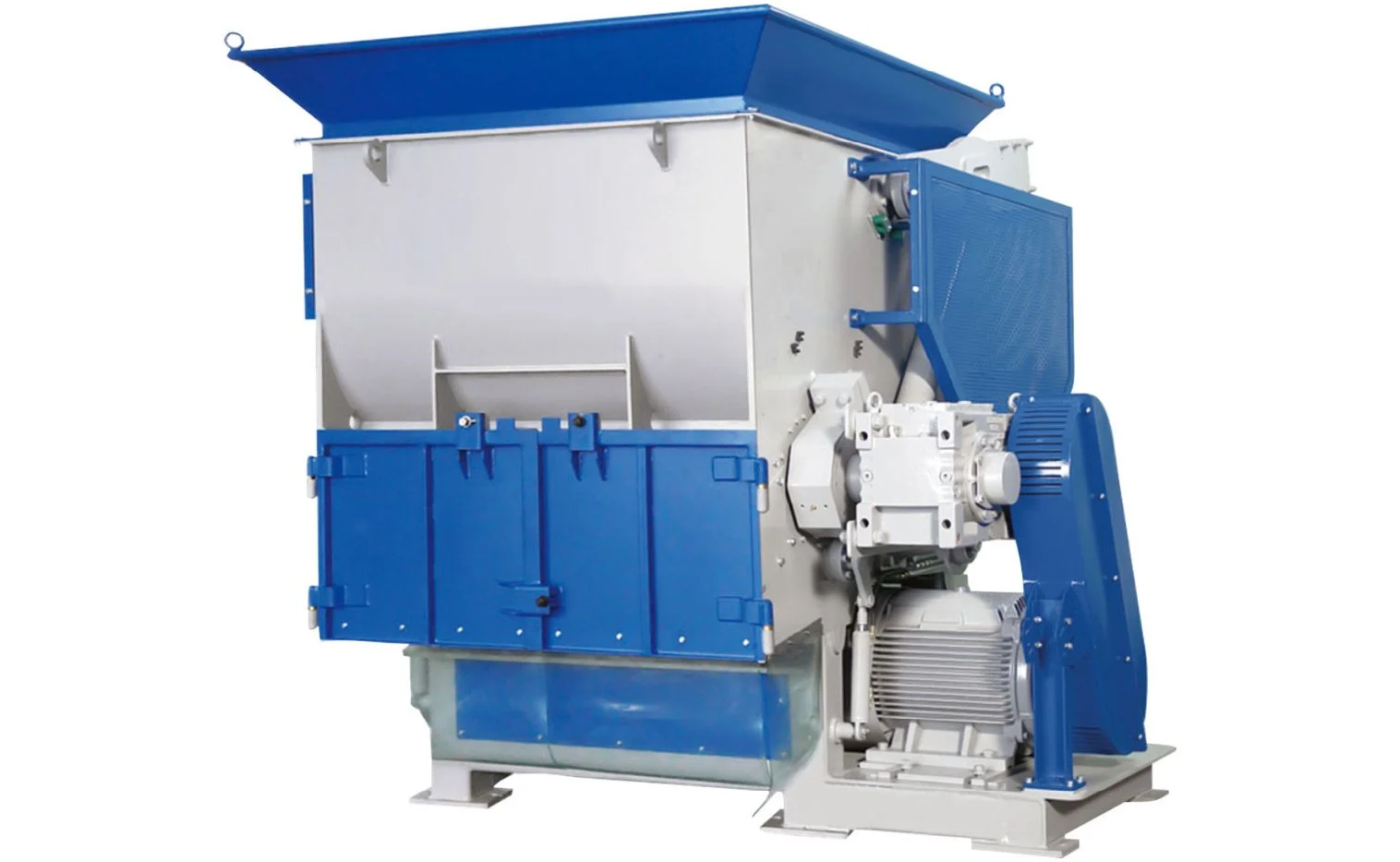
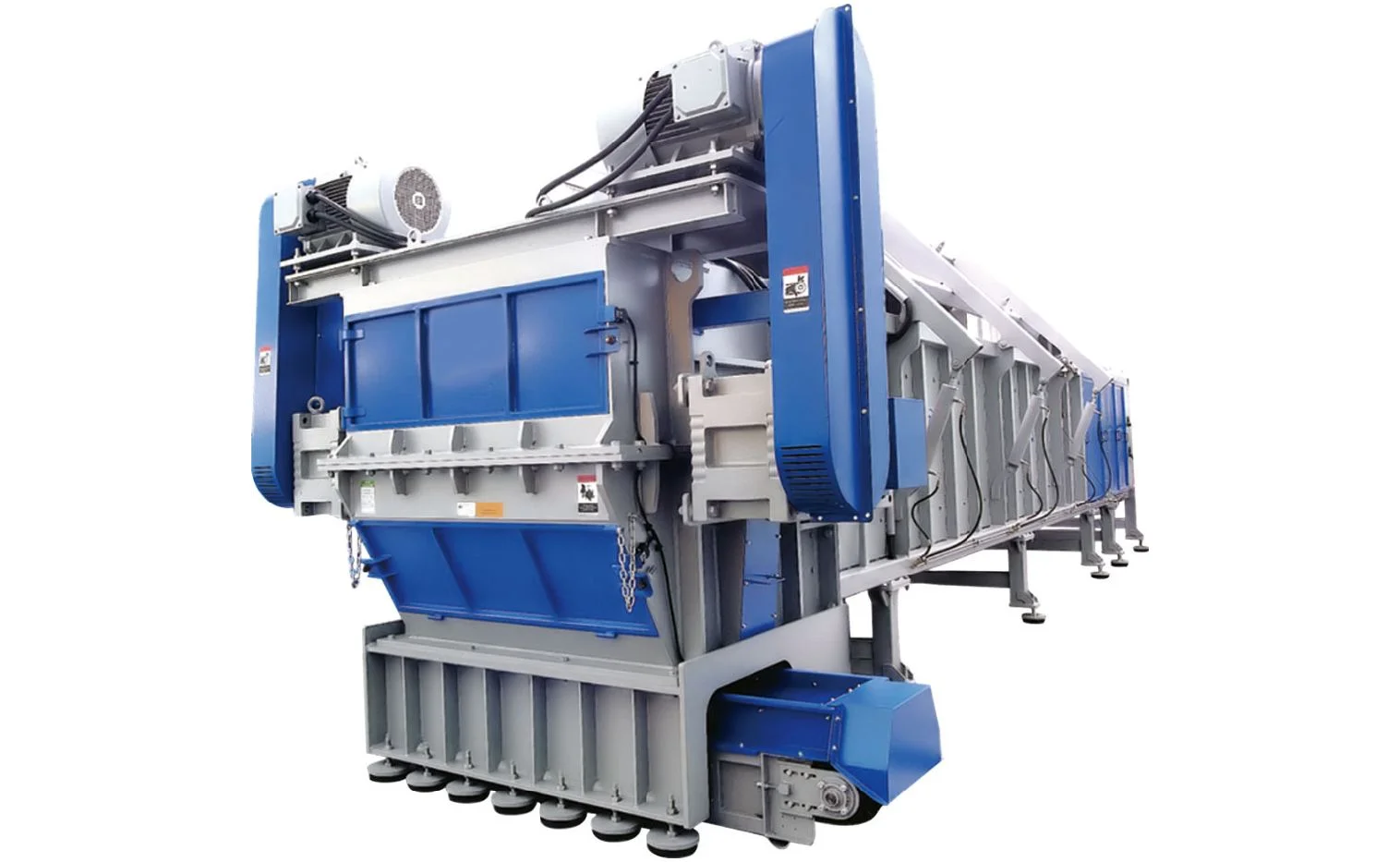
The P-Series is designed specifically for this application, which is why it has become the standard platform used by leading pipe manufacturers worldwide. Its horizontal feed trough geometry solves the problem that general-purpose shredders cannot: accepting full-length, large-diameter pipe without requiring the operator to pre-cut it to a manageable size first.
The hydraulic ram is the other critical design element. The ram controls how material enters the cutting zone at a consistent, controlled rate. This prevents overloads when the rotor engages the thicker wall sections of larger pipes, and it means the machine runs reliably rather than requiring operator intervention to manage the feed rate manually.
The ROI Calculation That Makes This Easy to Justify
For a pipe extrusion facility running two or three shifts, the cost of manual pipe pre-cutting accumulates quickly. At minimum, a dedicated worker spends meaningful time per shift on saw operations, material handling, and cleanup. Add the material cost of scrap that is stored rather than recaptured, the floor space consumed by scrap accumulation waiting to be processed, and the safety incident risk that comes with repeated manual cutting of large diameter pipe, and the economic case for a dedicated inline shredder becomes straightforward.
The regrind value adds another dimension. HDPE and PVC regrind from a single-resin, clean production source like pipe extrusion scrap is among the most valuable post-industrial recyclate available. Capturing it cleanly and consistently generates material value that directly offsets the equipment investment. The Plastics Pipe Industry Association reports that over 600 million pounds of post-consumer HDPE are recycled into new pipe annually in the U.S. alone. For pipe manufacturers, post-industrial scrap from the same facility is even cleaner and more valuable than post-consumer material.
Watch the P-Series Pipe Shredder in Action
These videos show the actual P-Series Pipe Profile Industrial Shredder running. See the horizontal feed trough, hydraulic ram operation, and how pipe material processes through the cutting zone.
- P-Series Pipe & Profile Shredder Overview
The official Virtus Equipment P-Series machine overview. See the horizontal trough, hydraulic ram, and rotor design that makes large diameter pipe processing possible without pre-cutting. - P-Series Pipe Shredder in Operation
See the P-Series processing pipe material under production conditions. Watch how the hydraulic ram controls material feed rate through the cutting zone. - Full Virtus Equipment YouTube Channel
Browse all Virtus Equipment material tests and machine demonstrations including granulators, shredders, and combination systems. - Have Similar Material? Send It to Us
Ship us your pipe or profile material and we will run it on the P-Series at our Fort Myers testing facility and send you the video results.