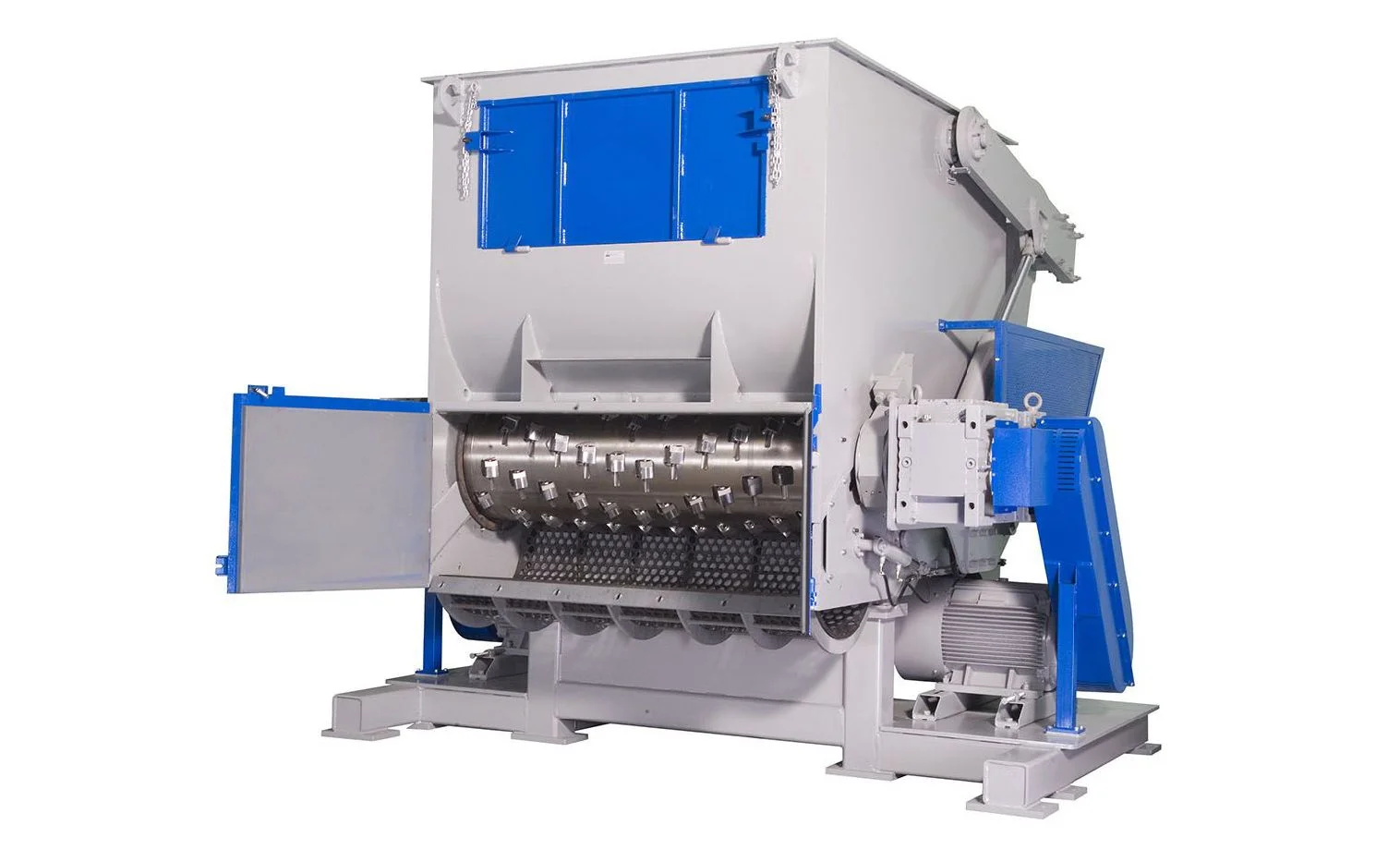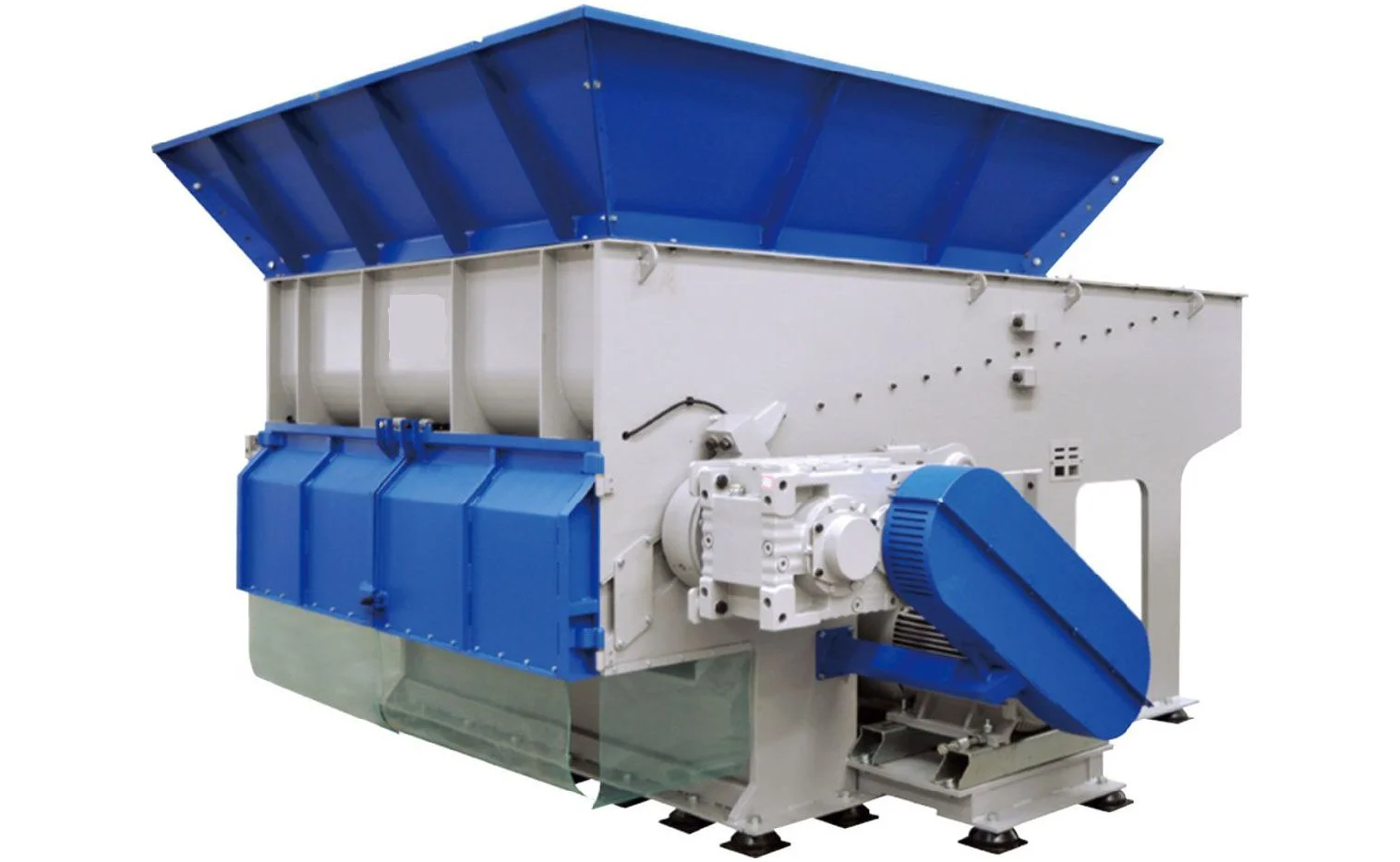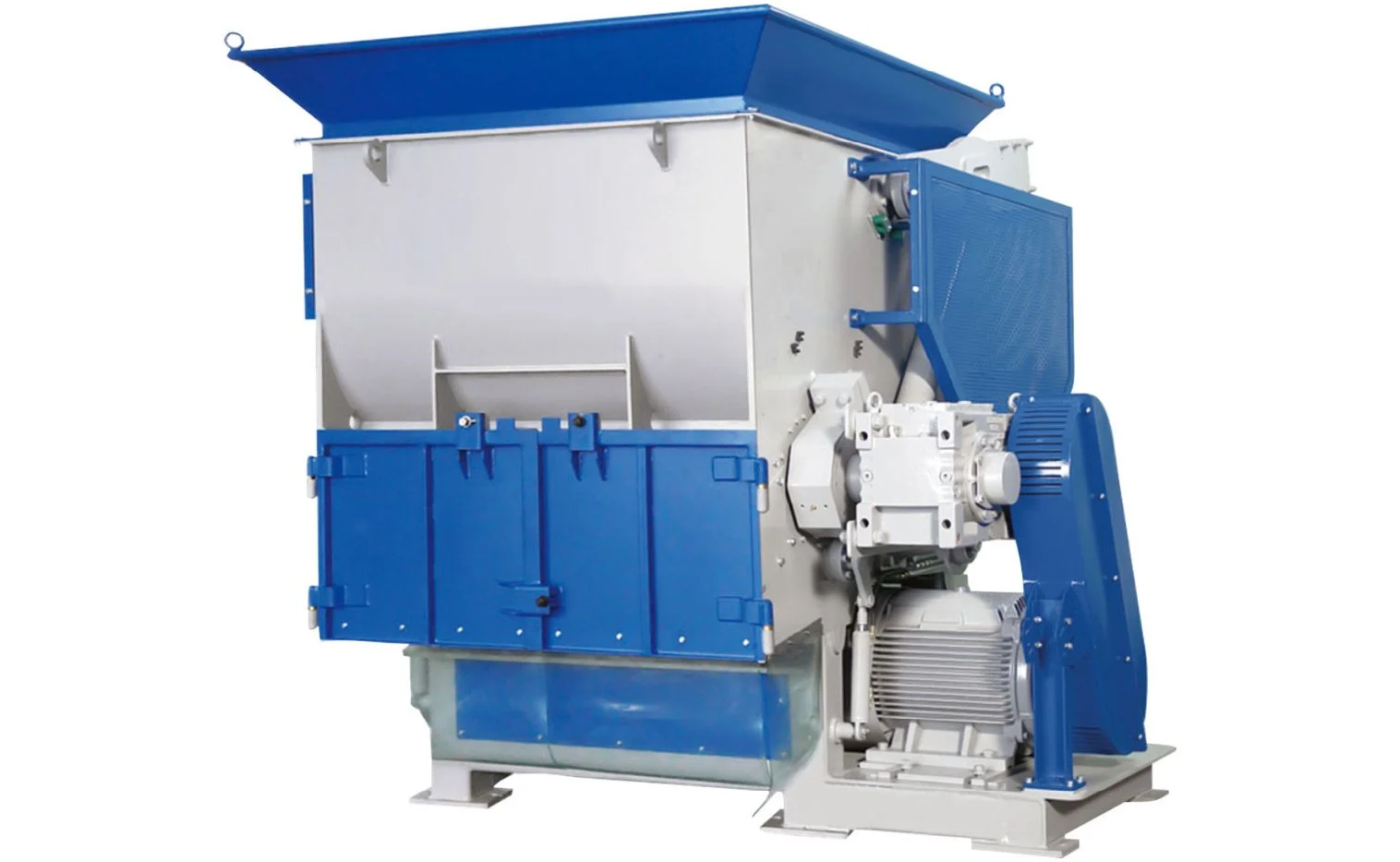
Extrusion scrap does not look like injection molding scrap, and it does not grind like it either. A run of PVC pipe, a length of window profile, a channel or a section of siding, these come off the line long, rigid, and continuous. Try to feed a ten-foot length of pipe into a standard granulator and you are stuck cutting it down by hand first, which is slow, adds labor, and is exactly the kind of manual step that creates safety risk and bottlenecks.
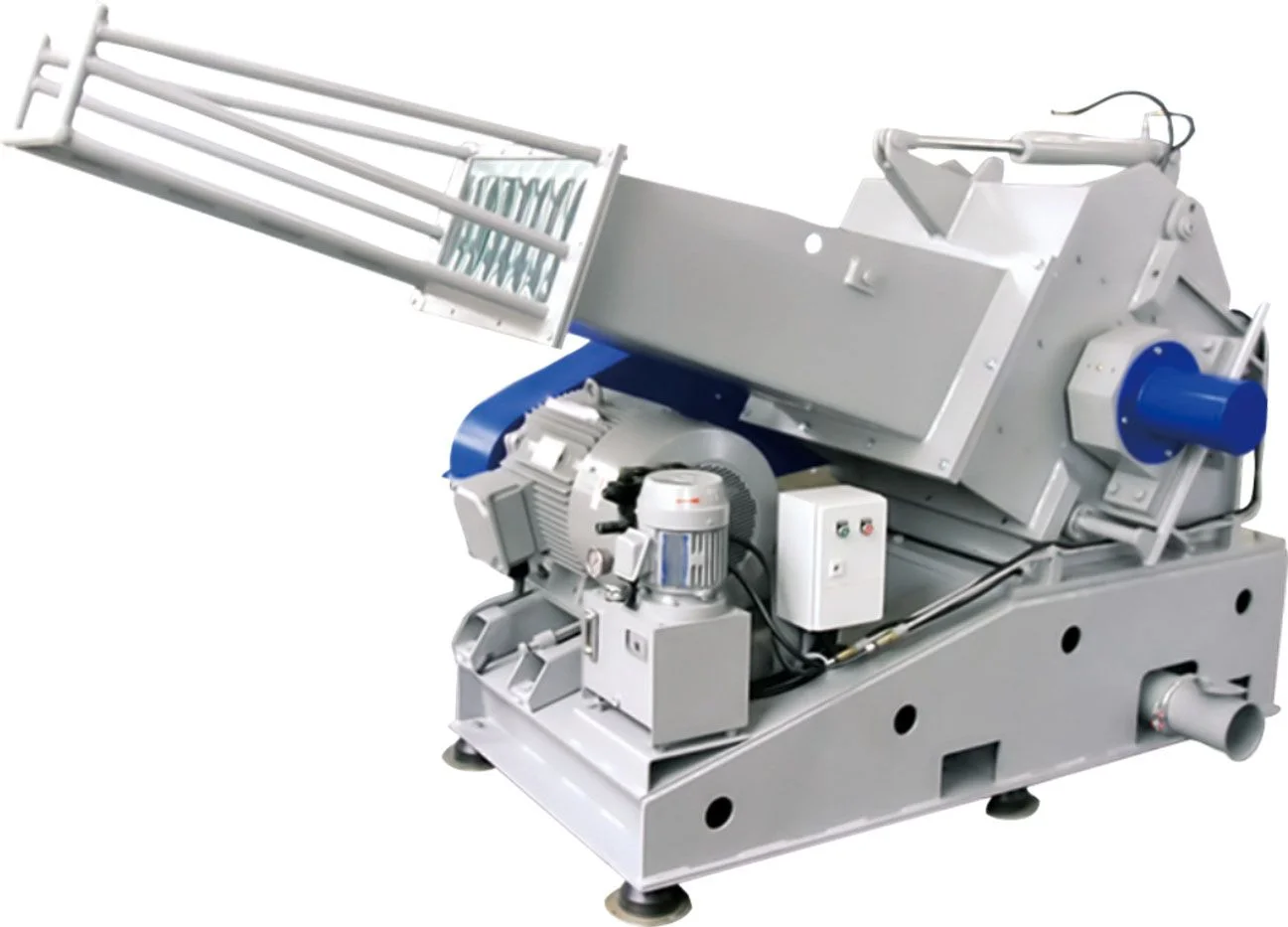
The pipe and profile granulator is built to skip that step entirely. It takes long, rigid extruded material directly and grinds it into clean regrind, no pre-cutting required.
This is the sixth post in our series covering every granulator we build and who each one is for. It follows the standard-duty and heavy duty lines. If your scrap comes off an extruder as long rigid lengths rather than discrete parts, this is the machine for you.
The problem with grinding pipe and profile
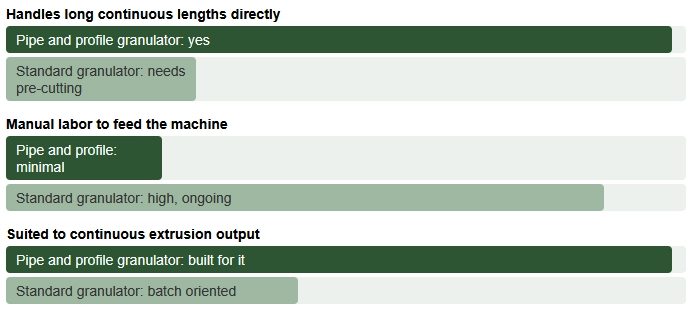
Long extruded scrap is awkward for a normal granulator for a few reasons at once. It is too long to drop into a standard hopper, so it has to be cut down first. It is rigid, so it does not fold or compress to fit. And because pipe and profile production runs continuously, the scrap volume keeps coming, which means any manual pre-cutting step becomes a permanent labor cost, not a one-time chore.
A machine designed for this material solves all three problems with one idea: bring the length into the cutting chamber directly and let the machine manage the feed rate.
Typical materials and real-world jobs
This machine is built for continuous extrusion scrap. Here is what feeds it:
| Pipe extruders | PVC, HDPE, and PP pipe, startup and shutdown lengths, off-spec runs, and trim |
| Window and profile makers | Rigid vinyl window and door profiles, offcuts, and frame scrap |
| Siding and channel producers | Continuous rigid extruded product in long lengths |
| Shops tired of pre-cutting | Any long, rigid extrusion scrap currently sawn down by hand |
The pipe and profile granulator handles long rigid extrusion scrap directly. Very large diameter pipe is better broken down first by a P-Series pipe shredder, and PVC that needs powder finishes on a pulverizer.
How a pipe and profile granulator works
The defining feature is the infeed. These granulators use long, wide feed openings and a specially angled cutting chamber so continuous pipes, channels, and window profiles can be fed in directly, without pre-cutting. A powered infeed grips the length and draws it into the machine at a controlled rate, so the rotor is not overwhelmed and the material does not jam or kick back.
Once inside, the material meets the same proven cutting principle used across the Virtus line: a V-cut rotor working against stationary knives shears the material into uniform granules, and a screen beneath the cutting chamber sets the final granule size. The result is clean, consistent regrind ready for re-extrusion or compounding, produced continuously instead of in awkward hand-fed batches.
What it grinds and who needs one
Pipe extruders. PVC, HDPE, and PP pipe scrap, startup and shutdown lengths, off-spec runs, and trim all feed directly. This is the headline application, and it is where the no-pre-cutting advantage saves the most labor.
Profile and window manufacturers. Rigid vinyl window and door profiles, along with the offcuts and frame scrap that come with them, are long and awkward in exactly the way this machine is built for.
Siding, channel, and rigid profile producers. Any continuous rigid extruded product creates the same long-scrap problem, and the same angled-infeed design is the answer.
Anyone tired of pre-cutting by hand. If your team is currently sawing or chopping extrusion scrap down to feed a standard granulator, this machine eliminates that step, which removes both the labor and the safety exposure that comes with manually handling long rigid material near a cutting machine.
Why direct infeed matters
The chart below is about labor and reliability, the two things that actually determine the cost of grinding pipe and profile over a year of production.
Sizing and configuration
Because pipe and profile work varies so much, from thin-wall conduit to heavy-wall pressure pipe, from small profile offcuts to full-length rejects, the right configuration depends on your specific material. The variables that matter most are the maximum cross-section and wall thickness you need to grind, the length of the material coming off your line, how clean or contaminated it is, and your target output size. Those inputs drive the infeed setup, rotor choice, and screen size. This is a machine you configure to the job rather than pull off a shelf, so the most reliable path to the right setup is a direct conversation with our team, ideally backed by a material trial.
See it in action
Sometimes the easiest way to understand a machine is to watch it run. Our YouTube channel has material demonstrations across the full Virtus lineup, so you can see how different materials feed and process at each stage of size reduction before you ever pick up the phone.
Send us your pipe or profile scrap and we will run it
Feeding behavior is genuinely hard to predict on paper with long rigid material, which is why a real test is the honest way to spec this machine. Send us a sample of your actual pipe, profile, or offcuts, tell us your line output and what the regrind needs to become, and our testing facility will run it and send back a confidential technical analysis with real results. We record the test too, so you can watch your own material feed and grind before you commit. For a machine you configure around your material, seeing it work first is simply the smart way to buy.
After the sale, you are not on your own
Screens and knives wear, and when they do, replacement knives, screens, and wear parts are in stock on Virtus Equipment Direct, our online webstore, so you are not waiting on a quote for a part you already know you need. Our service team handles installation and can commission the machine, train your operators, and set up a maintenance schedule from day one. And if your team works in Spanish, so do we. Nuestro equipo le atiende en espanol, desde la primera llamada hasta la instalacion y el soporte.
Frequently asked questions
Do I really not need to pre-cut long pipe?
That is the core advantage of the design. The long, wide feed opening and angled cutting chamber accept continuous lengths directly, and a powered infeed draws the material in at a controlled rate. Eliminating the pre-cutting step is usually the single biggest labor saving these machines deliver.
Can the same machine handle both pipe and window profile?
In many cases yes, since both are long rigid extruded materials. The right setup still depends on your maximum cross-section, wall thickness, and contamination level, so it is worth confirming your specific mix with our team before you buy.
What regrind quality can I expect?
The V-cut rotor and screen produce clean, uniform regrind suitable for re-extrusion or compounding. Final granule size is set by the screen, which is selected to match your downstream process.
Do I really not need to pre-cut long pipe?
That is the core advantage. The long, wide feed opening and angled cutting chamber accept continuous lengths directly, and a powered infeed draws the material in. Eliminating the pre-cutting step is usually the biggest labor saving.
Can the same machine handle both pipe and window profile?
Often yes, since both are long rigid extruded materials. The right setup still depends on your maximum cross-section, wall thickness, and contamination level, so confirm your mix with our team.
What regrind quality can I expect?
The V-cut rotor and screen produce clean, uniform regrind suitable for re-extrusion or compounding. Final granule size is set by the screen you select.
Terms worth knowing
A few terms come up constantly when you are speccing this kind of machine. Here they are in plain language:
Powered infeed. A driven feed that grips a continuous length and draws it into the rotor at a controlled rate, so long pipe and profile do not jam or kick back.
V-cut rotor. The rotor geometry that shears material into clean, uniform granules with a low percentage of fines.
Screen perforation size. The hole diameter in the discharge screen, which sets the maximum output granule size.
Regrind. The granulated output, ready for re-extrusion or compounding.
Fines. Undersized dust-like particles, kept low by a clean cut and the right screen.
Related machines
If this machine is not quite the right fit, these are the neighbors to look at: