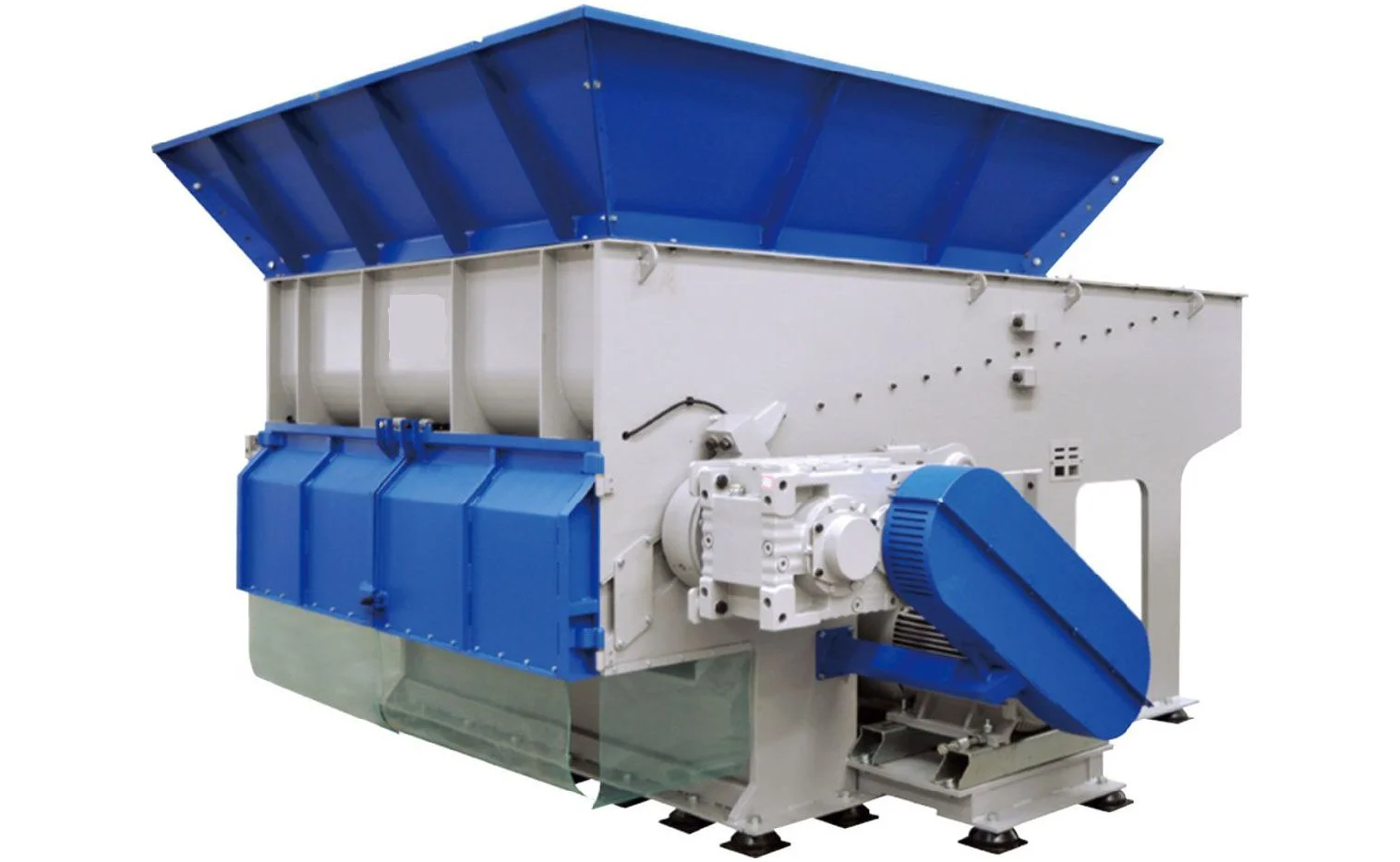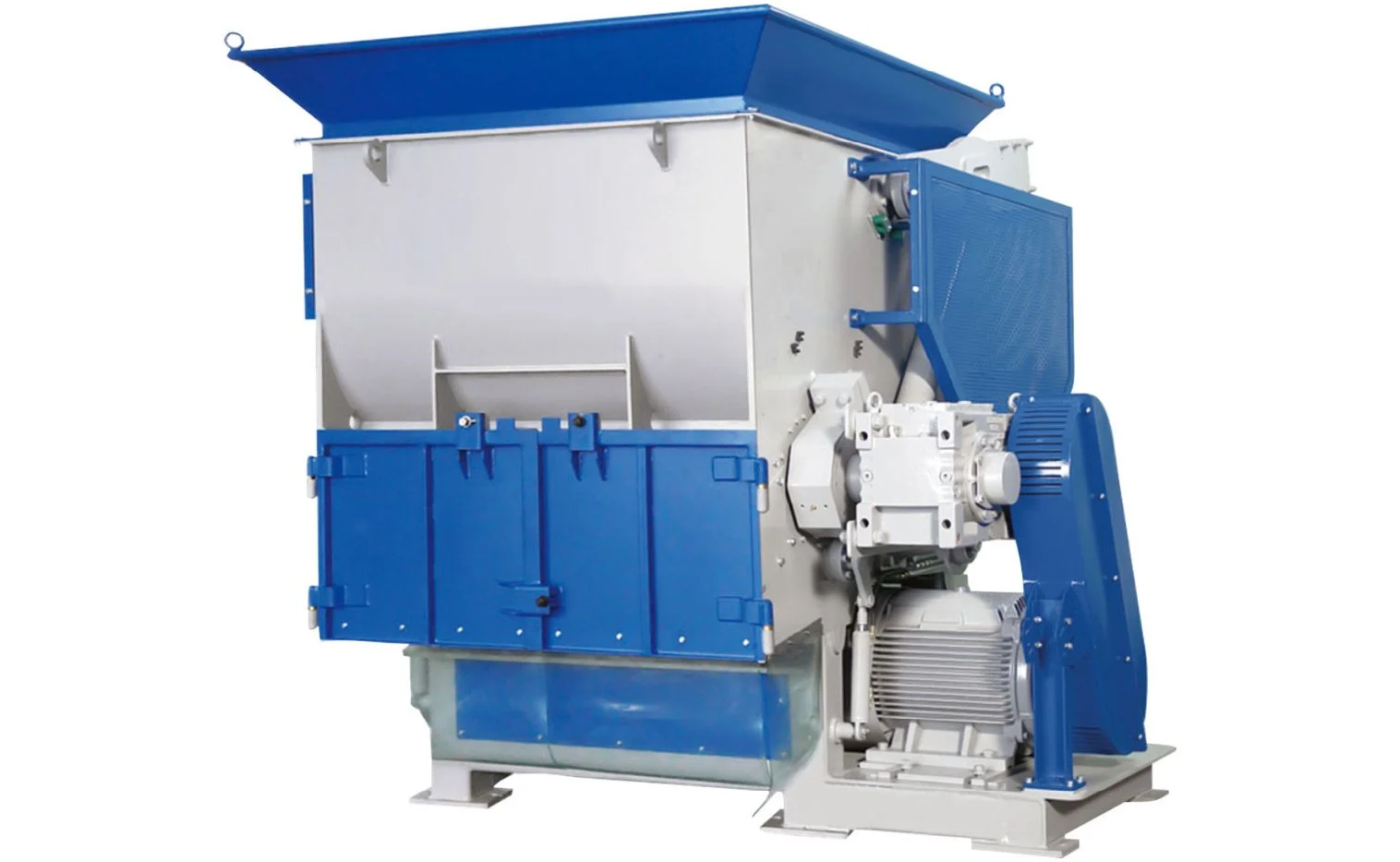
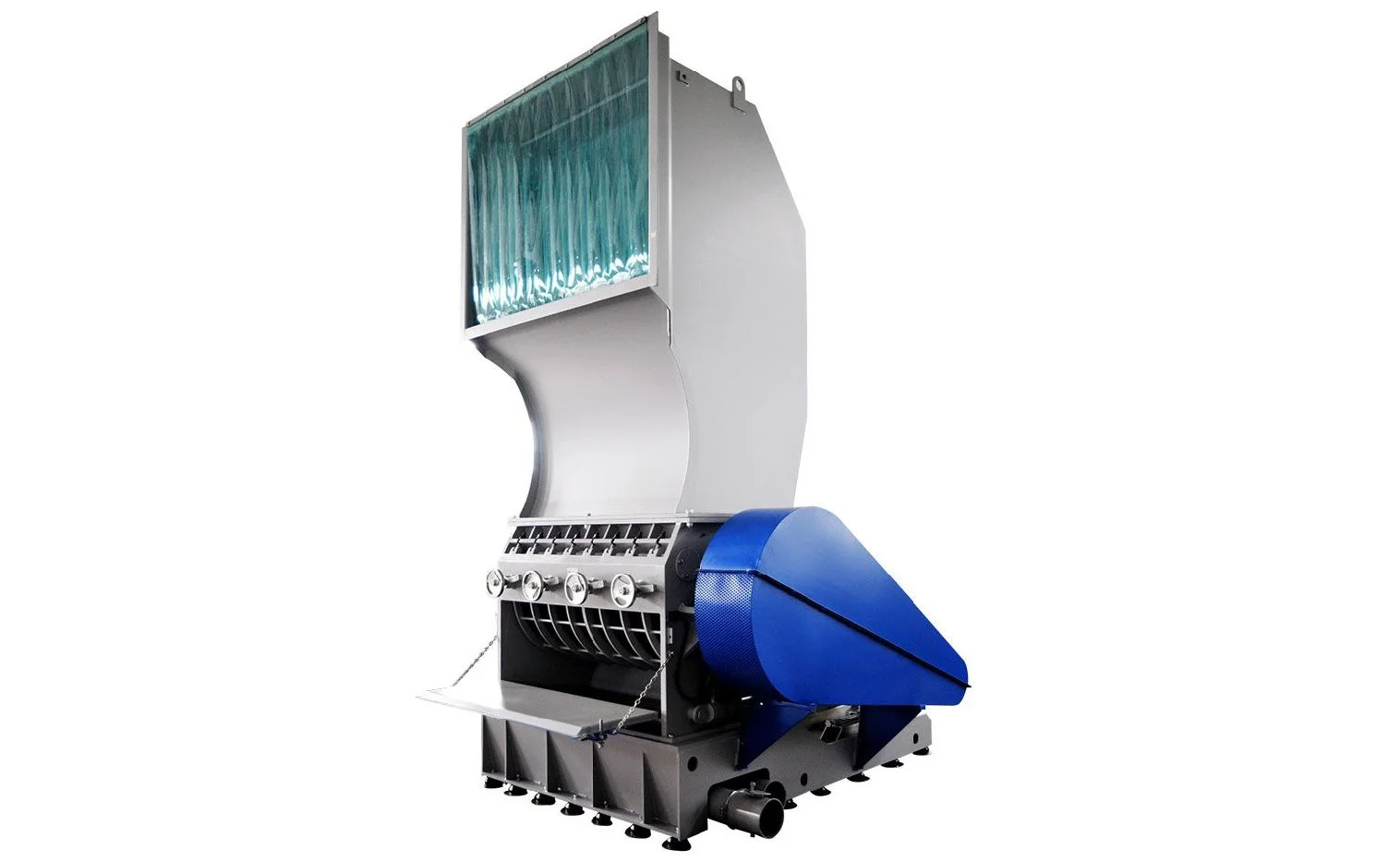
There is a point where a standard granulator stops being the right tool. Thick-walled parts, extruder purge, heavy rejected components, abrasive or contaminated material, the kind of scrap that would stall or wear out a lighter machine in a hurry. That is where the heavy duty granulator earns its place. It is built to take the hardest material in the plant and turn it into clean regrind in one step.
The H-Series is the industrial end of the Virtus granulator range. Where the earlier machines in this series are chosen for noise control, value, or specific part shapes, the H-Series is chosen for one reason above all: it can handle work the others cannot.
This is the fifth post in our series covering every granulator we build and who each one is for. It follows the E-Series economical granulators and the rest of the standard-duty lineup. If your material is thick, tough, abrasive, or simply relentless, this one is for you.
What makes it heavy duty, not just bigger
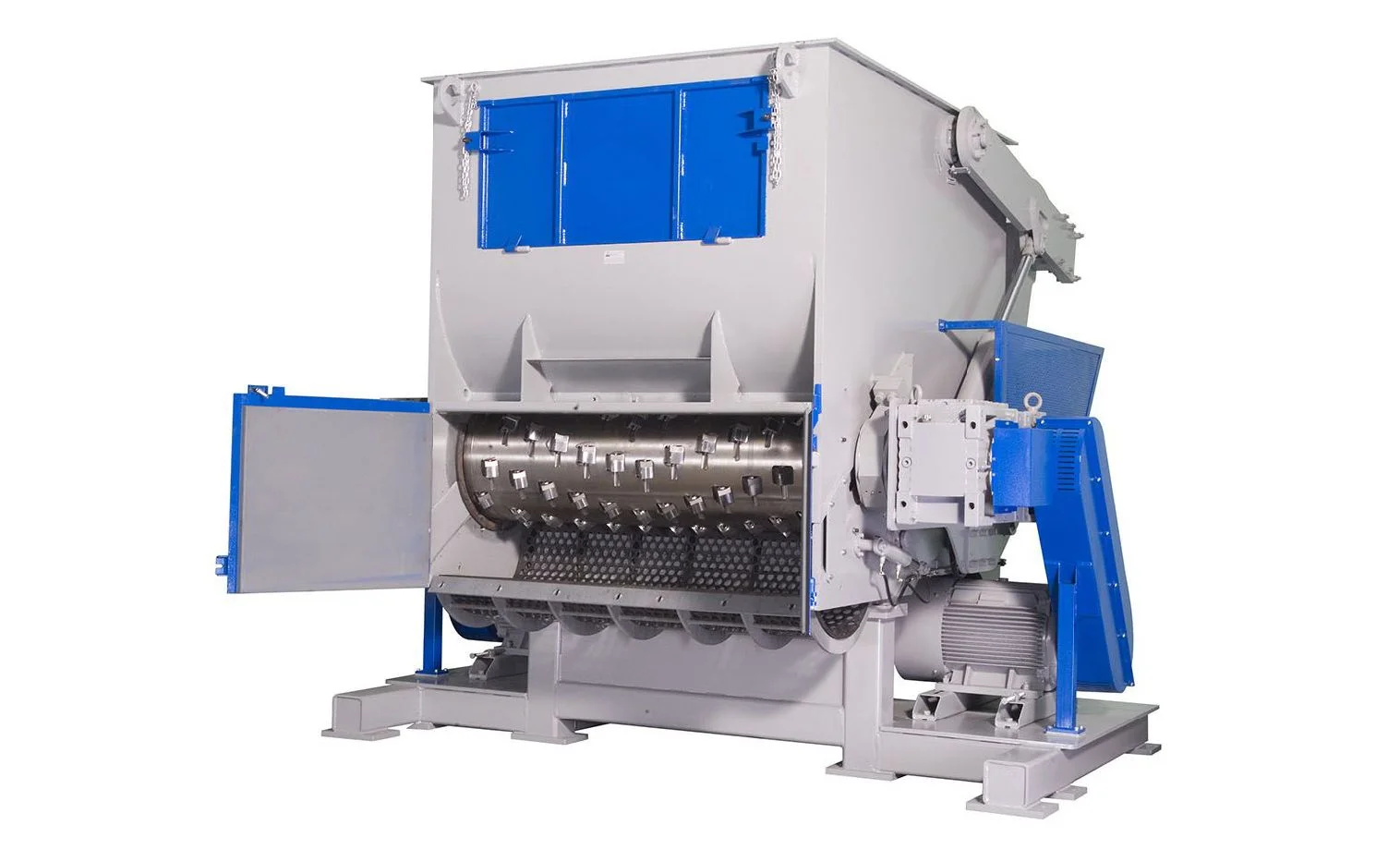
A heavy duty granulator is not a standard machine scaled up. The whole structure is built for punishment. The H-Series uses completely welded heavy steel construction designed to withstand the most demanding applications, and the rotor bearings, knife mounts, and rotor shaft are all oversized to meet the loads of industrial recycling. Those are the parts that fail first on an underbuilt machine fed heavy material, so building them big is what makes one-step processing of thick-walled scrap realistic.
Two design details matter especially for the toughest jobs. First, the bearings are outboard, meaning they sit outside and separated from the cutting chamber. That keeps material and contamination out of the bearings and keeps lubricants out of your regrind, which prevents the premature bearing failure and product contamination that plague machines with bearings mounted in the wrong place. Second, the cutting chamber uses easily replaceable wear plates, so the surfaces that take the abuse can be swapped rather than requiring a rebuild.
The V-cut rotor and the adjustable deflector wedge
Like the rest of the Virtus line, the H-Series rotors use V-cut technology, which produces a high-quality granule with a very low percentage of fines. Low fines matter more at industrial volume, because fines are wasted material and a headache downstream.
The feature that sets the heavy duty machines apart is the removable deflector wedge, which houses a third stator knife. It lets you quickly adjust the granulator’s aggressivity to match different materials, so the same machine can be tuned for different jobs rather than being locked into one behavior. For abrasive applications, the rotor’s key parts can be manufactured from highly wear-resistant steel with weld-on hard facing, which dramatically extends life when you are grinding filled or contaminated material.
Typical materials and real-world jobs
The H-Series is the industrial end of the granulator range. Here is the kind of material it is built to take:
| In-house recyclers | Thick-walled parts ground in a single step instead of requiring a pre-cut |
| Large-part processors | Big, heavy injection-molded parts through the H 110 |
| Abrasive and filled streams | Glass-filled, contaminated, or abrasive material with the wear-protection options |
| Two-step recyclers | Shredded output from an upstream shredder, run as a second-stage granulator |
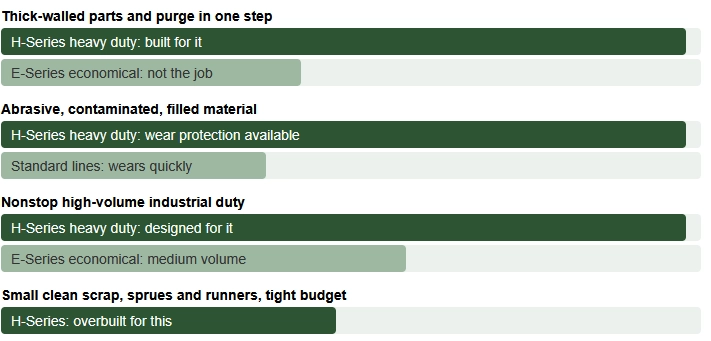
The H-Series is built for thick, tough, abrasive, or relentless material. Small clean scrap like sprues and bottle caps is overbuilt for this machine and better suited to an A-Series or E-Series. Whole pipe, tires, or bulky containers need a shredder first.
The H-Series lineup at a glance
| Model | Rotor diameter | Working widths |
|---|---|---|
| H 35 and H 50 | 350 and 500 mm | 500 mm to 1000 mm |
| H 60 and H 70 | 600 and 700 mm | 800 mm to 1000 mm |
| H 80 | 800 mm | 1200 mm to 2000 mm |
| H 110 | 1100 mm | 1200 mm to 2400 mm |
| Shared across the line | Welded heavy steel construction, oversized rotor shaft and bearings, V-cut rotor for low fines, removable deflector wedge as a third stator knife, replaceable wear plates, and outboard bearings separated from the cutting chamber. The H 110 offers a choice of 9, 11, or 13 rows of rotor knives. | |
Who needs a heavy duty granulator
In-house recyclers processing thick-walled parts. The H 35, 50, 60, and 70 are mainly used as central granulators for in-house recycling, grinding thick-walled pieces down in a single step instead of requiring a pre-cut. That one-step capability is the whole point.
Operations grinding large, heavy parts. The H 110 is built to take large thick-walled parts down to a granule in one pass, with large-diameter rotors available in 9, 11, or 13 knife rows to match throughput to your volume.
Anyone running abrasive, contaminated, or highly filled material. This is where the wear-protection options pay for themselves. Hard-facing on the rotor and housing, plus key parts in wear-resistant steel, keep the machine running when the material would chew up a standard granulator.
Recyclers running a two-step system. Every H-Series machine can work as a second-step granulator after a shredder to reach higher throughput rates. When you are grinding light material, a Virtus force-feeding device can greatly increase throughput by keeping the rotor fed.
Where the H-Series sits against the rest of the line
The heavy duty machines are the most capable in the range, and they are sized and priced accordingly. The honest guidance is to buy this much machine when the work truly calls for it, and to step down to a lighter line when it does not.
How to size a heavy duty granulator
Sizing an industrial machine is less of a do-it-yourself exercise than the smaller lines, because the variables interact. The starting points are the thickness and toughness of your heaviest parts, your target throughput, and whether the material is abrasive or contaminated enough to need wear protection. From there, rotor diameter and the number of knife rows set your capacity, and whether the machine runs standalone or as a second step after a shredder changes the math again. Because these machines are a significant investment and highly customizable, the right approach is a conversation with our team paired with a material trial, not a guess from a table.
See it in action
Sometimes the easiest way to understand a machine is to watch it run. Our YouTube channel has material demonstrations across the full Virtus lineup, so you can see how different materials feed and process at each stage of size reduction before you ever pick up the phone.
Send us your toughest material and let us prove it
With heavy duty work, a real test matters more than ever, because the stakes of getting it wrong are higher. Send us a sample of your actual thick-walled parts, purge, or abrasive scrap, tell us your throughput target and what the regrind needs to become, and our testing facility will run it and send back a confidential technical analysis with real results. We record the test, so you can see your hardest material go through before you commit to a machine of this size. This is exactly the kind of purchase you should never make on faith.
After the sale, you are not on your own
Wear plates, screens, and knives take real abuse on an industrial machine, and when they need replacing, wear parts for the H-Series are in stock on Virtus Equipment Direct, our online webstore, so you are not waiting on a quote for a part you already know you need. Our service team handles installation and can commission the machine, train your operators, and set up a maintenance schedule from day one. And if your team works in Spanish, so do we. Nuestro equipo le atiende en espanol, desde la primera llamada hasta la instalacion y el soporte.
Frequently asked questions
What is the difference between a heavy duty granulator and a standard central granulator?
A heavy duty granulator uses welded heavy steel construction with an oversized rotor shaft and bearings, so it can grind thick-walled and tough material in one step without the wear and stalling a lighter machine would suffer. A standard central granulator handles everyday medium-volume recycling but is not built for the hardest industrial scrap.
Can a heavy duty granulator process abrasive or contaminated material?
Yes, when it is equipped for it. For abrasive, contaminated, or highly filled material, the H-Series can be fitted with special wear protection, including hard-facing on the rotor and housing and key parts made from highly wear-resistant steel. This is worth specifying up front if your material is tough on equipment.
Can I use a heavy duty granulator as the second step after a shredder?
Yes. All H-Series machines can run as a second-step granulator after a shredder to reach higher throughput rates. For light material, adding a force-feeding device keeps the rotor fed and can greatly increase throughput.
What is the difference between a heavy duty granulator and a standard central granulator?
A heavy duty granulator uses welded heavy steel with an oversized rotor shaft and bearings, so it grinds thick-walled and tough material in one step. A standard central granulator handles everyday medium-volume recycling but is not built for the hardest industrial scrap.
Can it process abrasive or contaminated material?
Yes, when equipped for it. The H-Series can be fitted with hard facing on the rotor and housing and key parts in highly wear-resistant steel, which is worth specifying up front if your material is tough on equipment.
Can I run it as the second step after a shredder?
Yes. All H-Series machines can run as a second-stage granulator after a shredder to reach higher throughput. For light material, a force-feeding device keeps the rotor fed.
Terms worth knowing
A few terms come up constantly when you are speccing this kind of machine. Here they are in plain language:
Outboard bearings. Bearings mounted outside and separated from the cutting chamber, which keeps material and contamination out of them and lubricants out of your regrind.
Deflector wedge. A removable wedge that houses a third stator knife and lets you tune the granulator’s aggressivity to different materials.
Hard facing. A wear-resistant weld-on layer applied to the rotor and housing so the machine survives abrasive, filled, or contaminated material.
V-cut rotor. The rotor geometry that produces a high-quality granule with a very low percentage of fines, which matters more at industrial volume.
Second-step granulator. A granulator that runs after a shredder to reach higher throughput and a finer, more uniform output.
Related machines
If this machine is not quite the right fit, these are the neighbors to look at: