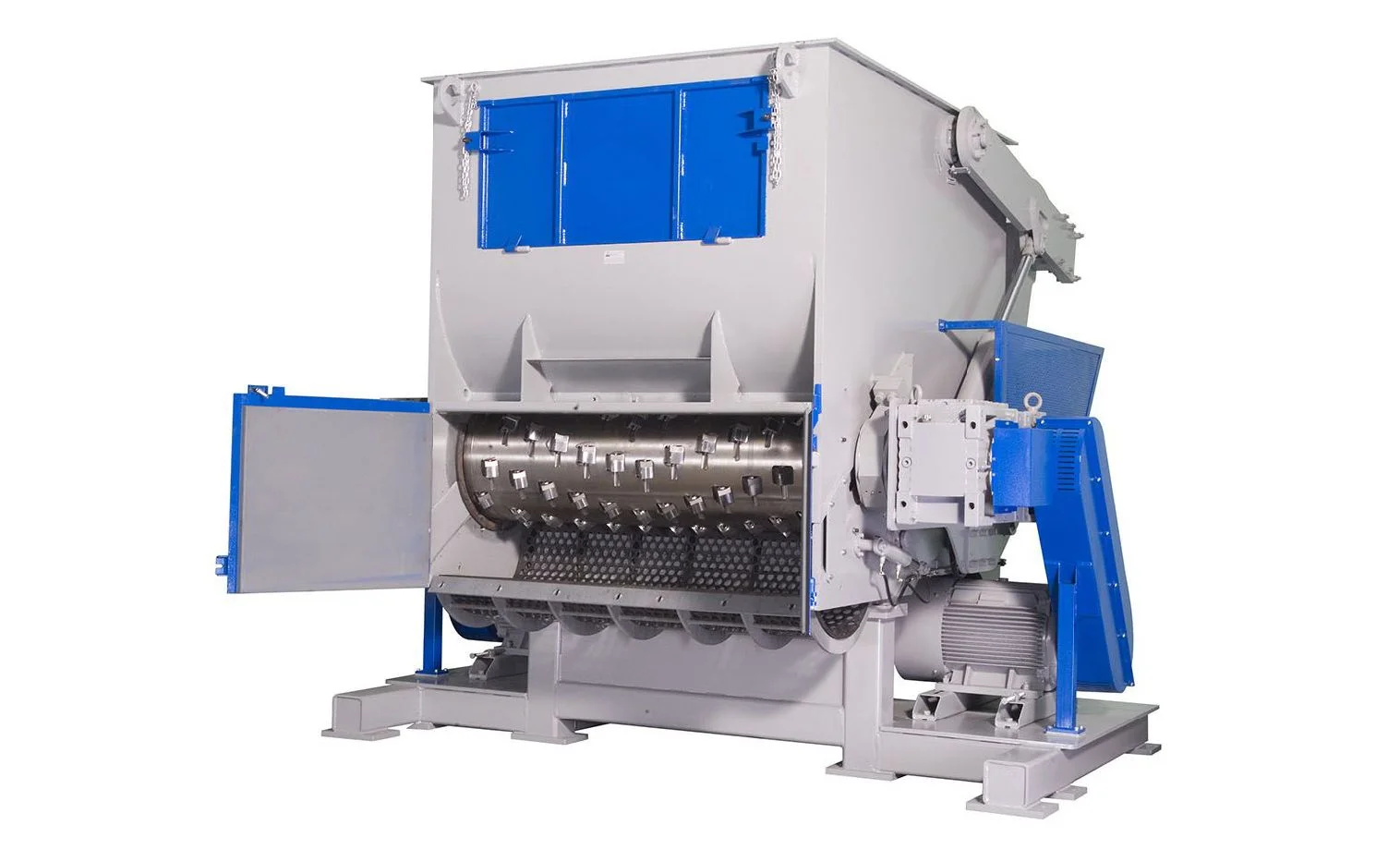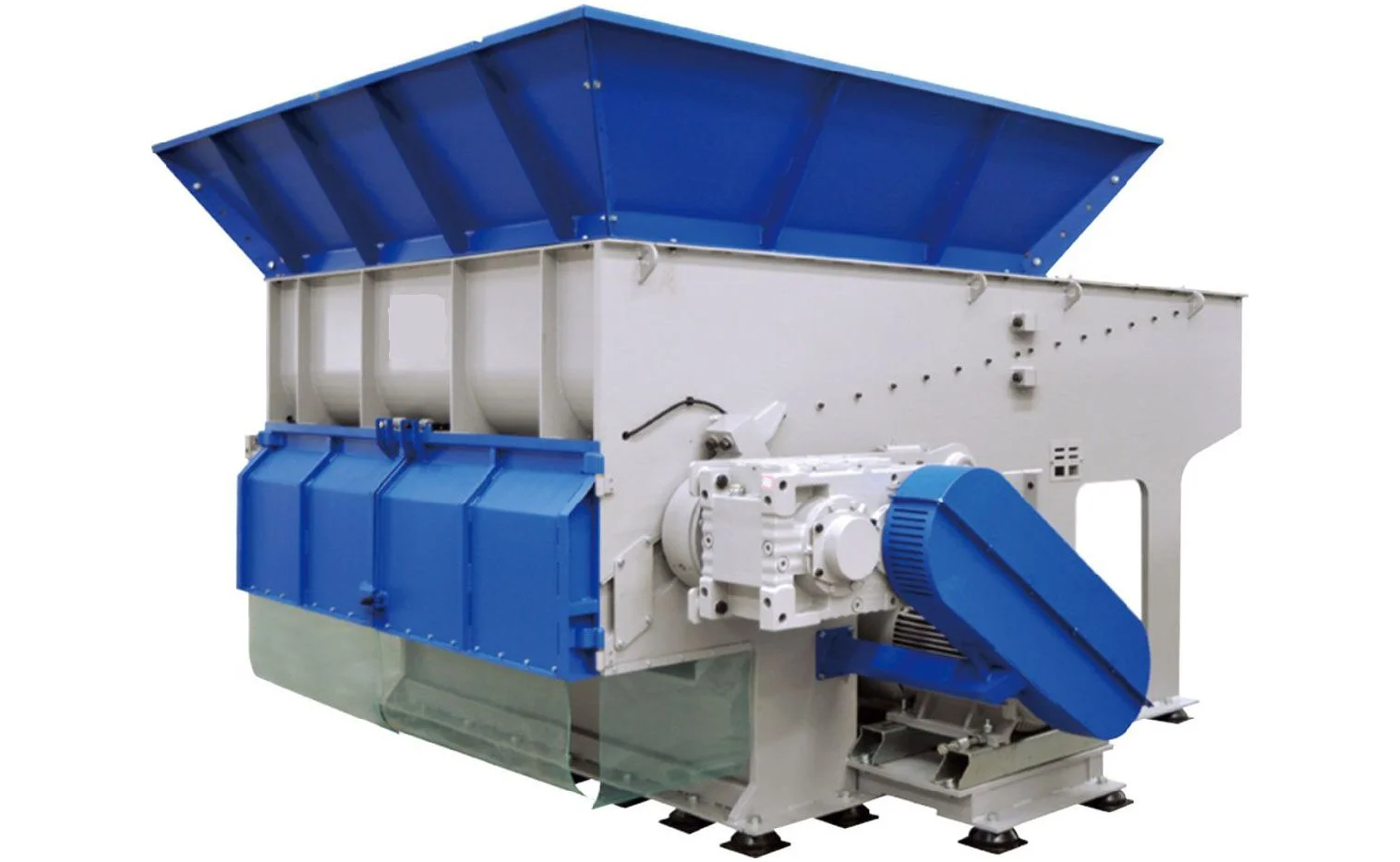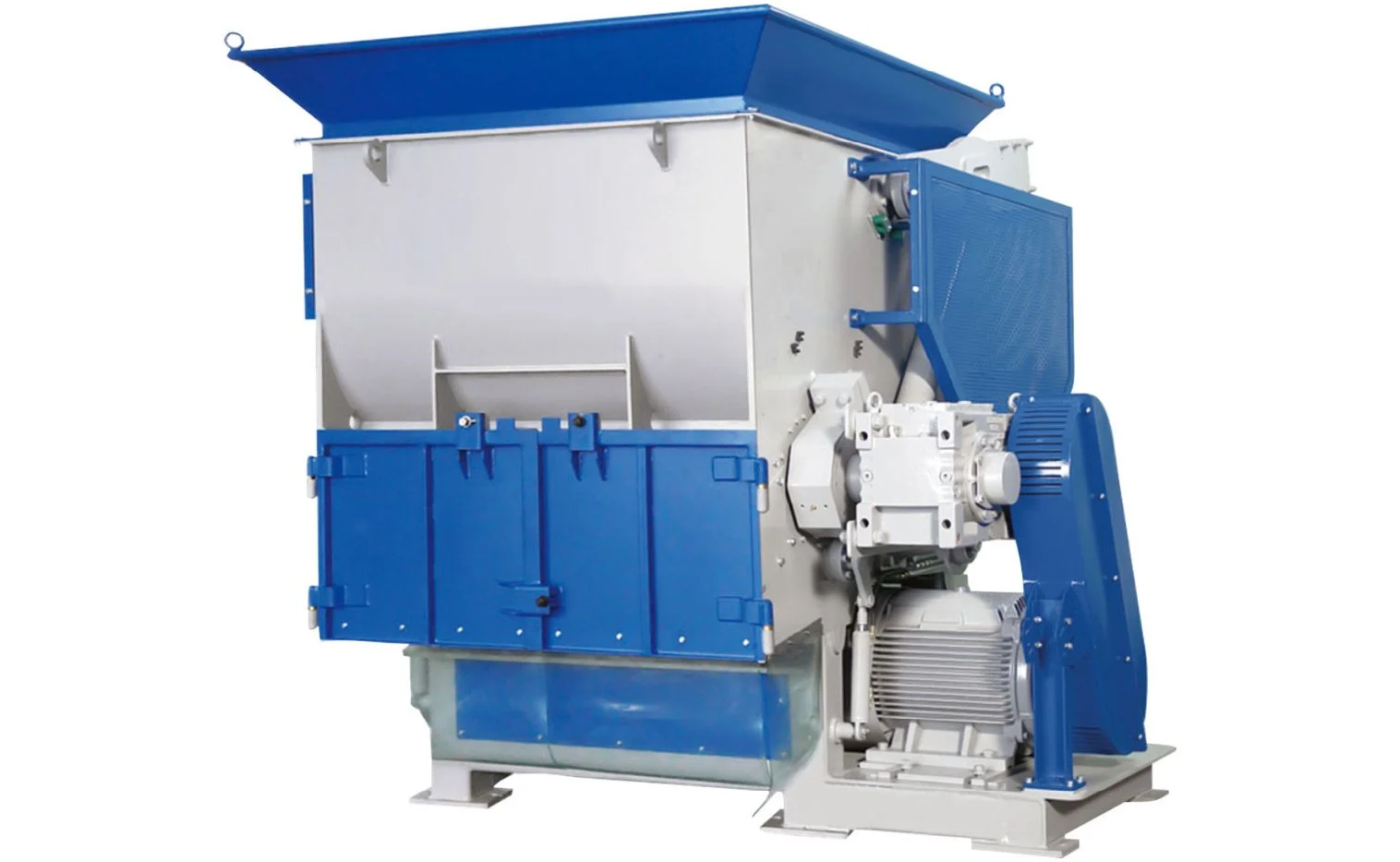
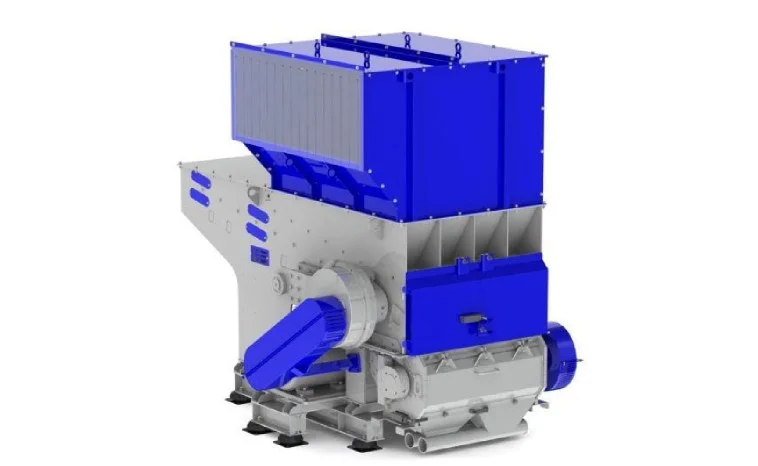
Some scrap is too bulky for a granulator but you still want granulator-quality regrind at the end. The usual answer is a two-stage line: a shredder to break the material down, a conveyor to move it, and a granulator to finish the job. That works, but it takes floor space, and every handoff between machines on an open conveyor is a chance for contamination to sneak in. For in-house molding waste, there is a tidier way to do it.
The SG-Series is a combination shredder and granulator, two machines stacked into one closed system. Material is shredded in the top stage and drops straight into the granulator stage below, all inside a single enclosed unit. No conveyor between them, no extra footprint, and far less contamination risk.
This is the second post in our shredder series, covering every shredder we build and who each one is for. It follows the G-Series general purpose shredder. This one is for the shop that wants both stages of size reduction without the space or the contamination risk of a two-machine line.
Two stages in one closed system
The SG-Series is genuinely two machines working as one. The upper stage is a shredder equipped with a 400 mm diameter E-type rotor, using the proven Virtus knife and knife holder design and driven by a high-torque gear drive. That gear drive, rather than a direct drive, is what lets the shredder stage handle tougher input material. A large material hopper and a powerful horizontal pusher feed voluminous and heavier parts into it.
The lower stage is a granulator built on a 3-blade rotor based on our C-series. It uses a sturdy F-type rotor with V-cut technology, which gives it good ingestion of the material flow coming down from the shredder while still handling thicker, heavier particles. The two stages are matched to work together and tied into a single advanced control system, so the whole unit runs as one smooth, reliable process rather than two machines you have to coordinate.
Why a combined system instead of two machines
The case for the SG-Series comes down to three things a two-machine line struggles with.
Floor space. A shredder, a conveyor, and a separate granulator take up real estate. The SG-Series stacks the two stages vertically into one small footprint that drops into an existing workshop easily.
Contamination. Being a closed system, the SG-Series reduces the contamination risk that comes with moving material across an open conveyor belt between two separate machines. For in-house recycling that goes straight back into production, cleaner is better.
Simplicity. One machine, one control system, one thing to run and maintain, instead of coordinating three pieces of equipment.
Shredder stage (top)
Granulator stage (bottom)
Who needs one
Blow and injection molders. The SG-Series was designed mainly for in-house use in plastics blow and injection molding applications. If you generate flash, purging, and large-volume or thicker parts and want them turned into usable regrind on the spot, this is the machine built for that job.
Shops tight on floor space. If you want two-stage size reduction but do not have room for a shredder, conveyor, and granulator laid out separately, the stacked SG design solves the space problem.
Operations that care about clean regrind. Because it is a closed system, it suits recyclers who want to minimize contamination between stages, especially when the regrind goes straight back into the product.
Beyond molding. While molding is the primary use, the SG-Series can be adopted in other fields too, and it is well-suited for large-volume parts and thicker materials such as flash and purging.
Typical materials and real-world jobs
The SG-Series does two stages in one closed unit, so it is aimed at in-house molding waste. Here is what it processes:
| Injection molders | Flash, purge, sprues, runners, and rejected parts, turned into regrind on the spot |
| Blow molders | Bottles, tails, and hollow parts reduced and granulated in one pass |
| Large-part molders | Thicker and voluminous parts that need shredding before granulating |
| Clean-regrind operations | Any shop that wants closed-loop regrind with minimal contamination |
The SG-Series is built for in-house molding waste where you want both stages in one footprint. Very large or specialized scrap like big pipe, tires, or bulk containers is better matched to a dedicated shredder.
SG-Series at a glance
| Feature | Detail |
|---|---|
| Shredder stage rotor | 400 mm E-type rotor, high-torque gear drive |
| Granulator stage rotor | 3-blade F-type rotor with V-cut technology, based on the C-series |
| Feed system | Roller-guided drawer-type ram with large hopper and horizontal pusher |
| Configuration | Closed, space-saving combined system with one advanced control system |
| Best for | In-house blow and injection molding waste, flash, purging, large-volume and thicker parts |
Is the SG-Series right for you?
The decision usually comes down to whether you need both stages and how much room you have. If your scrap is already granulator-ready, you do not need the shredder stage, so a standalone granulator is the more economical pick. If your scrap is bulky but you have plenty of floor space and may want to scale each stage independently, a separate shredder and granulator line gives you more flexibility. But if you want both stages, a small footprint, and clean closed-loop regrind for in-house molding waste, the SG-Series is purpose-built for exactly that.
See it in action
Sometimes the easiest way to understand a machine is to watch it run. Our YouTube channel has material demonstrations across the full Virtus lineup, so you can see how different materials feed and process at each stage of size reduction before you ever pick up the phone.
Not sure? Send us your flash and purging
Whether a combined system is right for your material is easy to answer with a real test. Send us a sample of your actual flash, purging, or reject parts, tell us your volume and what you want the regrind to become, and our testing facility will run it and send back a confidential technical analysis with real results. We record the test too, so you can watch your own material go from bulky part to finished regrind before you commit.
After the sale, you are not on your own
Both stages have wear parts, and when screens, knives, or blades need replacing, parts for the SG-Series are in stock on Virtus Equipment Direct, our online webstore, so you are not waiting on a quote for a part you already know you need. Our service team handles installation and can commission the machine, train your operators, and set up a maintenance schedule from day one. And if your team works in Spanish, so do we. Nuestro equipo le atiende en espanol, desde la primera llamada hasta la instalacion y el soporte.
Frequently asked questions
What is a combination shredder and granulator?
It is a single machine that stacks a shredder stage above a granulator stage. Bulky material is shredded first, then drops directly into the granulator stage for finishing, all inside one closed unit. It does the work of a two-machine line in one footprint.
Why choose an SG-Series over a separate shredder and granulator?
Mainly floor space and cleanliness. The stacked design fits where a full two-machine line would not, and being a closed system it reduces contamination compared with moving material across an open conveyor between two separate machines. It is especially suited to in-house molding waste.
What does the granulator stage produce?
Clean regrind. The lower stage uses a C-series-based F-type rotor with V-cut technology, so the finished output is granulator-quality material suitable for reintroduction into production.
What is a combination shredder and granulator?
A single machine that stacks a shredder stage above a granulator stage. Bulky material is shredded first, then drops into the granulator stage for finishing, all in one closed unit. It does the work of a two-machine line in one footprint.
Why choose an SG-Series over a separate shredder and granulator?
Mainly floor space and cleanliness. The stacked design fits where a full two-machine line would not, and being closed it reduces contamination compared with moving material across an open conveyor.
What does the granulator stage produce?
Clean regrind. The lower stage uses a C-series-based F-type rotor with V-cut technology, so the output is granulator-quality material ready to go back into production.
Terms worth knowing
A few terms come up constantly when you are speccing this kind of machine. Here they are in plain language:
Shredder-granulator combination. A single integrated unit that pre-shreds bulky feedstock and then granulates it to uniform regrind in one closed footprint.
F-type rotor. The sturdy granulator-stage rotor with V-cut technology that gives good ingestion while handling thicker, heavier particles.
Drawer-type ram. The roller-guided pusher that feeds material into the shredder stage smoothly, including thin materials.
Closed system. A design where material drops from the shredder stage straight into the granulator stage with no open conveyor, reducing contamination.
Two-stage size reduction. Coarse shredding followed by fine granulation, here combined into one machine.
Related machines
If this machine is not quite the right fit, these are the neighbors to look at: