Here is a scenario that surprises a lot of first-time granulator buyers. They pick a well-built machine, get it installed, start feeding blow-molded bottles into the hopper, and watch the parts bounce around on top of the rotor instead of getting pulled down and cut. The machine is not broken. It is just the wrong geometry for the job.
Bulky, hollow, thin-walled parts, think bottles, canisters, jugs, and crates, are awkward to granulate. They are light, they trap air, and they do not want to drop straight down into the cutting circle. A standard granulator that grinds sprues and runners beautifully can struggle badly with a milk jug. That is the exact problem the tangential compact soundproofed granulator was designed to fix.
This is the third post in our series covering every granulator we build and who each one is for. It follows the A-Series low speed granulators and the straight-drop C-Series soundproofed granulators. If your scrap is bulky and hollow rather than small and dense, this is the post for you.
What tangential actually means, in plain terms
On a conventional granulator, the feed opening sits more or less straight above the rotor, so parts drop down onto the cutting circle. That works great for material that falls and stays put. Bulky hollow parts do not. They sit on top, get batted around, and take several passes before the knives can bite.
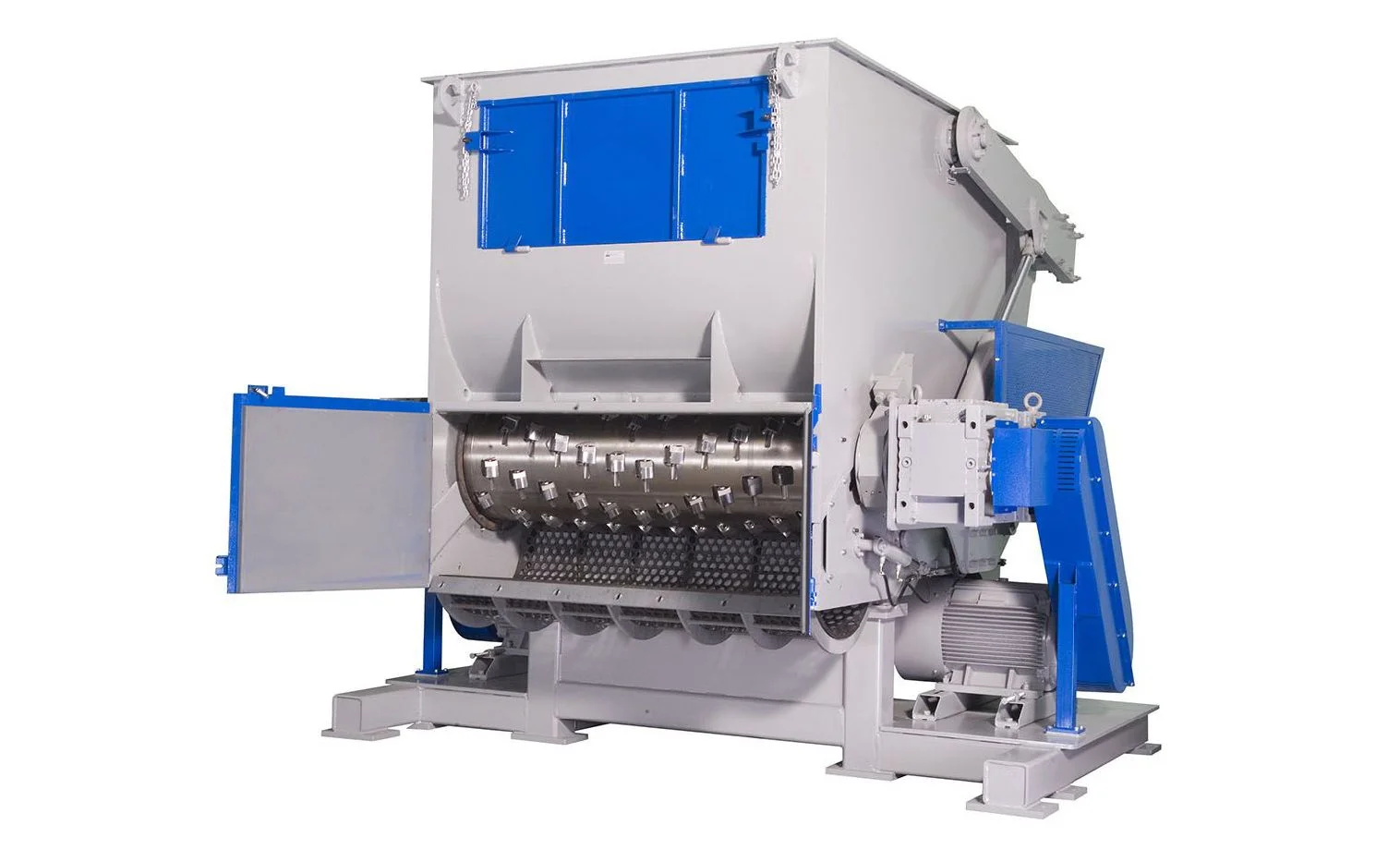
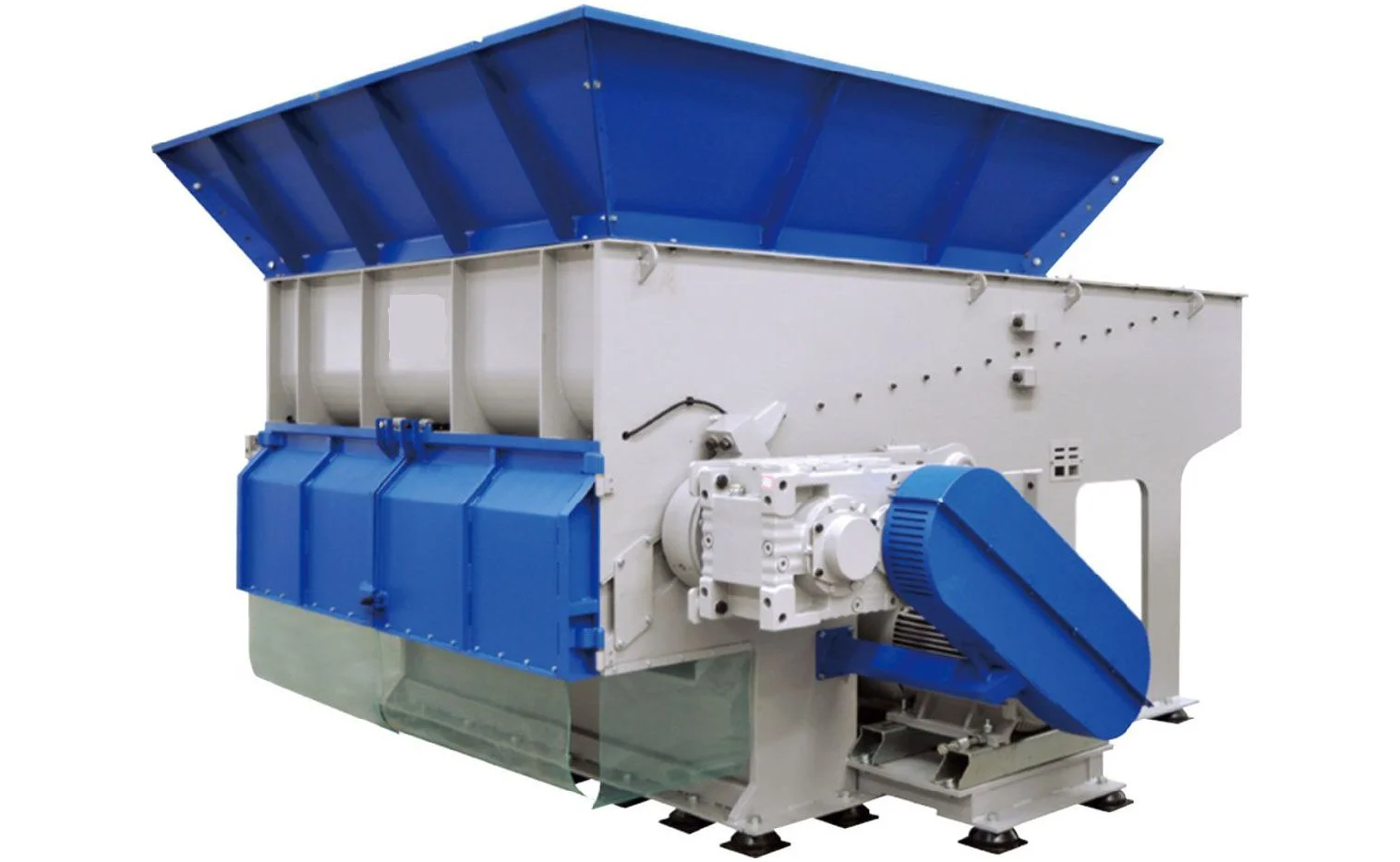
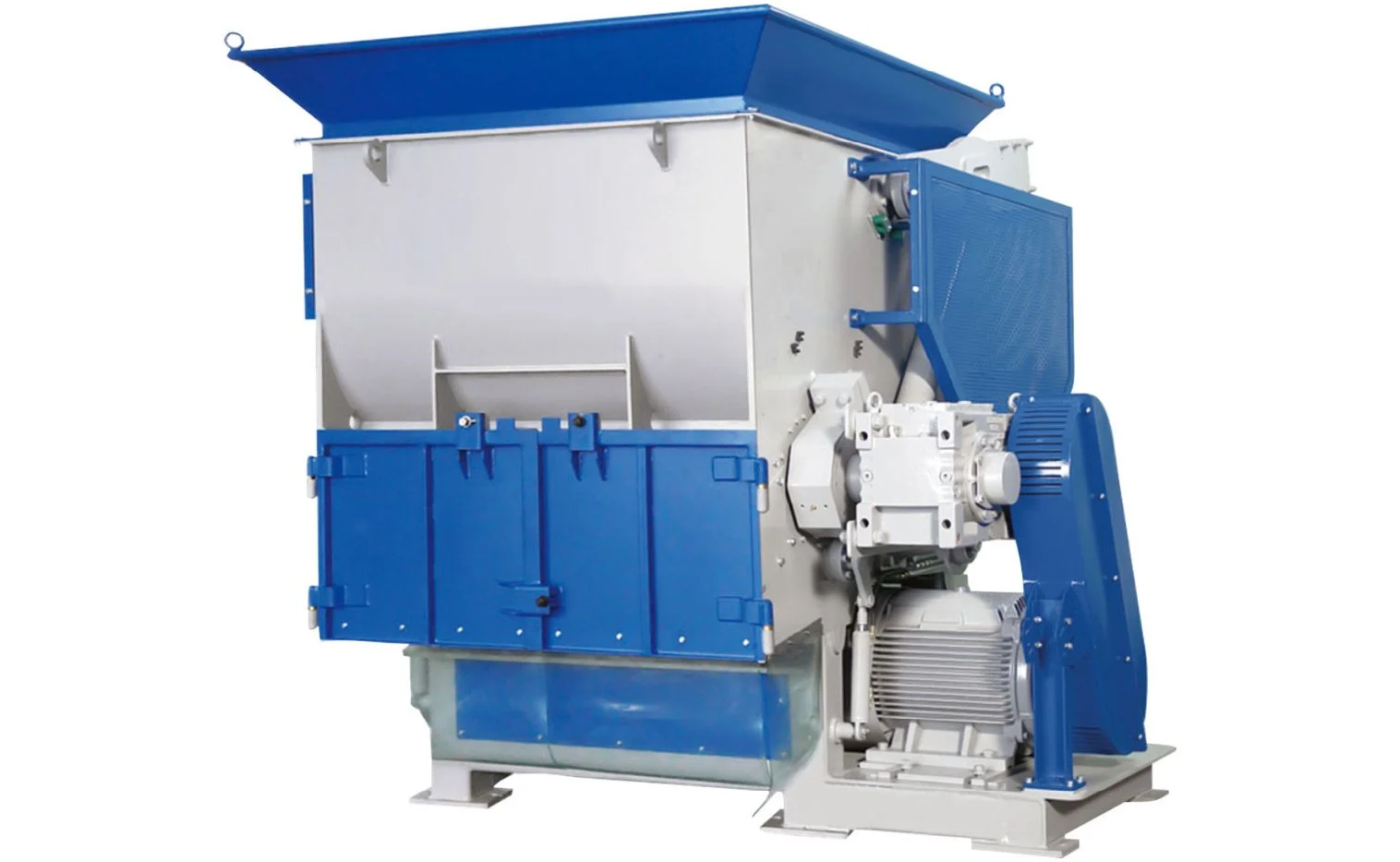
A tangential granulator offsets the cutting chamber so material is directed into the rotor at an angle, along a tangent to the cutting circle rather than straight down onto it. Paired with an aggressive open rotor and a curved back wall in the cutting chamber, the design does two things at once. It grabs voluminous parts and pulls them in on the first try, and the curved wall keeps parts from wedging or getting stuck. The result is reliable ingestion of exactly the kind of material that frustrates a standard machine, with less operator babysitting and fewer jams.
Who needs one
Blow molders. This is the headline application. Bottles, jugs, canisters, and containers are the definition of voluminous and thin-walled, and blow molding flash comes off the same way. If your reject stream is mostly hollow parts, a tangential granulator is very likely the right tool.
Anyone grinding crates, totes, and containers. Bulky rigid parts with a lot of trapped air behave like bottles from the rotor’s point of view. The tangential feed grabs them where a straight-drop chamber would let them ride.
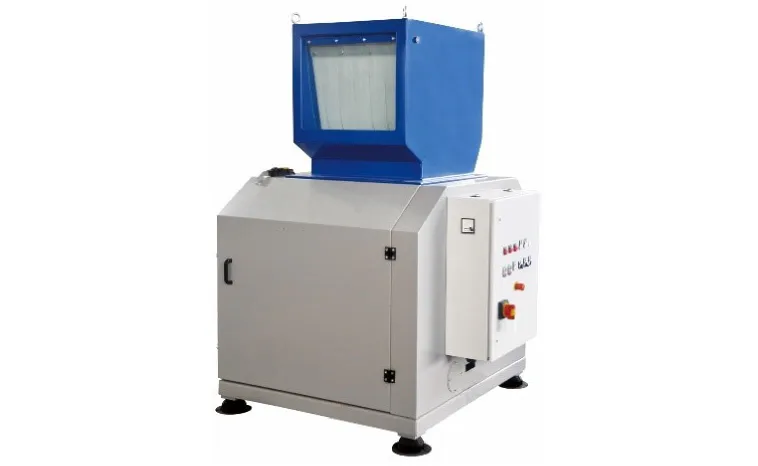
Shops that also want the noise contained. Because this is a compact soundproofed granulator, you get the quiet, floor-friendly enclosure of the C-Series family along with the tangential feed. You are not choosing between quiet operation and good ingestion. You get both.
Injection molders with mixed scrap. The tangential machines are inline granulators and handle injection sprues too, so a molder producing both bulky and standard parts can consolidate onto one machine that does not choke on the awkward pieces.
Typical materials and real-world jobs
The tangential feed is built for material that bounces on a standard rotor. Here is what actually goes into one:
| Blow molders | Bottles, jugs, canisters, and containers, plus blow molding flash |
| Container and crate processors | Totes, crates, and rigid bulky parts full of trapped air |
| Beverage and packaging | Large hollow bottles and thin-walled packaging that will not feed straight down |
| Mixed-scrap molders | Injection sprues alongside bulky parts, on one machine |
The tangential design earns its keep on voluminous, hollow parts. Small dense scrap like sprues alone is handled more economically by a straight-drop C-Series, and thick pipe, purge, or textiles such as denim jeans belong to a shredder.
Tangential specs at a glance
| Feature | Detail |
|---|---|
| Rotor diameters | 250 mm and 400 mm |
| Working widths | 300 mm to 1000 mm |
| Rotor type | Open F-type rotor on the smaller machines, heavier S-type rotor on the larger |
| Cutting chamber | Offset tangential feed with a curved back wall for aggressive ingestion and no blockages |
| Built to last | Rigid design with replaceable wear plates |
| Maintenance | Rotor and stator knives adjusted outside the machine to cut downtime |
| Noise | Compact soundproofed enclosure with sound-dampening hoppers |
Tangential vs straight-drop: which C-Series is right?
Both live in the compact soundproofed family, so the choice comes down to what your scrap looks like. The chart below shows where each design shines.
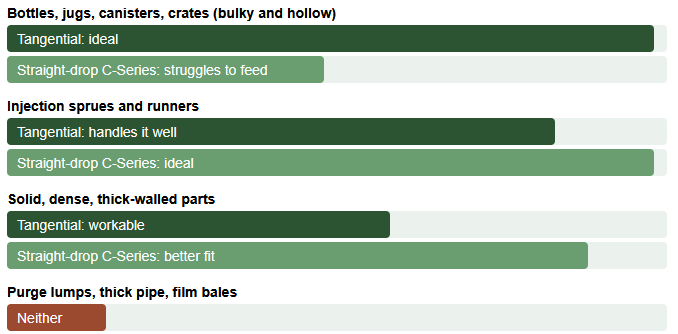
These need a shredder or a heavy duty H-Series granulator, covered later in this series
How to know if tangential is your answer
The test is simple. Look at your scrap and ask whether it is bulky and hollow or small and dense. If most of what you grind traps air, bottles, jugs, canisters, crates, totes, then a straight-drop chamber will fight you and a tangential feed will not. If your scrap is mostly sprues, runners, and small dense parts, the standard C-Series soundproofed granulator is the more economical pick and blog two in this series walks through those three models.
When your stream is a mix, the tangential machine is usually the safer choice, because it handles the awkward parts without giving up much on the easy ones.
See it in action
Sometimes the easiest way to understand a machine is to watch it run. Our YouTube channel has material demonstrations across the full Virtus lineup, so you can see how different materials feed and process at each stage of size reduction before you ever pick up the phone.
Not sure? Send us the parts that are giving you trouble
Ingestion is one of those things that is genuinely hard to judge from a spec sheet. The honest way to know whether a machine will grab your specific bottles or crates is to watch it happen. Send a box of your actual parts to our testing facility, tell us your volume and what you want the regrind to become, and we will run it and send back a confidential technical analysis with real results. We record the test run too, so you can see your own material feed and cut before you commit. If a straight-drop machine would serve you just as well for less money, we will tell you that.
After the sale, you are not on your own
Screens and knives wear, and when they do, replacement knives, screens, and wear parts for the tangential machines are in stock on Virtus Equipment Direct, our online webstore, so you are not waiting on a quote for a part you already know you need. Our service team handles installation and can commission the machine, train your operators, and set up a maintenance schedule from day one. And if your team works in Spanish, so do we. Nuestro equipo le atiende en espanol, desde la primera llamada hasta la instalacion y el soporte.
Frequently asked questions
What is the difference between a tangential and a standard granulator?
A standard granulator feeds material straight down onto the rotor, which suits small dense scrap like sprues and runners. A tangential granulator offsets the cutting chamber so material enters the rotor at an angle, which grabs bulky hollow parts like bottles and crates that would otherwise bounce on a straight-drop machine.
Can a tangential granulator still handle sprues and runners?
Yes. These are inline granulators that process injection sprues along with voluminous parts, so a shop with mixed scrap can run both on one machine. The tangential design earns its keep on the bulky material, but it does not give up the everyday work.
Is it as quiet as the other C-Series machines?
Yes. The tangential models use the same compact soundproofed enclosure and sound-dampening hoppers as the rest of the C-Series family, so quiet operation and good ingestion come together.
What is the difference between a tangential and a standard granulator?
A standard granulator feeds straight down onto the rotor, which suits small dense scrap. A tangential granulator offsets the cutting chamber so material enters at an angle, which grabs bulky hollow parts like bottles and crates that would otherwise bounce.
Can a tangential granulator handle bottle caps and small parts too?
Yes. It is happy with small dense scrap as well as bulky parts, so a shop with a mixed stream can run both on one machine. The tangential advantage shows up most on the awkward hollow items.
Is it as quiet as the other C-Series machines?
Yes. The tangential models use the same compact soundproofed enclosure and sound-dampening hoppers, so you get quiet operation and good ingestion together.
Terms worth knowing
A few terms come up constantly when you are speccing this kind of machine. Here they are in plain language:
Tangential feed. A feed geometry where material enters the rotor at an angle, along a tangent to the cutting circle, so bulky hollow parts get pulled in instead of bouncing on top.
Open rotor. A rotor with knives on an open frame that gives good airflow and grabs light, bulky scrap aggressively.
Cutting circle diameter. The diameter swept by the rotor knife tips, a primary indicator of a granulator’s capacity.
Fines. The dust-like undersized particles in the regrind, minimized by a clean cut and correct screening.
Regrind. The granulated output, blended back with virgin resin and fed back into production.
Related machines
If this machine is not quite the right fit, these are the neighbors to look at: