A granulator is a precision tool. It wants material that is already a reasonable size, and it cuts it into clean regrind. But a lot of what shows up on a recycling floor is not granulator-ready. Lumps, pipes, bales, woven bags, film, whole rejected parts, this is bulky, dense, awkward material that would stall a granulator the moment it hit the rotor. That is what a shredder is for, and the G-Series is the machine most operations reach for first.
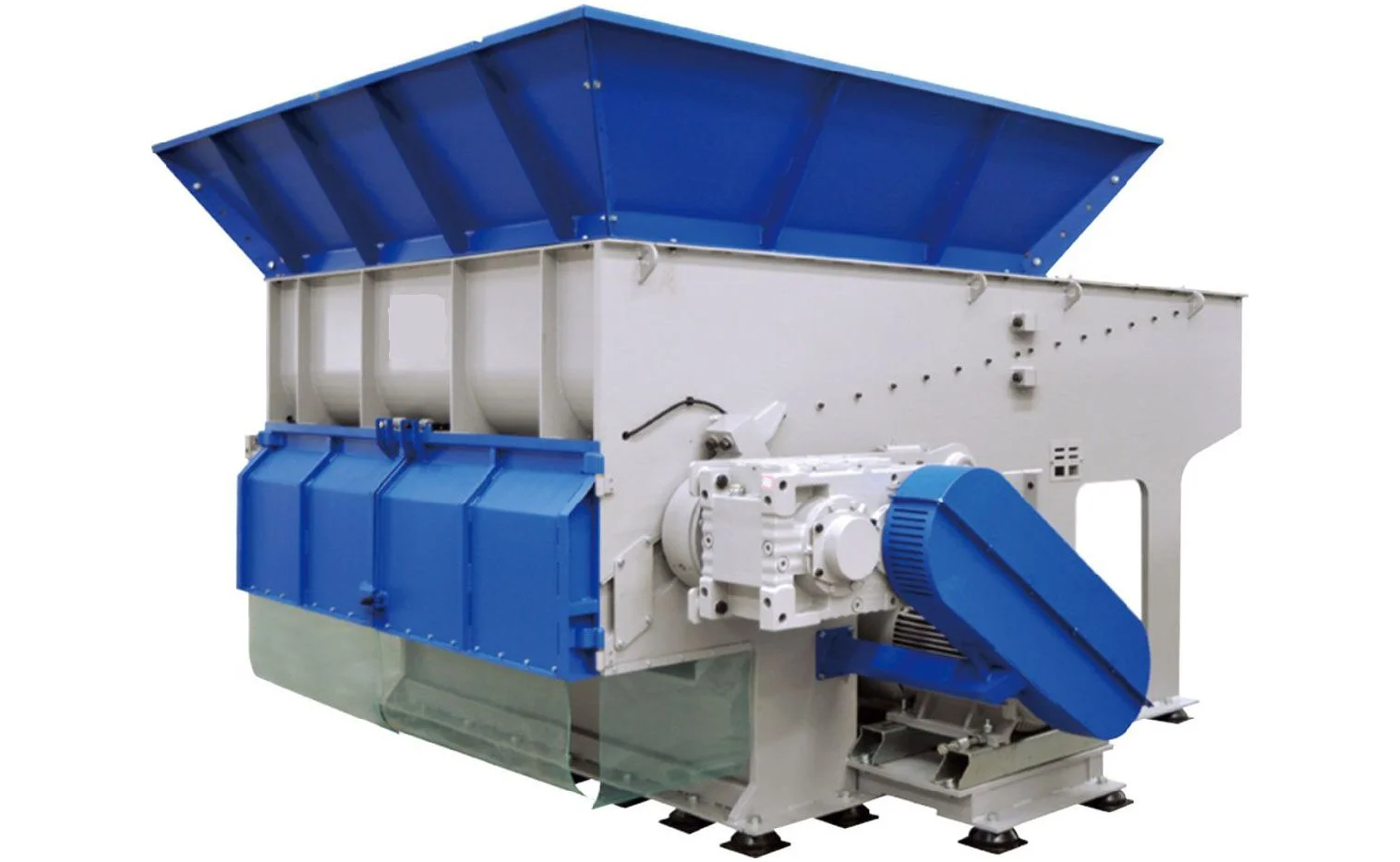
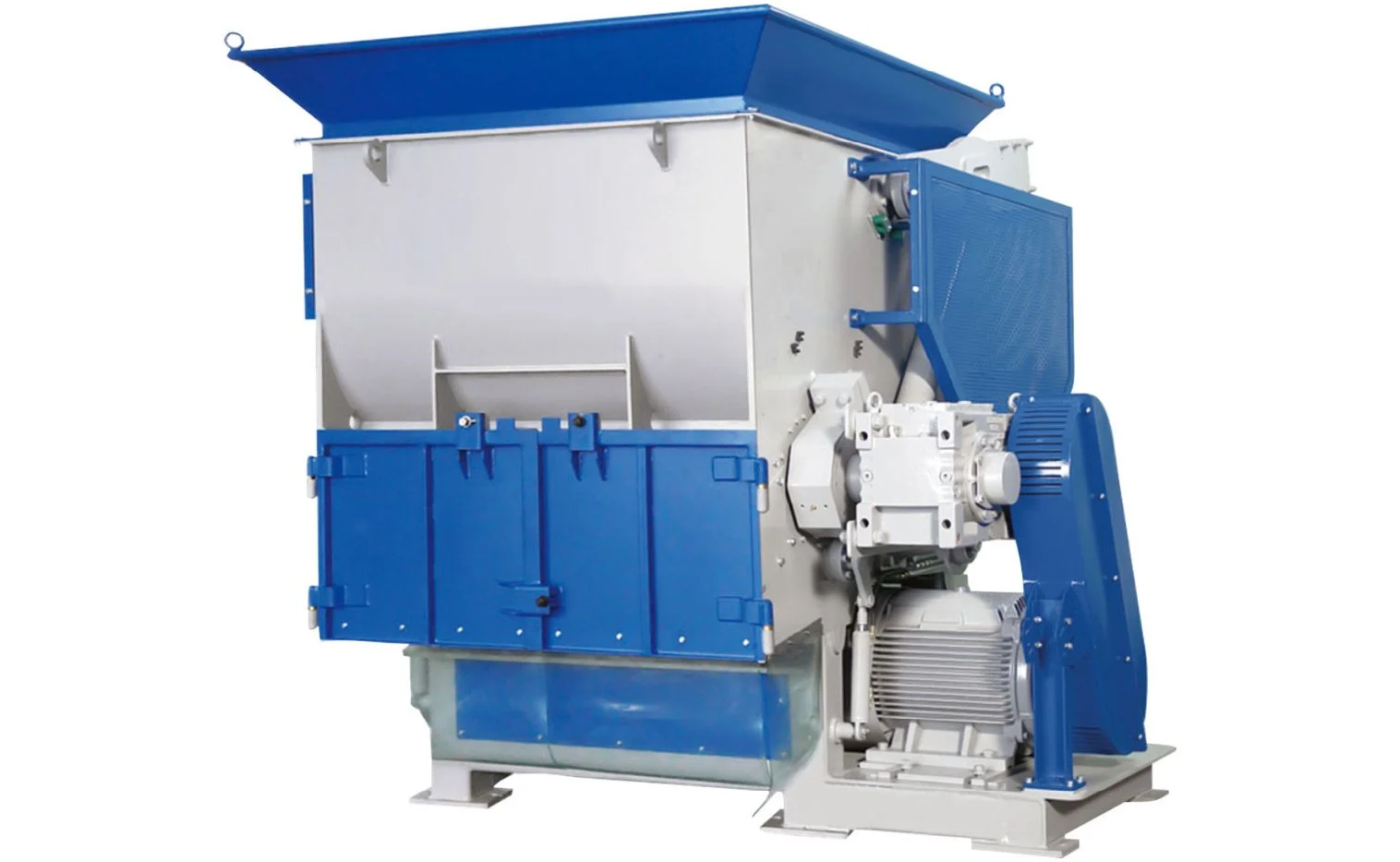
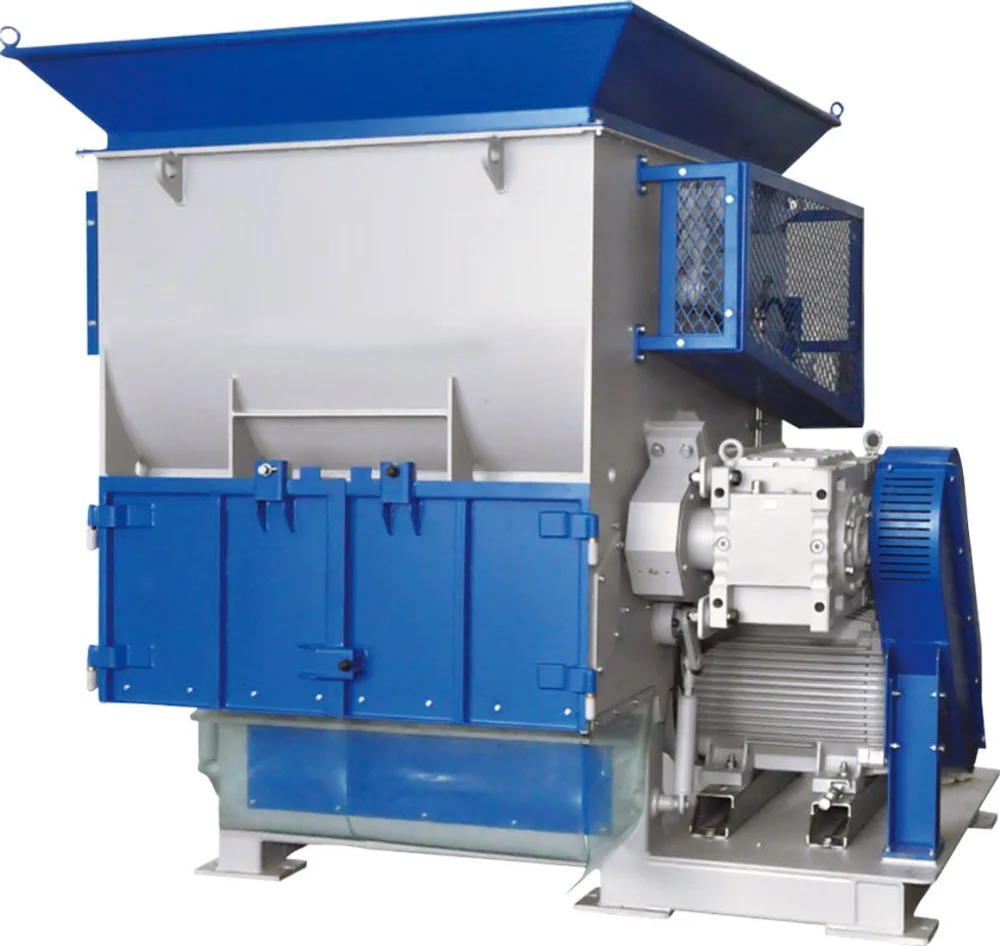
The G-Series is our general purpose single-shaft industrial shredder, the versatile multi-purpose shredder built to take a wide range of material shapes and sizes and break them down into pieces that can be handled, recycled, or fed into the next stage of size reduction.
This is the first post in our shredder series, covering every shredder we build and who each one is for. We are starting with the machine that fits the widest range of jobs.
How a single-shaft shredder works
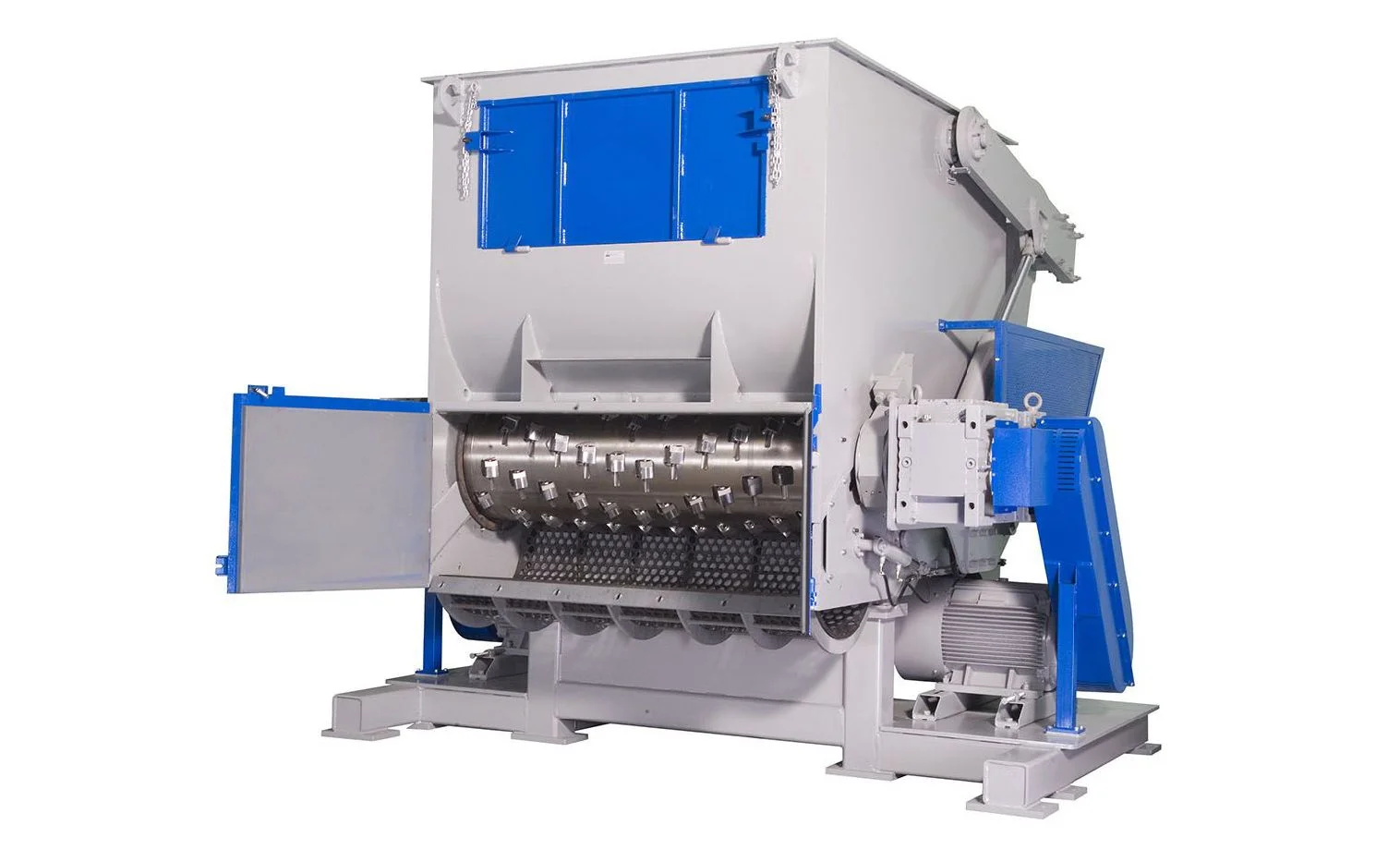
A shredder is the opposite of a granulator in the way it works. A granulator uses high speed and lower torque to slice. A shredder uses low speed and high torque to overpower. Material is loaded into a hopper, and a hydraulic ram pushes it into a slow-turning rotor fitted with hardened knives. Those rotor knives work against a fixed counter knife to tear the material into smaller pieces, and a screen at the bottom of the cutting chamber controls the maximum output size. Anything too big to pass through the screen stays in the chamber and gets re-shredded until it does.
That slow, forceful action is exactly what lets a shredder handle large, dense, bulky material that would stop a granulator cold. The hydraulic ram matters too, because bulky scrap like pipes, bales, and drums will not feed by gravity alone. It needs to be pushed.
What makes the G-Series a workhorse
The G-Series is built around a 457 mm diameter E-type rotor, available in widths from 850 mm to 2000 mm, and driven by an oversized gearbox for the high torque these jobs demand. A few design choices are worth calling out because they show up as real-world reliability:
The two-speed hydraulic swing ram feeds with a swing action rather than sliding along internal guide rails, which eliminates the blocking and rail wear that plague ram designs that slide. The hydraulic power pack sits inside the shredder housing, which saves floor space and protects it from damage while staying accessible for maintenance. Outboard bearings sit outside the cutting chamber, keeping material and contamination away from them. And a hydraulically operated screen cradle makes output size changes quick instead of a wrestling match.
What it shreds and who needs one
The G-Series earns the multi-purpose shredder label because its material range is genuinely broad:
- Plastic lumps and purge
- Pipes and profiles
- Film, woven bags, and bales
- Rigid and flexible plastics of many kinds
- Cables, paper, and wood
- Electronic waste and other general recyclables
In-house recyclers are the core audience. If you generate a mix of scrap shapes and want to reduce volume or prep material for a granulator, the G-Series is the flexible first shredder. General recycling operations handling post-consumer and post-industrial waste use it for the same reason: one machine, many material types. And because the shredded output often becomes feedstock for the next stage, the G-Series pairs naturally with a downstream H-Series heavy duty granulator for two-stage size reduction.
Typical materials and real-world jobs
The G-Series is the versatile workhorse, so its material range is wide. Here is what it takes on:
| In-house recyclers | Mixed plastic scrap, rejected parts, runners, and purge in many shapes |
| Post-consumer processors | Bottles, containers, film, and woven bags |
| Textile and fiber recyclers | Fabric offcuts and textiles such as denim jeans, run as a first-stage size reduction |
| General recycling | Cables, paper, wood, and electronic waste alongside plastics |
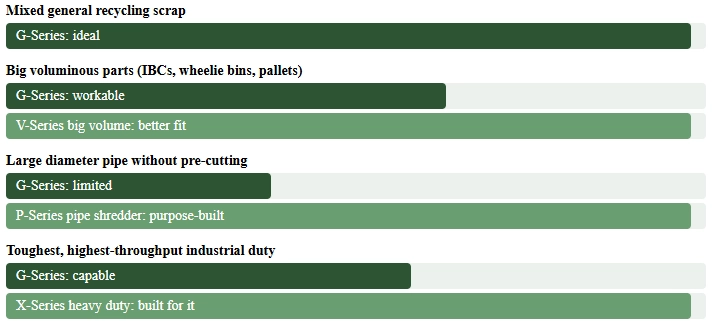
The G-Series is a true multi-purpose shredder, but very large diameter pipe, whole tires, and the very toughest high-volume streams have dedicated machines that do those jobs better. For clean regrind, pair the G-Series with a downstream granulator.
G-Series at a glance
| Feature | Detail |
|---|---|
| Rotor diameter | 457 mm E-type rotor |
| Working widths | 850 mm to 2000 mm |
| Feed system | Two-speed hydraulic swing ram |
| Drive | Oversized gearbox, low speed and high torque |
| Standard features | Outboard bearings, hydraulic screen cradle, integrated hydraulic power pack |
| Wear options | Rotor cooling, hard facing, and other wear packages |
Where the G-Series fits among Virtus shredders
The G-Series is the versatile middle of the shredder range. The chart below shows when a different machine is the better call.
See it in action
Sometimes the easiest way to understand a machine is to watch it run. Our YouTube channel has material demonstrations across the full Virtus lineup, so you can see how different materials feed and process at each stage of size reduction before you ever pick up the phone.
Not sure it fits your material? Let us shred it
Shredder performance depends heavily on your specific material, its shape, density, and how it feeds, and that is hard to judge from a spec sheet. Send us a sample of your actual scrap, tell us your volume and what you want the output to become, and our testing facility will run it and send back a confidential technical analysis with real results. We record the test too, so you can watch your own material go through before you commit.
After the sale, you are not on your own
Screens and knives are high-wear parts on any shredder, and when they need replacing, screens, knives, and wear parts for the G-Series are in stock on Virtus Equipment Direct, our online webstore, so you are not waiting on a quote for a part you already know you need. Our service team handles installation and can commission the machine, train your operators, and set up a maintenance schedule from day one. And if your team works in Spanish, so do we. Nuestro equipo le atiende en espanol, desde la primera llamada hasta la instalacion y el soporte.
Frequently asked questions
What is the difference between a shredder and a granulator?
A shredder uses low speed and high torque to break down large, dense, bulky material, and it feeds with a hydraulic ram. A granulator uses high speed and lower torque to cut already-manageable material into fine regrind. Many recycling lines use both: a shredder first, then a granulator for a second stage.
Can the G-Series feed a granulator for two-stage size reduction?
Yes, and that is a common setup. The G-Series reduces bulky scrap to a size a granulator can accept, then a downstream granulator like the H-Series takes it to final regrind. The screen in the shredder sets how coarse or fine that intermediate output is.
What materials can the G-Series handle?
A wide range: plastic lumps and purge, pipes, film, woven bags, bales, cables, and rigid or flexible plastics, plus electronic waste, paper, and wood. For abrasive or filled material, hard facing and other wear options are available.
What is the difference between a shredder and a granulator?
A shredder uses low speed and high torque to break down large, dense, bulky material, fed by a hydraulic ram. A granulator uses high speed and lower torque to cut manageable material into fine regrind. Many lines use both in sequence.
Can the G-Series shred textiles like denim?
Yes. A single-shaft shredder handles fabric and textiles such as denim jeans as a first-stage size reduction. The right screen and knife setup depend on your volume and what happens to the material next, which a material test confirms.
Can the G-Series feed a granulator for two-stage size reduction?
Yes, and it is a common setup. The G-Series reduces bulky scrap to a size a granulator can accept, then a downstream granulator like the H-Series takes it to final regrind.
Terms worth knowing
A few terms come up constantly when you are speccing this kind of machine. Here they are in plain language:
Single-shaft shredder. One cutting rotor working against fixed counter knives, fed by a hydraulic ram. This is the design across most Virtus shredders.
Two-speed swing ram. A pivoting hydraulic pusher that feeds material with a swing action and reverses to clear jams, avoiding the guide-rail wear of a sliding ram.
Screen perforation size. The hole diameter in the discharge screen that sets the maximum output particle size.
Outboard bearings. Bearings mounted outside the cutting chamber so material and contamination stay away from them.
Two-stage size reduction. Shredding bulky material first, then granulating it into uniform regrind.
Related machines
If this machine is not quite the right fit, these are the neighbors to look at: