Walk a plant floor at shift change and you can usually hear the granulator before you see it. A conventional high-speed grinder in an open room is one of the loudest machines in the building, loud enough that operators standing near it reach for hearing protection and loud enough to matter when OSHA measures your noise exposure. For a lot of shops, noise is not a minor annoyance. It is the reason a grinder gets banished to a far corner, which then creates a material-handling problem of its own.
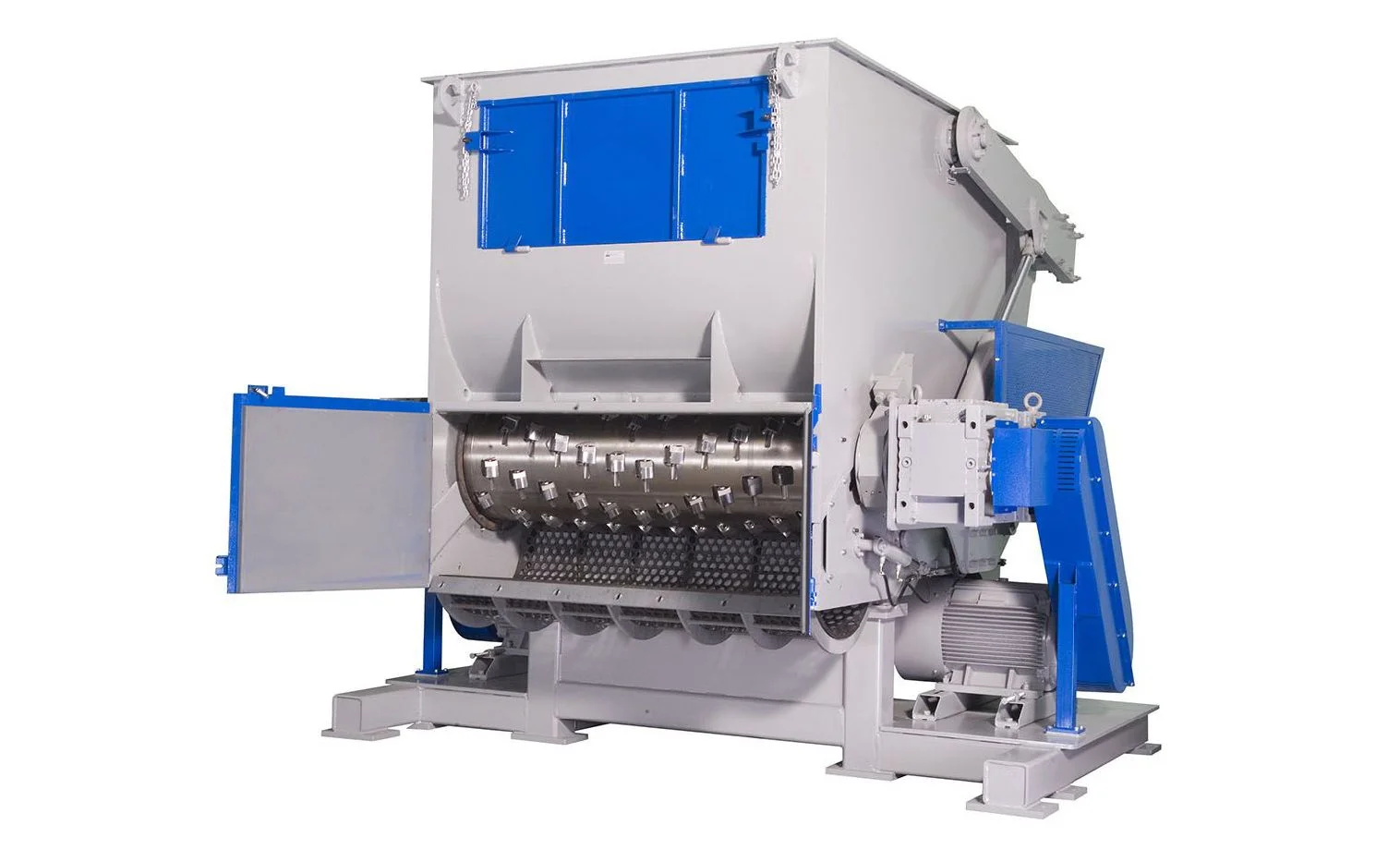
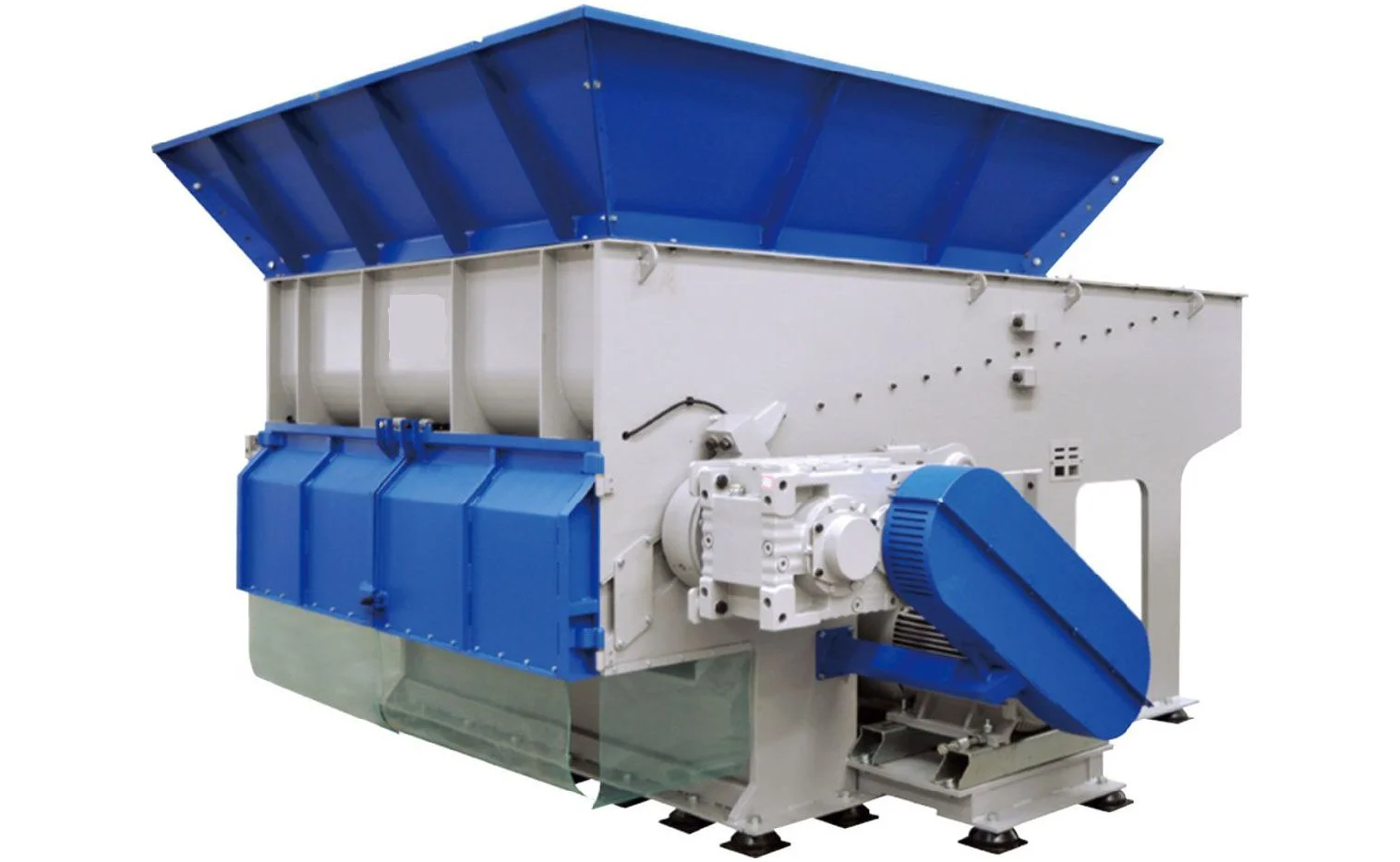
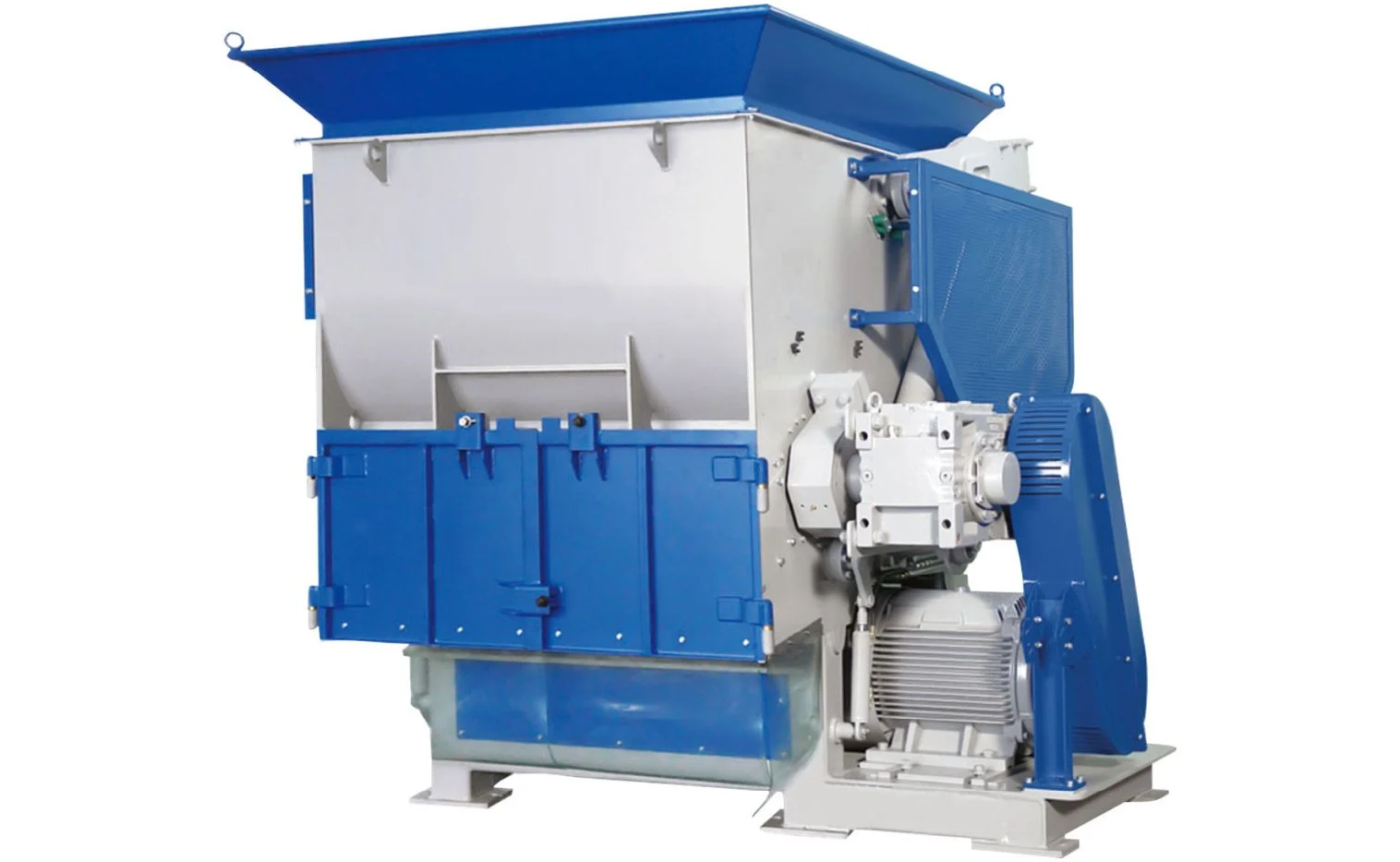
That is the problem the C-Series was built to solve. These are compact soundproofed granulators, and the soundproofing is not an afterthought bolted onto a standard machine. The whole enclosure, down to the sound-dampening hoppers, is engineered to keep the noise inside the box so the machine can live right where the work happens.
This is the second post in our series covering every granulator we build and who each one is for. If you have not seen it, the first post compared the A 18 and A 30 low speed granulators. This one is for the shop whose real constraint is not throughput. It is noise, dust, and floor space.
When soundproofing is the deciding factor
Plenty of granulator buyers start by comparing horsepower and throughput, then get blindsided on install day by how much the machine changes the room. A compact soundproofed granulator is the right call when any of these describe your situation:
- Operators work close to the granulator for a full shift and noise exposure is a real concern
- The grinder has to sit on the production floor, not in a separate soundproofed room you do not have
- You run in a facility where a quieter floor is part of the culture, such as medical, cleanroom, or a shared building
- Dust control matters, either for product quality or for the air your people breathe
The C-Series housing still opens up fast for knife changes, screen swaps, and cleaning, so you are not trading quiet operation for a maintenance headache. And like every Virtus granulator, the rotor and stator knives are pre-set outside the machine on a fixture, which means no awkward internal adjustments while you are half inside the cutting chamber.
Three models, three jobs
The C-Series is not one machine in three sizes. The three models are aimed at genuinely different roles, and picking by role is easier than picking by spec.
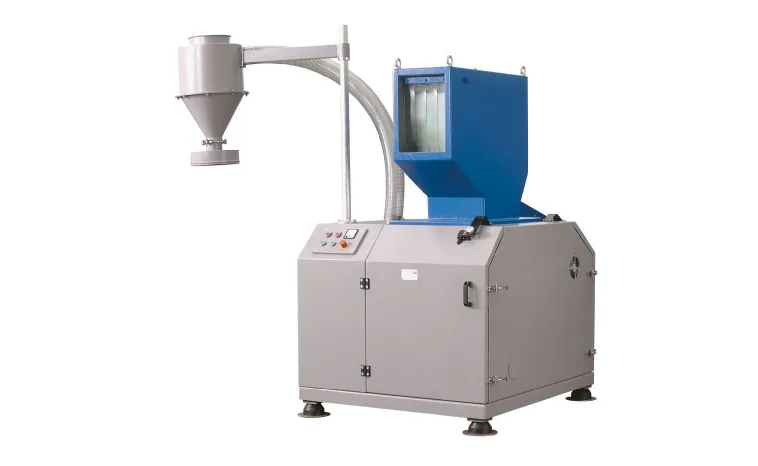
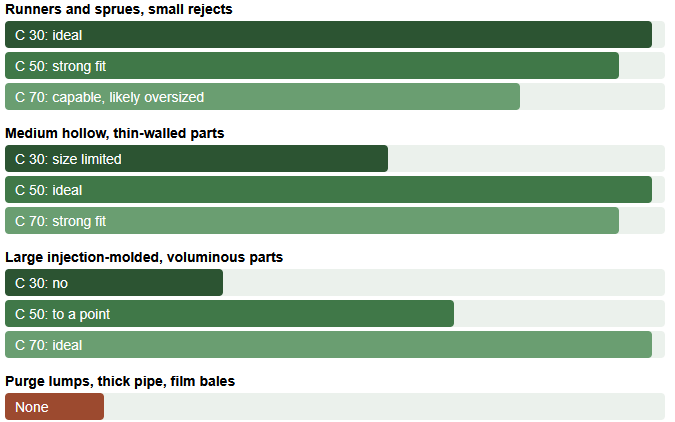
C 30, the beside the press workhorse. This is the in-line machine. It sits next to the press and grinds rejected products, runners, and sprues as they come off, quietly, right where they are generated. If your problem is production scrap piling up next to a molding machine and you cannot put a loud grinder there, the C 30 is the answer.
C 50, the small central granulator. The C 50 takes everything the C 30 does and scales it up to work as a small central granulator. It is built for medium-sized hollow, thin-walled parts along with runners and sprues, so it fits the shop that has outgrown a single beside-the-press unit but does not need a full heavy duty central system.
C 70, the central granulator for large parts. The C 70 is mainly used as a central granulator for large injection-molded parts and more voluminous material. When the parts are big but you still want the noise contained, this is the model.
Typical materials and real-world jobs
Because the C-Series shows up in shops with very different scrap, here is what actually feeds a compact soundproofed granulator on a typical day:
| Injection molders | Sprues, runners, and rejected parts in PP, PE, ABS, and PC where a quieter floor matters |
| Blow molders | Bottles, tails, flash, and hollow thin-walled parts (the C 50 and C 70 handle the bigger ones) |
| Bottle and cap producers | Bottle caps, closures, and small containers generated in high counts |
| Noise-sensitive plants | Any operation where the granulator has to sit on the production floor near people |
The C-Series shines on clean single-resin scrap where noise and dust are real constraints. Very bulky items, thick pipe, purge lumps, or textiles such as denim jeans belong to a shredder or a heavy duty granulator instead, which we cover elsewhere in this series.
C 30 vs C 50 vs C 70 at a glance
| C 30 | C 50 | C 70 | |
|---|---|---|---|
| Rotor diameter | 300 mm | 500 mm | 700 mm |
| Primary role | Beside the press | Small central granulator | Central granulator |
| Best for | Rejects, runners, sprues | Medium hollow thin-walled parts, runners, sprues | Large injection-molded and voluminous parts |
| Shared across the line | Rotor widths across the C-Series run from 300 mm to 1400 mm. Every model uses a fully welded cutting chamber, V-cut rotor technology, a complete soundproof enclosure with sound-dampening hoppers, and knives pre-set outside the machine on a fixture. | ||
What it grinds, regardless of model
One of the quiet advantages of the C-Series cutting geometry is that it does not care much about material form. The line produces high-quality regrind independent of whether you are feeding injection-molded parts, blow-molded parts, profiles, sheet, or film. The bars below show which model is the natural fit as parts get larger and more voluminous.
How to land on the right model
Start with the largest part you need to grind, not the average part. The feed opening and rotor have to accept your biggest piece whole, so that single dimension usually rules a model in or out faster than throughput math does. From there, think about role. If the machine lives next to one press, you are almost always in C 30 territory. If it serves several machines or a whole cell, you are looking at the C 50 or C 70, and the deciding factor is how big and bulky the parts get.
Noise and floor space are the constant. Every model in the line keeps the sound contained, so you are choosing capacity without giving up the quiet that brought you to the C-Series in the first place.
See it in action
Sometimes the easiest way to understand a machine is to watch it run. Our YouTube channel has material demonstrations across the full Virtus lineup, so you can see how different materials feed and process at each stage of size reduction before you ever pick up the phone.
Not sure which one? Let us grind your material first
You do not have to commit based on a spec table. Send a box of your actual parts and scrap to our testing facility, tell us how much you process per shift and what you want the regrind to become, and we will run it through the machines and send back a confidential technical analysis with real results. We even record the test run, so you can watch your own material go through before you decide. Sometimes the honest answer is a smaller, quieter machine than you were about to buy.
After the sale, you are not on your own
Screens and knives wear, and when they do, replacement knives, screens, and wear parts for the full C-Series are in stock on Virtus Equipment Direct, our online webstore, so you are not waiting on a quote for a part you already know you need. Our service team handles installation and can commission the machine, train your operators, and set up a maintenance schedule from day one. And if your team works in Spanish, so do we. Nuestro equipo le atiende en espanol, desde la primera llamada hasta la instalacion y el soporte.
Frequently asked questions
How much quieter is a soundproofed granulator, really?
The enclosure and sound-dampening hoppers are engineered to keep cutting noise contained rather than radiating it across the floor. The practical result is a machine you can place in an occupied work area instead of exiling to a separate room. For an exact reading in your space, a demo or a plant visit is the only honest answer, since room acoustics vary.
Can a C-Series granulator handle more than one type of plastic?
Yes. The cutting geometry produces high-quality regrind across injection-molded parts, blow-molded parts, profiles, sheet, and film, and across common thermoplastics like PP, PE, ABS, PET, and PC. If you run multiple resins that must stay separated, plan your cleanout routine accordingly, and the fast-access housing makes that easier.
Is a C 50 a beside the press machine or a central granulator?
Both, depending on how you deploy it. It is capable enough to serve as a small central granulator, yet compact and quiet enough to sit closer to production than a full heavy duty system. That flexibility is exactly why it is a popular middle choice.
What materials can a compact soundproofed granulator process?
Clean single-resin scrap across injection-molded parts, blow-molded parts, profiles, sheet, and film, in common thermoplastics like PP, PE, ABS, PET, and PC. Bulky, thick-walled, or contaminated material is better suited to a shredder or heavy duty granulator.
How much floor space does a C-Series need?
Less than you might expect, which is part of the point. The compact soundproofed design is meant to drop into an existing workshop near the presses rather than requiring a separate room.
Which C-Series model should I start with?
Match it to your largest part and your role. The C 30 is beside-the-press, the C 50 is a small central granulator, and the C 70 handles large injection-molded parts. A material trial settles it quickly.
Terms worth knowing
A few terms come up constantly when you are speccing this kind of machine. Here they are in plain language:
Rotor knives and bed knives. The rotor knives (fly knives) spin on the rotor and shear material against the stationary bed knives. That scissor action is the actual cut.
Blade gap. The clearance between rotor and bed knives. Set it right for clean, uniform granules; let it drift and you get ragged cuts and extra fines.
Soundproofed enclosure. The acoustic housing and sound-dampening hoppers that keep cutting noise contained, which is what lets a C-Series machine live right on an occupied floor.
Fines. The dust-like undersized particles in the regrind. Too many cause feeding and quality problems downstream, so keeping them low matters.
Central granulator. A larger granulator that serves a whole cell or plant from one location, which is the role the C 50 and C 70 can fill.
Related machines
If this machine is not quite the right fit, these are the neighbors to look at: