Every injection molding and plastics processing plant that generates scrap faces the same question: where does the granulation happen? The two primary answers are beside each press, or in a centralized location that collects and processes scrap from across the floor. Each has real advantages backed by how operations are structured, and the right answer depends on your specific mix of materials, production volume, floor layout, and labor model.
Industry trends in 2025 and 2026 are putting this decision under more scrutiny than ever. Closed-loop recycling systems that integrate granulators directly into production lines are growing in adoption, according to market research tracking the granulator equipment sector. Manufacturers are moving away from batched scrap handling toward immediate recapture, both to improve regrind quality and to meet the tighter recycled content requirements entering U.S. and EU markets.
Beside the Press: Closed Loop, Low Handling
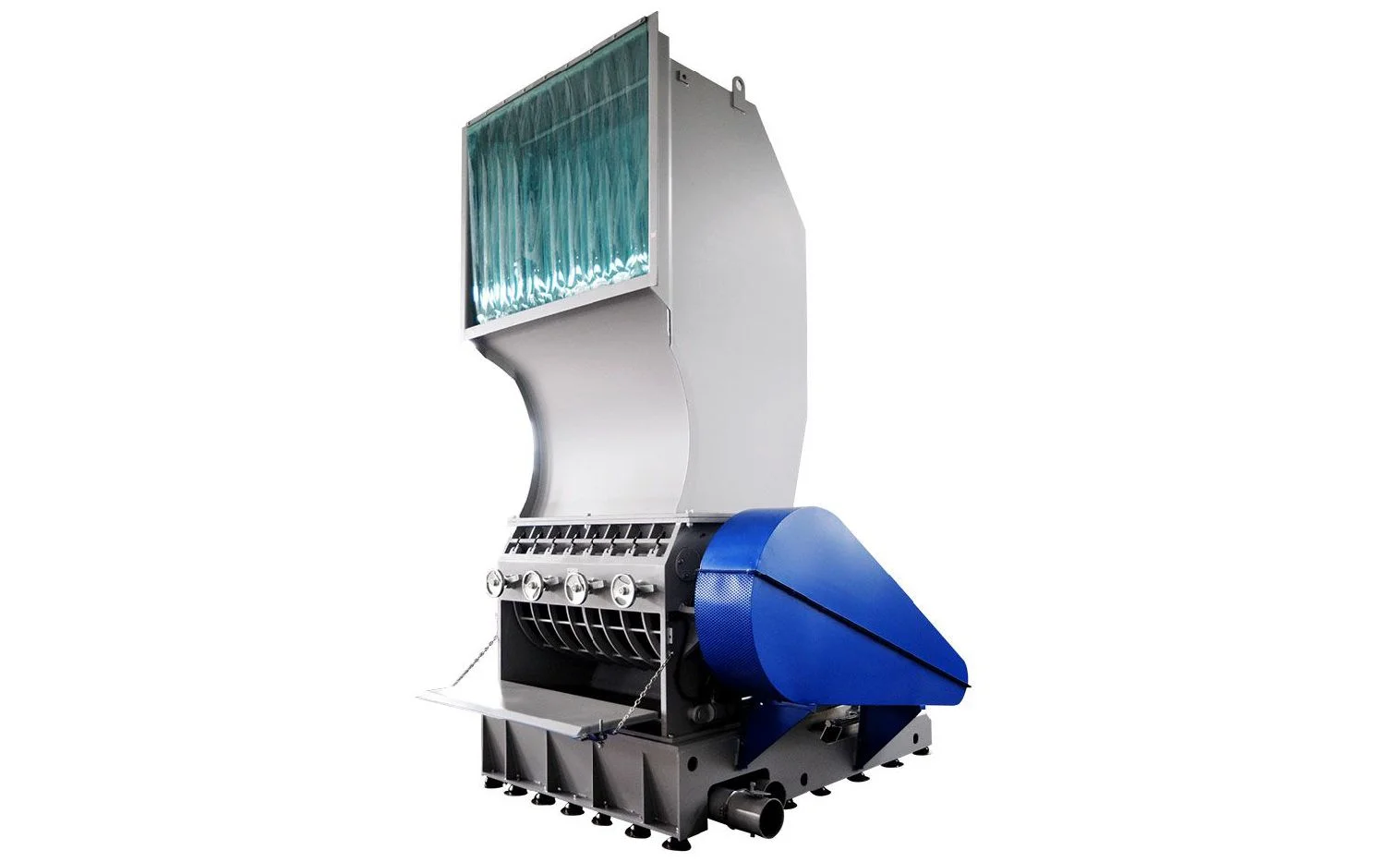
A beside-the-press setup puts a compact granulator, typically a low speed unit, directly next to each injection molding machine. Runners and sprues feed directly in, and regrind comes out the bottom ready to blend back. The loop closes almost immediately, and material stays close to its source.
This approach fits naturally with the industry push toward closed-loop recycling systems in manufacturing. When regrind is produced at the press and reintroduced at the same press, contamination risk is minimal and material traceability is straightforward. That matters more as customer specifications for recycled content percentages become more specific.
Beside the Press: Key Advantages
Immediate regrind loop, no scrap accumulation, minimal manual handling labor, low contamination risk because material stays at the source press, quieter low speed operation suited to open production floors, strong fit for dedicated single-resin presses.
Beside the Press: Key Considerations
Higher upfront investment per press if equipping an entire floor, multiple units to maintain on a regular service schedule, not ideal for large bulky parts or thick-wall scrap that benefits from pre-size reduction first.
Central Granulation: Consolidation and Throughput
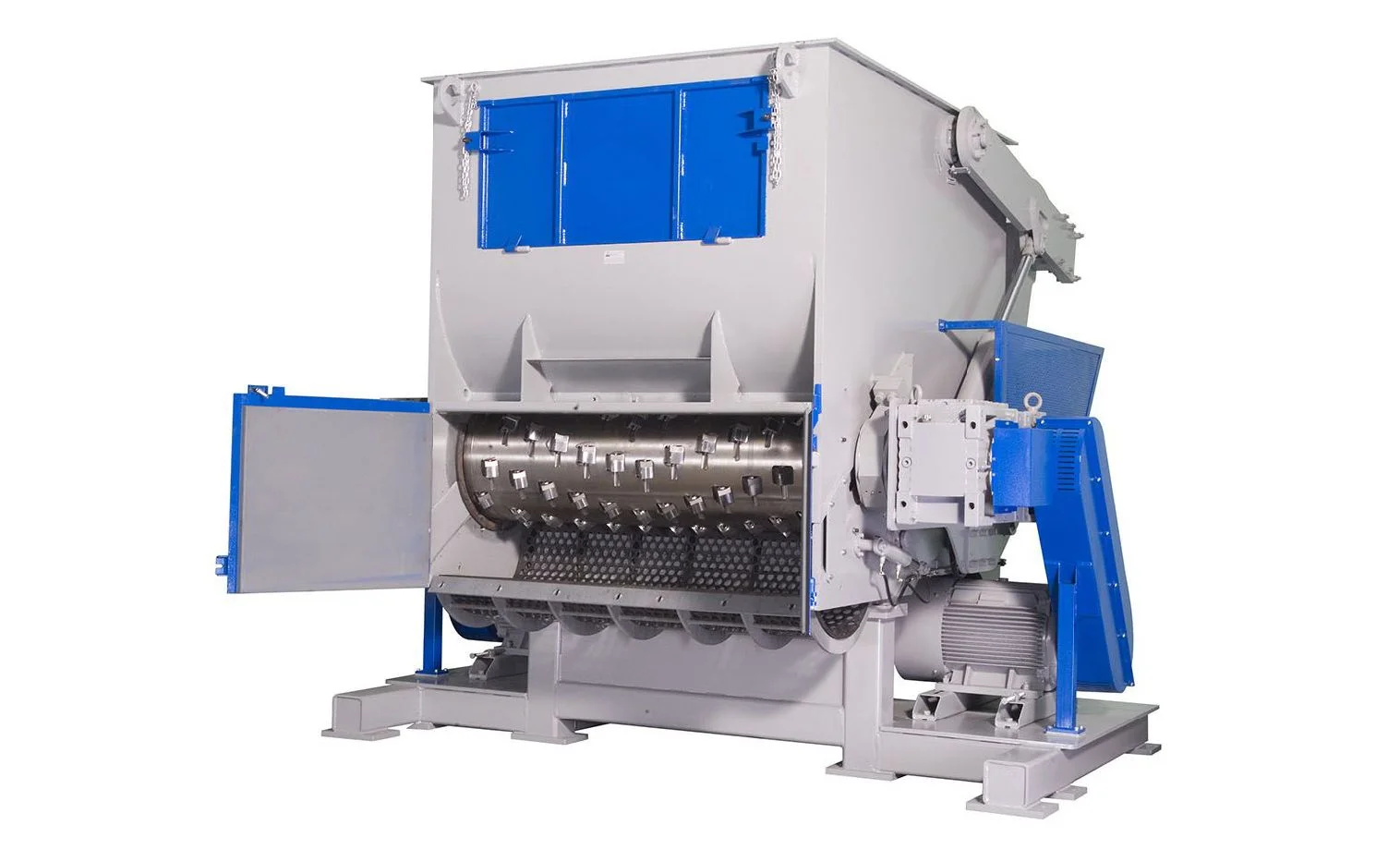
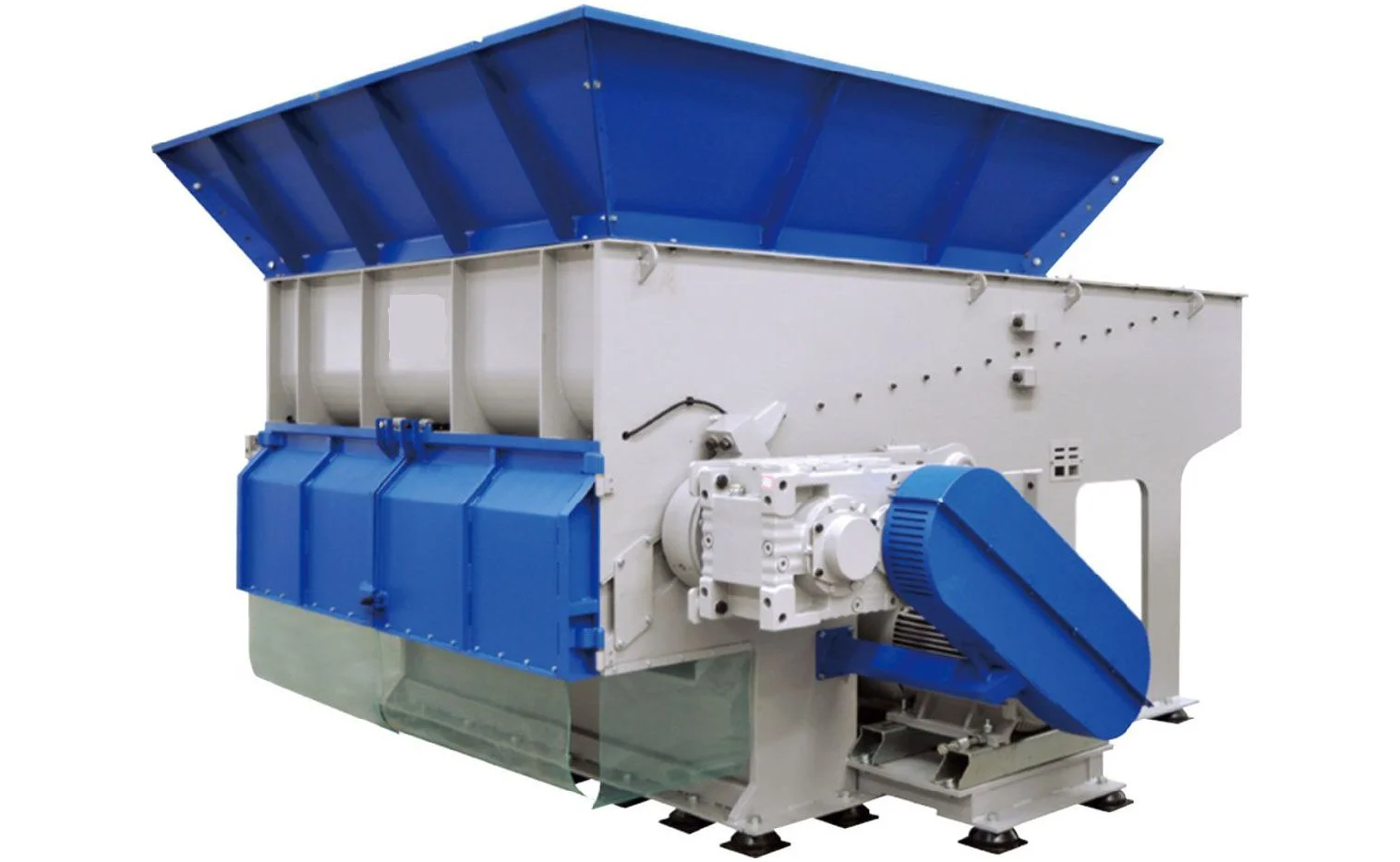
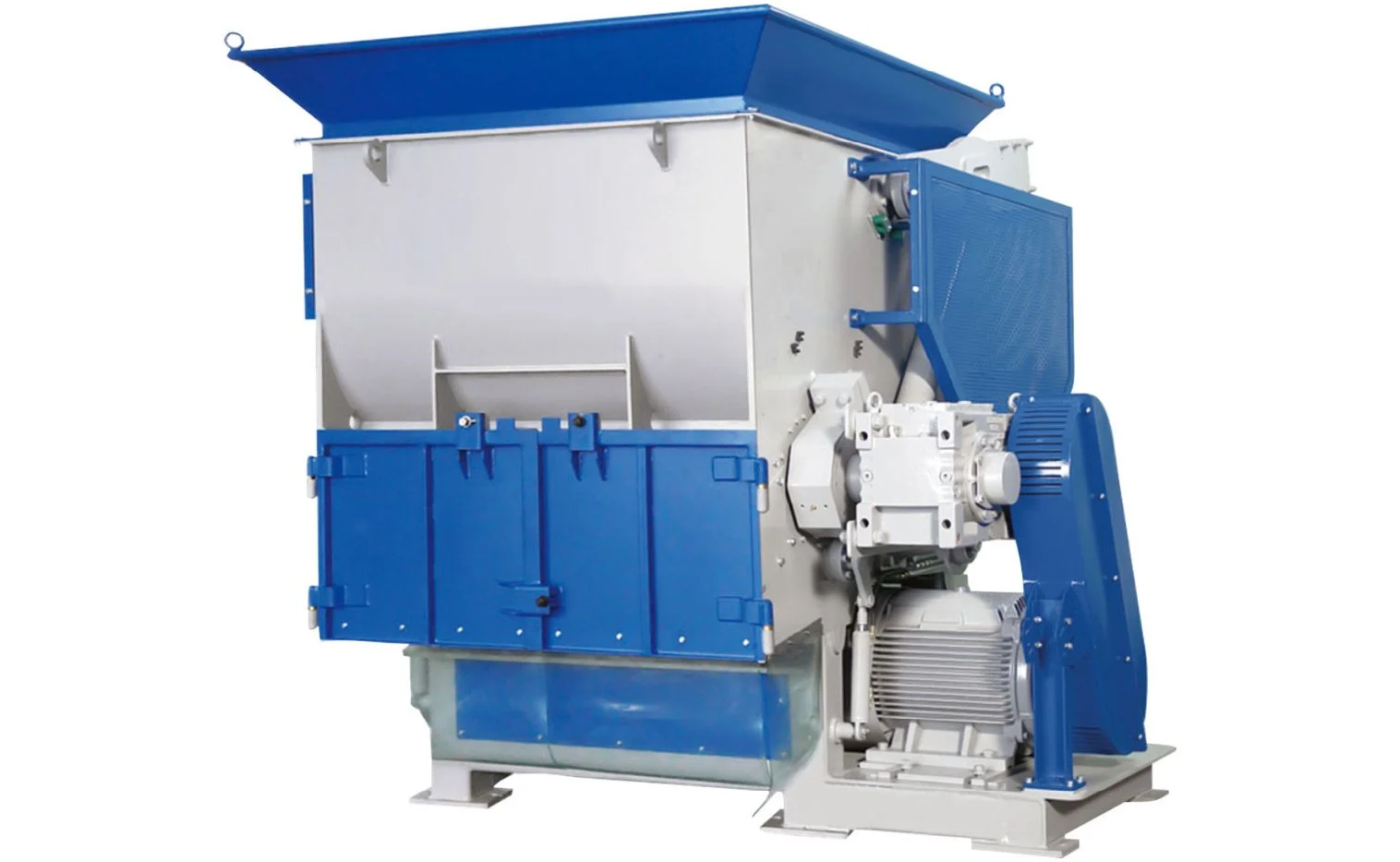
A centralized granulation system collects scrap from multiple presses or production lines and processes it in one area, usually with a larger, higher-throughput granulator, sometimes preceded by a shredder for bulky or oversized material. One machine handles the aggregate volume from several lines.
This model is a practical fit when your operation runs many different resin types, when per-press scrap volumes are individually low but add up significantly across the floor, or when scrap includes large parts that need size reduction before they reach granule form. Centralized systems can also simplify staffing since one operator manages the processing area rather than monitoring multiple units spread across the floor.
Central Granulation: Key Advantages
Fewer machines to purchase and maintain, high-volume throughput from a single unit, better fit for large and thick-wall parts, easier to staff if scrap conveyance infrastructure is already in place.
Central Granulation: Key Considerations
Requires conveyance infrastructure to move scrap, higher contamination risk if resin sorting is not strictly controlled, regrind loop takes longer to close, larger footprint in the processing area.
Why Many Plants End Up Doing Both
A hybrid approach is more common than most people expect. Dedicated high-volume presses running a single resin get their own beside-the-press granulator, which captures runner scrap immediately and puts it back in the loop the same shift. A central granulator handles everything else: purge lumps, thick-wall scrap, and mixed material that requires batching and sorting. This is not a compromise, it is often the most efficient configuration for a mid-to-large facility.
2026 Industry Trend: Market research tracking the plastic recycling granulator sector shows growing adoption of closed-loop systems that integrate granulators directly into production lines rather than treating granulation as a separate downstream process. Manufacturers with tight regrind quality requirements are driving this shift as recycled content mandates expand in the U.S. and EU.
| Decision Factor | Points Toward Beside the Press | Points Toward Central Granulation |
|---|---|---|
| Primary scrap type | Runners, sprues, small parts | Bulky parts, lumps, thick-wall scrap |
| Floor layout | Space available beside each press | Dedicated processing area available |
| Resin mixing risk | Low, material stays at the source press | Requires a clear sorting protocol |
| Labor model | Operator at press manages scrap as part of regular cycle | Centralized scrap handling team or area |
| Noise tolerance on floor | Low speed = press-floor friendly | Can be isolated in processing area if needed |
| Regrind turnaround priority | Immediate recapture, same shift | Batch processing, flexible schedule |